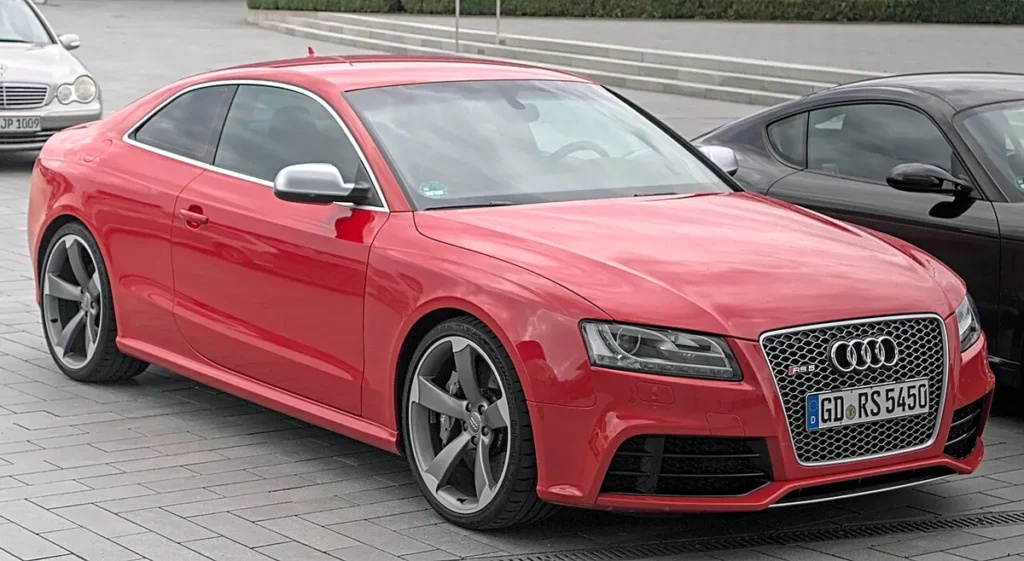
Audi RS5 problems depend almost entirely on which generation you are looking at. The first-generation (B8, 8T) RS5 has a naturally aspirated 4.2-litre V8 that revs to 8,250 rpm, and its weak points are the surrounding systems: carbon on the intake valves, the 7-speed S tronic’s mechatronic unit, leaking Dynamic Ride Control dampers and age-related oil leaks. The second-generation (B9, F5) RS5 has a twin-turbo 2.9-litre V6 shared with Porsche, and its issues are different: an internal coolant-pump leak covered by an Audi service bulletin (TSB 2070349), early rocker arms on cars built before about mid-2018 (CarChecker) and a long list of minor recalls (NHTSA).
This guide covers the real Audi RS5 common problems for both generations: symptoms, causes, repair cost ranges, NHTSA recalls and bulletins, a year-by-year view and a buyer’s checklist. It is written for people comparing used cars, and every cost range is attributed to a linked source, mainly CarChecker’s B8 report and CarChecker’s B9 report. If you are also looking at the smaller RS, read our Audi RS3 problems guide.
Short answer: The Audi RS5 is a strong performance coupe, but it is not a maintenance-free one. On the B8 V8, budget for carbon cleaning, S tronic fluid service and possible Dynamic Ride Control repairs. On the B9 (2018 onward) V6, check that the water pump has been inspected or replaced, confirm the rocker arm revision on cars built before about mid-2018, and verify every recall by VIN. A documented service history matters more than the model year on either car.
This guide is part of the Audi RS problems and reliability hub, which links every engine, gearbox and fault-code guide for the brand.
Audi RS5 Problems at a Glance
This table summarizes the issues owners, independent specialists and Audi bulletins report most often. Costs are rough European estimates in euros from CarChecker’s reliability reports for the B8 RS5 and the B9 RS5, not Audi figures. Labor rates and parts prices differ by country, so use them for comparison and get local quotes.
| Generation | Problem | Typical symptoms | Approx. cost |
|---|---|---|---|
| B8 4.2 V8 | Intake valve carbon buildup | Rough cold idle, misfires, hesitation, power loss | About €800–€1,500 (about $880–$1,650) for walnut blasting |
| B8 4.2 V8 | S tronic (DL501) mechatronic fault | “Gearbox malfunction” message, harsh or lost gears, limp mode | About €1,500–€2,500 (about $1,650–$2,750) for a mechatronic repair; more with clutch work |
| B8 4.2 V8 | Dynamic Ride Control (DRC) leaks | Knocking over bumps, uneven ride height | About €500–€900 (about $550–$990) per damper; up to €3,000–€4,500 (about $3,300–$4,950) for the system |
| B8 4.2 V8 | Oil consumption and gasket leaks | Low oil warning, oil smell, residue at the rear of the engine | About €500–€2,500 (about $550–$2,750) depending on the gasket |
| B8 4.2 V8 | Blocked plenum drains | Wet footwell, random electrical faults | Cheap if caught early; up to about €2,000 (about $2,200) if modules are damaged |
| B9 2.9 V6 | Coolant pump leak (TSB 2070349) | Coolant loss with no puddle, P0299, drivetrain warning | About €1,500–€2,000 (about $1,650–$2,200) early; €3,000–€5,000 (about $3,300–$5,500) with vacuum system damage |
| B9 2.9 V6 | Rocker arm wear (early cars) | Metallic ticking at idle, especially on cars built before about mid-2018 | About €3,500–€4,000 (about $3,850–$4,400) for rocker arms and camshaft; €6,000–€8,000 (about $6,600–$8,800) if metal spreads |
| B9 2.9 V6 | Intake valve carbon buildup | Rough idle, misfires, power loss | About €900–€1,800 (about $990–$2,000) |
| B9 2.9 V6 | DRC leaks (if fitted) | Knocking, uneven ride height | Up to about €5,500 (about $6,050) for the full system |
Which Audi RS5 Is Which? B8 vs B9
Audi has built three generations of the RS5 name, but only two are old enough to have a meaningful reliability record. The engine, gearbox and body styles differ, so the problems differ too.
| Generation | Years | Engine and output | Gearbox | Body styles |
|---|---|---|---|---|
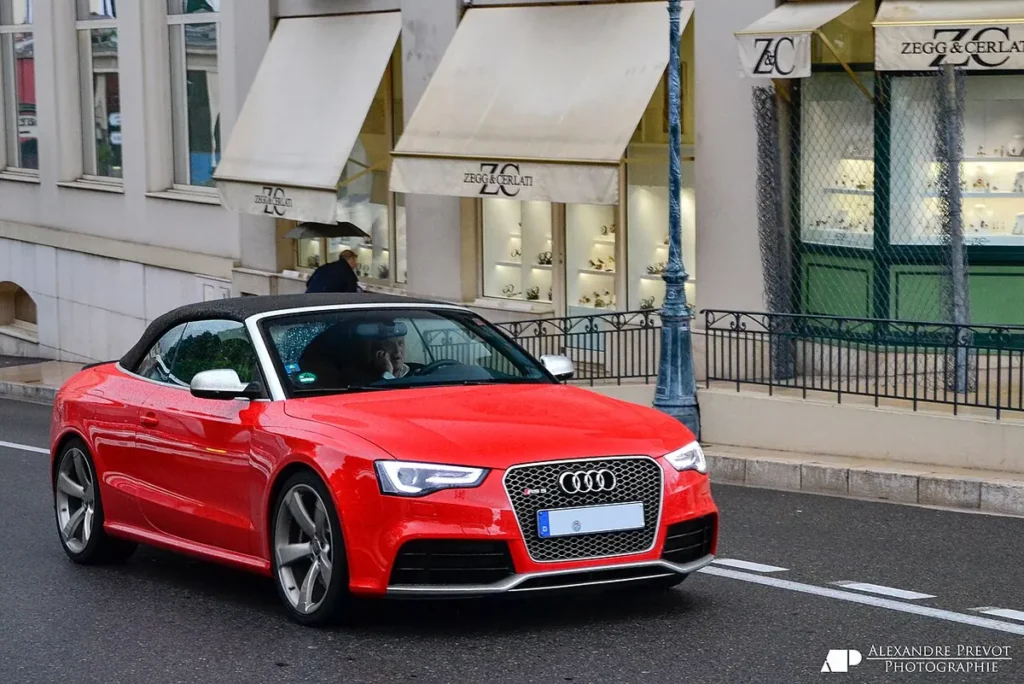
| B8 (8T) | 2010–2016 per CarChecker (US model years 2013–2015) | 4.2 FSI V8 (code CFSA), 450 PS at 8,250 rpm, 430 N·m | 7-speed S tronic (DL501) | Coupe; Cabriolet from 2013 |
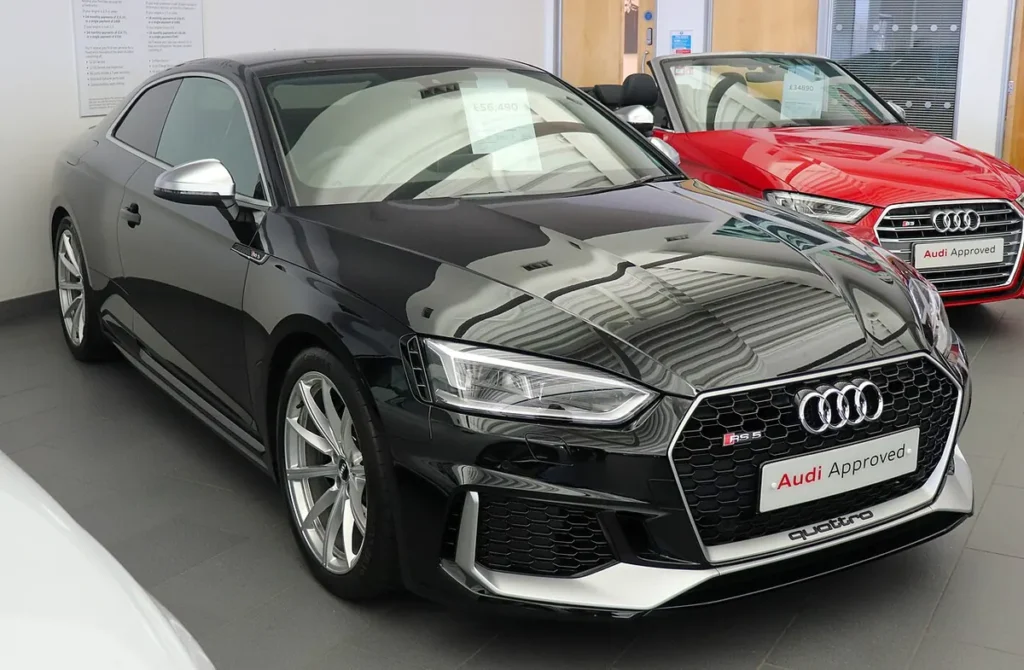
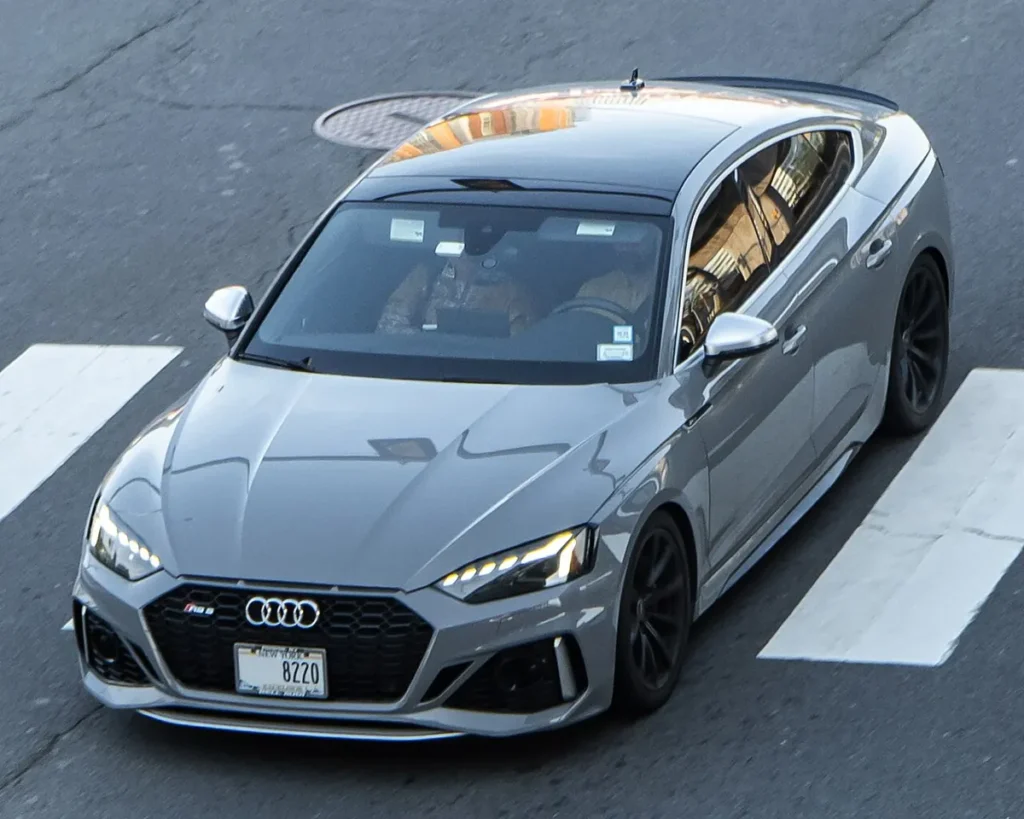
| B9 (F5) | 2017–2024, facelift in late 2019 | 2.9 TFSI twin-turbo V6, 450 PS, 600 N·m | 8-speed automatic, ZF | Coupe; Sportback from 2018 in North America and 2019 in Europe |
| B10 | 2026 on | 2.9 TFSI V6 plug-in hybrid, about 630 hp combined | Not covered here | Sedan and Avant |
According to CarChecker, the B8 RS5 uses the hand-built CFSA 4.2-litre V8, which revs to 8,250 rpm. A mid-cycle refresh in 2012 brought revised LED headlights, electric power steering and a revised suspension, coupe production ran through 2016 and the cabriolet was sold briefly in 2013–2015. (Wikipedia lists the 4.2 FSI RS5 coupe as 2010–2017.) Per CarChecker and Wikipedia, the B9 replaced the V8 with the twin-turbo 2.9-litre V6 that Porsche also uses in the Panamera 4S, and Wikipedia says it is 60 kg lighter than its predecessor. The B10 RS5 Sedan and Avant was officially unveiled on 19 February 2026 (Wikipedia) and is too new for a reliability verdict.
Audi RS5 B8 Problems: The 4.2 FSI V8 (2010–2016)
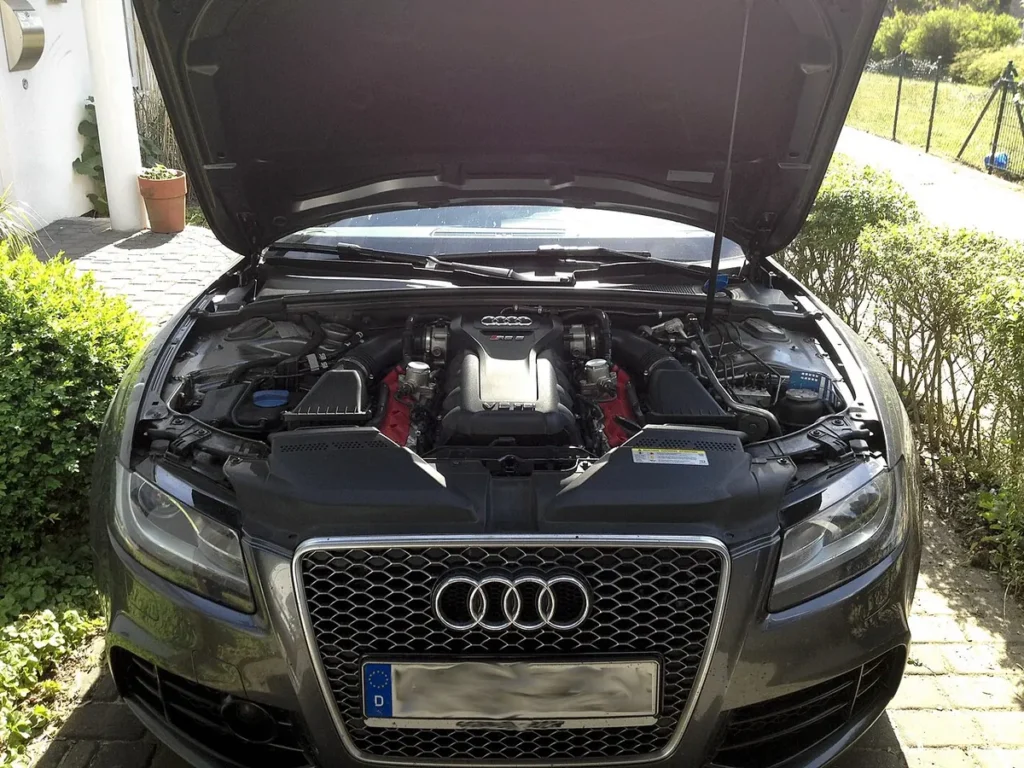
CarChecker calls the CFSA V8 fundamentally robust, with high-mileage examples above 200,000 km, and says the supporting systems are what demand attention. Most B8 RS5 problems are about maintenance and age, not a fundamental design flaw, but several items are expensive enough to affect the price you should pay.
Carbon buildup on the intake valves
The 4.2 FSI uses direct injection only, so fuel never washes the backs of the intake valves. Crankcase vapors and oil mist bake onto the valves and ports over time. Symptoms are a lumpy cold idle, occasional misfires, hesitation on light throttle and a gradual loss of crispness. The fix is mechanical cleaning, normally walnut-shell blasting, and on a V8 that covers all 16 intake valves. CarChecker puts it at €800–€1,000 (about $880–$1,100) at an independent specialist and €1,200–€1,500 (about $1,300–$1,650) at a dealer, and says most owners need it every 50,000–70,000 km. Treat it as maintenance, not a defect, and ask when the last clean was done.
S tronic (DL501) mechatronic faults
The B8 RS5 uses the 7-speed DL501 (0B5), a wet-clutch S tronic that CarChecker calls generally robust, but whose mechatronic control unit (J743) it says can develop internal faults, particularly between 60,000 and 120,000 km. Audi technical service bulletin 2030477 (the NHTSA copy, revision 6 dated 4 November 2013) lists the 2013 RS5 with the S tronic and covers the “Gearbox malfunction: you can continue driving” message. Its technical background says poor internal contact area on the circuit board will lead to faults and that oil additives can cause the plastic circuit plates to delaminate. The production solution is an improved circuit board, and the service is a VIN-specific replacement circuit board kit rather than a whole new gearbox. NHTSA owner complaints for the 2013 RS5 (NHTSA data) include reports of the transmission malfunction message and one mechatronic unit replacement.
- Symptoms: a gearbox warning in the cluster, harsh or delayed shifts, reluctance to engage gears at low speed, lost gears or limp mode (symptoms as listed by CarChecker).
- Cost: CarChecker estimates €1,500–€2,500 (about $1,650–$2,750) at a specialist transmission shop to repair the mechatronic unit, €3,000–€4,000 (about $3,300–$4,400) if the clutch packs also need work, and dealer quotes for a full replacement gearbox of up to €14,000–€15,000 (about $15,400–$16,500).
- Prevention: fluid service. CarChecker says regular DL501 oil and filter changes every 40,000–50,000 km are essential. Ask for proof of the service.
Dynamic Ride Control (DRC) leaks
Dynamic Ride Control was an option rather than standard equipment in at least some European specifications of the RS5 (CarChecker). It links diagonally opposite dampers through a central hydraulic valve to control body roll, so a small seal leak can affect the whole system. Symptoms are knocking over bumps at low speed, uneven ride height and poor body control. CarChecker says many owners report DRC problems between roughly 60,000 and 100,000 km and estimates about €500–€600 (about $550–$660) per damper including labor at an independent and €700–€900 (about $770–$990) per corner at a dealer, rising to €3,000–€4,500 (about $3,300–$4,950) if the accumulator and central valve are also replaced. Many owners convert to conventional coilovers (CarChecker names KW, Bilstein and Ohlins) for roughly €2,000–€3,500 (about $2,200–$3,850) installed. Cars without DRC avoid the problem, so check the options list.
Timing chain and cold-start rattle: what is actually known
CarChecker describes a metal timing chain designed for the life of the engine and says high-mileage examples exceeding 200,000 km exist without major engine failures. Its viewing checklist also says that on a completely cold start, a brief rattle that fades quickly can indicate timing chain tensioner wear. No chain failure rate for the B8 was found in the sources reviewed, so none is quoted here. Treat any rattle as a reason to ask a specialist to inspect the car before buying.
Oil consumption and gasket leaks
CarChecker says the 4.2 FSI develops oil leaks from several locations as it ages past 80,000–100,000 km: the timing cover gasket at the rear of the engine, the valve cover gaskets and the oil filter housing gasket. It notes that Audi considers up to 0.5 litres per 1,000 km of oil consumption within specification, though most well-maintained examples consume less. The timing cover is the expensive one, at €1,500–€2,500 (about $1,650–$2,750) at a specialist because of the labor, while valve cover gaskets are about €500–€1,000 (about $550–$1,100).
Plenum drains, injectors, coils and the sport differential
CarChecker says the B8 platform has two plenum drains in the scuttle that can clog with debris, letting water pool and enter the ECU box or footwell. Repair costs range from €300 (about $330) for drain clearing and ECU box resealing to €2,000 (about $2,200) or more if control modules need replacement, and regular clearing of the drains during servicing prevents the problem. The same report lists injector failures commonly after 80,000–100,000 km (a set of eight about €800–€1,200 (about $880–$1,300) at an independent specialist or €1,500–€2,000 (about $1,650–$2,200) at a dealer) and ignition coil pack failures (up to about €600 (about $660)). Where fitted, the optional rear sport differential can throw warning messages that CarChecker says are often sensor faults (about €500–€800 (about $550–$880)); it needs its own fluid change at about 55,000–60,000 km, and a full differential replacement costs about €3,000–€3,500 (about $3,300–$3,850).
Emissions recall 37P1 (2013–2015)
In April 2024 Audi issued emissions recall 37P1 for 2013–2015 RS5 Coupes and Cabriolets in the USA and Canada (NHTSA copy of the Audi notice, which lists 3,508 US coupes and 767 US cabriolets). A software error can cause elevated tailpipe emissions in Sport mode and can store non-erasable OBD fault codes that stop a state emissions inspection from passing. The fix is a free ECM and TCM software update.
Audi RS5 B9 Problems: The 2.9 TFSI V6 (2018 Onward)
CarChecker calls the Porsche-shared 2.9 V6 robust and the ZF 8-speed automatic proven, but lists a water pump design flaw on the EA839 engine and rocker arm failure on early cars as the main weak points. Early cars need specific checks.
Coolant pump leak and coolant migration (TSB 2070349)
CarChecker explains that the EA839 water pump uses vacuum actuation to control a slide valve inside the pump. When its internal seal fails, coolant can be drawn into the engine’s vacuum system rather than leaking onto the ground, so there may be no puddle to warn you. Audi technical service bulletin 2070349 (the NHTSA copy dated 17 May 2023) covers loss of coolant from the coolant pump on 2018–2019 and 2021–2024 RS 5 coupes and 2019 and 2021–2024 RS 5 Sportbacks, among other V6 models. It tells technicians to locate the leak precisely, notes that up to 3 ml of coolant may escape from the drip cup over 100 hours of operation, which is normal, and says to replace the component causing the leak.
- Symptoms: falling coolant level with no visible leak, a coolant warning lamp, and an engine light with P0299 (underboost).
- Coverage: the bulletin lists warranty coverage up to 48 months or 50,000 miles. A service bulletin is not a recall, and outside warranty it is informational only.
- Cost: CarChecker estimates about €1,500–€2,000 (about $1,650–$2,200) if only the pump is replaced early, rising to €3,000–€5,000 (about $3,300–$5,500) once the solenoid valves, vacuum reservoir and lines are contaminated.
- Revised pump: CarChecker says the revised replacement pump uses a 6-bolt pulley instead of the original 4-bolt design, which makes it easy to check visually. Treat that as a quick visual clue, not proof of condition.
Rocker arms on early B9 cars
CarChecker says early EA839 engines used rocker arms with needle roller bearings that were undersized for the loads involved. Under high temperatures and sustained high rpm the bearings can collapse, locking the outer roller race and scoring the camshaft lobes, and the telltale sign is a loud metallic tick at idle. It estimates about €3,500–€4,000 (about $3,850–$4,400) at a specialist to replace all rocker arms and the affected camshaft, and €6,000–€8,000 (about $6,600–$8,800) if metal debris spreads through the oiling system. According to CarChecker, Audi revised the rocker arm design with significantly larger bearings for cars produced after approximately June 2018, and most B9.5 facelift cars (late 2019 onward) are not affected, so on pre-facelift cars it is worth checking whether the updated rocker arms have been fitted. Some owner discussions quote an exact build date for the change, but no Audi document or other verifiable source for one was found, so this guide does not give one: confirm a specific car’s part with an Audi dealer or an inspection. This is not an Audi recall.
Carbon buildup on the intake valves
The 2.9 TFSI is also direct-injection only, so it collects intake valve deposits like the V8 does. CarChecker says the hot-V layout, with the turbos between the cylinder banks, makes the cleaning job longer and more expensive, and estimates €900–€1,200 (about $990–$1,300) at a specialist and €1,500–€1,800 (about $1,650–$2,000) at a dealer, with a service needed roughly every 60,000–80,000 km depending on how the car is driven.
Dynamic Ride Control on the B9
The B9 offers DRC as an option, with the same basic weakness as the B8: a hydraulic system with a small fluid volume that is sensitive to seal wear. CarChecker quotes about €750–€800 (about $820–$880) per damper from Audi plus labor, €800–€1,200 (about $880–$1,300) for a system fluid service and €5,000–€5,500 (about $5,500–$6,050) for full system replacement at a dealer, and says some owners have reported leaks as early as 30,000 km. Cars without DRC use conventional adaptive dampers and avoid this risk.
Audi RS5 Recalls and Technical Bulletins (NHTSA)
The table below lists the main US campaigns that name the RS5, checked against NHTSA’s recall database; each campaign number below links to its NHTSA record. Recall repairs are free, and NHTSA only lists campaigns by model and year range, so always confirm a specific car by VIN with an Audi dealer or at nhtsa.gov/recalls. The B8 coupe has no safety recall under the RS5 name in NHTSA’s database for 2013–2015, apart from the 2024 emissions action above.
| Campaign | Models and years | Issue |
|---|---|---|
| 19V-547 (Audi 74D9) | 2018–2019 RS5 Sportback, plus A4/A5/S4/S5 models | Oxidation on the passenger occupant detection cable can disable the passenger air bag; fix with cable ties on the harness |
| 20V-760 (Audi 27i6) | 2018–2019 RS5 Coupe | Incorrect positive battery terminal cover; a rear crash could stop the doors opening from outside |
| 21V-295 (Audi 42L1) | 2019–2021 RS5 Coupe and Sportback, many other Audi models | Rear axle trailing arm lock nut may break from stress corrosion, which could misalign the axle |
| 21V-874 | 2018–2019 RS5 Coupe, 2019 RS5 Sportback, plus A4/A5/S4/S5 models | Seat heater cable contact fault can disable the passenger air bag; cable and heating mat or seat cover replaced |
| 22V-034 | 2019–2021 RS5 Coupe and Sportback, many other models | Rear axle alignment may not have been checked after the 21V-295 repair, causing uneven tire wear |
| 20V-737, 21V-606, 22V-102, 22V-742, 24V-251 | Various 2021–2023 RS5 Coupe and Sportback model years | Smaller campaigns: rear light harness scuff protection, middle rear seat belt retractor, B-pillar tire label, blank rearview camera display and passenger occupant detection connector |
| Emissions recall 37P1 | 2013–2015 RS5 Coupe and Cabriolet (US and Canada) | ECM and TCM software update for Sport mode emissions and non-erasable OBD codes |
The rear axle lock nut recall (21V-295) and its follow-up alignment check (22V-034) deserve the closest attention, because NHTSA says the rear axle alignment may not have been inspected after the repairs for 21V-295 were performed. Service bulletins such as TSB 2070349 and TSB 2030477 are not recalls and will not appear in a VIN recall lookup.
What NHTSA Owner Complaints Show
NHTSA holds only a handful of RS5 complaints, which reflects low sales as much as reliability. As of November 2026 it lists 7 for the 2013 model year, 5 for 2014, 2 for 2015, 1 for 2018 and 3 for 2019. Five of the seven 2013 reports are filed under power train, including transmission warnings and a mechatronic replacement, and brake shudder appears in the 2014 and 2015 reports. These are unverified owner reports, so treat them as a pattern to check, not as proof.
Best and Worst Audi RS5 Years
There is no honest “avoid this year” label for the B8, because the issues are driven by maintenance rather than by a particular production year. The 2012 refresh added electric power steering and a revised suspension (CarChecker), and the 2013–2015 cars are the ones covered by NHTSA’s US recall data. For the B9, the build date matters more than the badge year.
| Car | Verdict | Why |
|---|---|---|
| B8 RS5 with full history | Good, if the history is real | Naturally aspirated V8, no turbo hardware. Look for carbon cleaning, S tronic fluid service and DRC fluid or damper work |
| B8 RS5 with gaps in history | Risky | Missed gearbox fluid, leaks and blocked drains turn into four-figure bills |
| B9 RS5 built before about mid-2018 | Verify before buying | Early rocker arms, plus the coolant pump bulletin |
| B9 RS5 built after about mid-2018 | Generally the safer B9 | Revised rocker arms per CarChecker, though the coolant pump bulletin covers cars up to 2024 |
| B10 RS5 (2026) | Too new to judge | No meaningful reliability record yet |
Audi RS5 Running Costs and Reliability Verdict
CarChecker estimates ownership costs (B8 report, B9 report) of roughly €1,450–€2,500 (about $1,600–$2,750) a year for a B8 and €1,400–€2,500 (about $1,550–$2,750) for a B9 at 15,000 km a year, covering servicing, tires, brakes and a repair reserve. That is an estimate based on CarChecker’s German and French asking prices, not an Audi figure. To see where the RS5 sits against its rivals, read our Audi RS vs BMW M comparison, our ranking of the top Audi RS models and our Audi RS 7 Sportback review. New to the badge? See what RS means on an Audi.
Audi RS5 Buyer’s Checklist
- Cold start: insist on a genuinely cold engine and listen for unusual mechanical noise in the first 30 seconds. CarChecker says a brief rattle that fades quickly can indicate timing chain tensioner wear on the V8, and a loud metallic tick at idle is the telltale sign of rocker arm failure on the V6.
- Service records: look for oil changes at sensible intervals, the DL501 gearbox oil and filter and the sport differential fluid on the B8.
- Carbon cleaning: ask when it was last done and by whom.
- Gearbox: drive in stop-and-go traffic for at least ten minutes and watch for harsh engagement or any gearbox warning.
- DRC: drive slowly over rough surfaces and listen for knocking at each corner. Check whether the car has DRC at all.
- B9 coolant: check the coolant level, ask for a scan for P0299, ask whether the pump has been replaced and check whether the pulley has 6 bolts (revised pump) or 4 bolts (original).
- B9 build date: read the build date and have the rocker arms confirmed if the car was built before about mid-2018.
- B8 plenum: feel the footwell carpets for damp and ask when the drains were last cleared.
- Recalls: run the VIN through NHTSA or an Audi dealer, and confirm the rear axle recalls on 2019–2021 cars.
For a wider view of model-specific guides, browse our Common Problems & Reliability Guides hub.
Frequently Asked Questions
What are the most common Audi RS5 problems?
On the B8 V8, the most common are intake valve carbon buildup, S tronic mechatronic faults, Dynamic Ride Control leaks and oil leaks. On the B9 V6, the most discussed are the coolant pump leak covered by TSB 2070349, early rocker arm wear on cars built before about mid-2018 and carbon buildup.
Is the Audi RS5 reliable?
It can be, with the right car. The B8’s naturally aspirated V8 is considered robust, and the B9’s V6 is generally seen as strong once the coolant pump and rocker arm questions are settled. Service history and documented fluid changes matter more than the badge year.
Does the Audi RS5 have a water pump problem?
The B9’s 2.9 TFSI has a documented coolant pump leak issue. Audi’s TSB 2070349 covers loss of coolant from the pump on 2018–2019 and 2021–2024 RS 5 models, and the coolant can migrate into the vacuum system. The bulletin lists warranty coverage up to 48 months or 50,000 miles (NHTSA copy).
Is the Audi RS5 B8 timing chain a known failure?
No chain failure rate for the B8 RS5 was found in the sources reviewed. CarChecker describes a metal timing chain designed for the life of the engine, with examples above 200,000 km, but also says a brief cold-start rattle that fades quickly can indicate timing chain tensioner wear. Treat any rattle as a reason for a specialist inspection.
How much does an S tronic mechatronic repair cost on an RS5?
CarChecker estimates about €1,500–€2,500 (about $1,650–$2,750) to repair the mechatronic unit at a specialist, €3,000–€4,000 (about $3,300–$4,400) with clutch work and dealer quotes up to €14,000–€15,000 (about $15,400–$16,500) for a full gearbox. Audi TSB 2030477 (NHTSA copy) describes a circuit board replacement kit for the 2013 RS 5 with the gearbox warning.
Are there any Audi RS5 recalls?
Yes. NHTSA lists several campaigns, including a battery terminal cover recall (20V-760), passenger air bag detection recalls (19V-547 and 21V-874), a rear axle lock nut recall (21V-295) and its alignment follow-up (22V-034). The 2013–2015 RS5 also has a 2024 emissions recall (37P1). Check any specific car by VIN.
How much does Audi RS5 carbon cleaning cost?
CarChecker estimates €800–€1,500 (about $880–$1,650) on the B8 V8 and CarChecker estimates €900–€1,800 (about $990–$2,000) on the B9 V6, depending on whether an independent or a dealer does the work. Intervals are quoted as every 50,000–70,000 km on the B8 and 60,000–80,000 km on the B9.
Should I buy a B8 or B9 RS5?
The B8 offers the last naturally aspirated V8 and simpler hardware but carries age-related costs. The B9 is quicker and more refined but needs checks on the coolant pump and, on early cars, the rocker arms. Pick the best-documented example.
Is the new Audi RS5 reliable?
It is too early to say. The B10 RS5 was unveiled in February 2026 as a plug-in hybrid with about 630 hp (Wikipedia), so there is no long-term data yet. Wait for real-world ownership reports and recall history before drawing conclusions.
The Bottom Line on Audi RS5 Problems
Most Audi RS5 problems are known, specific and checkable. The B8 asks for fluid service, carbon cleaning and attention to DRC and drains. The B9 asks you to check the coolant pump, the rocker arm revision and the recall history. Buy on documentation, get an independent inspection from an Audi specialist and keep a repair reserve.
Currency note: amounts quoted in € by the sources are converted to US dollars at the European Central Bank reference rate of 19 November 2026 (1 euro = 1.0992 US dollars; 1 British pound = about 1.3151 US dollars, from the ECB euro-pound rate of 0.83581) and rounded, so dollar figures are approximate. See the ECB reference rates.
Sources and notes: Recall campaigns link by number to NHTSA records, and complaint counts link to NHTSA’s complaint database; all were checked in November 2026. Bulletins are linked as NHTSA copies: TSB 2070349, TSB 2030477 and the 37P1 emissions recall notice. Cost ranges, intervals and the rocker arm revision come from CarChecker’s Audi RS5 4.2 FSI V8 B8 and Audi RS5 B9 reports, not from Audi, and may change. Specifications and the B10 launch come from CarChecker and Wikipedia’s Audi A5 article. This article is for general information. Confirm any diagnosis or recall status for a specific vehicle with an Audi dealer or qualified specialist.