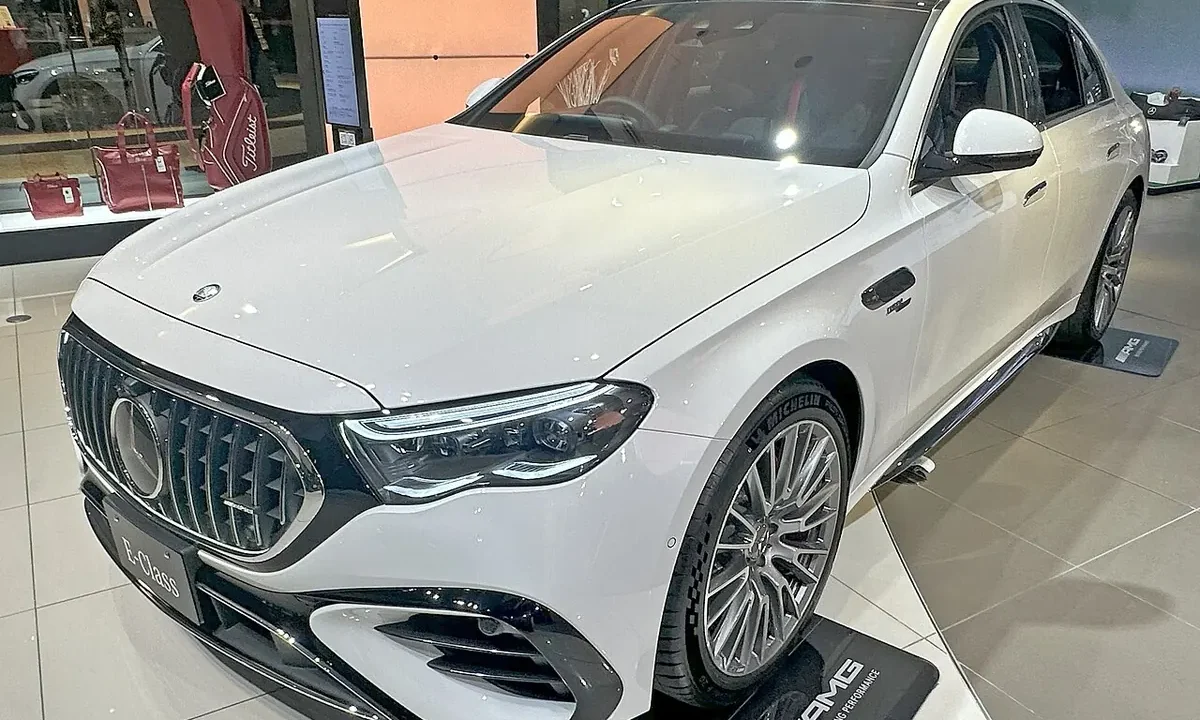
Mercedes-AMG E53 problems are mostly electrical and software-related, not catastrophic engine failures. The E53 uses the 3.0-liter M256 turbocharged inline-six with a 48-volt “EQ Boost” mild-hybrid system and an electric auxiliary compressor. Most documented trouble sits in that 48V system, plus a run of safety recalls, including three linked recalls on the transmission wiring harness. In the US the first generation (the 213-platform sedan plus the 238-platform coupe and cabriolet, per NHTSA’s recall report 24V-445) was sold from the 2019 model year, according to Mercedes-Benz USA. The newer E 53 Hybrid, a plug-in hybrid, arrived for the 2025 model year, per Mercedes-Benz USA.
This guide separates what is documented from what is only owner talk. It uses NHTSA recall data, Mercedes technical bulletins filed with NHTSA, and independent reliability guides, and it says clearly where the data on the newer E 53 Hybrid is too limited to judge. For the older V8 and four-cylinder AMG cars, see our Mercedes-AMG reliability and C63 problems guide and our E63 S reliability article.
Short answer: The AMG E53 is not known for engine failures, but it has a complex 48V mild-hybrid system that accounts for most reported faults, including no-start and limp-mode cases covered by a Mercedes bulletin. It also has many recalls, among them a transmission wiring harness fire-risk recall (24V-445, which lists 9,858 E 53 sedans, coupes and cabriolets) and a 48V ground cable recall (24V-100, 1,665 AMG E 53 vehicles). Check the VIN for open campaigns, scan for 48V fault codes, and budget for AIRMATIC suspension. The 2025 E 53 Hybrid is too new for a reliability verdict; NHTSA’s reports name it in two recalls so far (26V-281 and 25V-865).
This guide is part of the Mercedes-AMG problems and reliability hub, which links every engine, gearbox and fault-code guide for the brand.
AMG E53 Problems at a Glance
This table summarizes what recalls, Mercedes bulletins and independent guides report. Cost ranges are indicative European figures from the independent CarChecker E53 W213 report, not Mercedes prices, and they vary by market and shop. Euro amounts are converted to US dollars at the European Central Bank reference rate of 19 November 2026 (1 euro = 1.0992 US dollars, ECB) and rounded, so the dollar figures are approximate.
| Issue | Typical symptoms | Evidence | Indicative cost |
|---|---|---|---|
| 48V system (battery, DC/DC converter, software) | No start, 48V warning, limp mode, overheating, A/C not cold | Mercedes bulletin LI54.10-P-069698 (valid for series 213 and 238 among others); CarChecker | Battery about €800–€2,500 (about $880–$2,750); software updates are described in the bulletin as the first remedy |
| Transmission wiring harness | Corrosion, short-circuit, fire risk (recalls 22V-533, 24V-445) | NHTSA recalls 22V-533 and 24V-445 | Free recall repair |
| 48V ground cable | Overheating cable, fire risk | NHTSA recall 24V-100 | Free recall repair |
| Integrated starter-generator (ISG) | Whine, start-stop faults, reduced power, no start | CarChecker; the seal bulletin also mentions oil contamination of the starter-generator | About €3,000–€6,000 (about $3,300–$6,600) |
| Rear crankshaft seal leak | Low oil warning, oil under the car | Mercedes bulletin LI03.20-P-078715 (M254/M256, up to listed engine numbers) | Warranty or labor-heavy |
| Electric auxiliary compressor | Weak low-end response, check-engine light | CarChecker (described as uncommon) | Part about €1,000–€1,500 (about $1,100–$1,650) plus labor |
| AIRMATIC air suspension | Car sags overnight, compressor runs often | CarChecker | Up to about €2,000–€3,000 (about $2,200–$3,300) per repair |
Which AMG E53 Models Exist
“E53” covers two quite different generations. The first is the W213 E-Class family with its mild-hybrid six-cylinder. The second is the W214, which turns the E53 into a plug-in hybrid.
| Model | Years (US) | Powertrain | Notes |
|---|---|---|---|
| E 53 4MATIC+ sedan (W213) | 2019–2023 | 3.0 L M256 inline-six, EQ Boost 48V | Replaced the E 43 sedan (MBUSA) |
| E 53 coupe (C238) and cabriolet (A238) | 2019–2023 | Same | The sedan joined the E 53 coupe and cabriolet (MBUSA) |
| E 53 HYBRID 4MATIC+ sedan (W214) | 2025 on (MBUSA) | 3.0 L inline-six turbo plus a 120 kW electric motor integrated in the 9-speed transmission | Plug-in hybrid |
| E 53 HYBRID wagon | 2025–2026 (NHTSA lists recalls for both model years) | Same | NHTSA names it “AMG E 53 4MATIC+ WAGON” in 26V-281 |
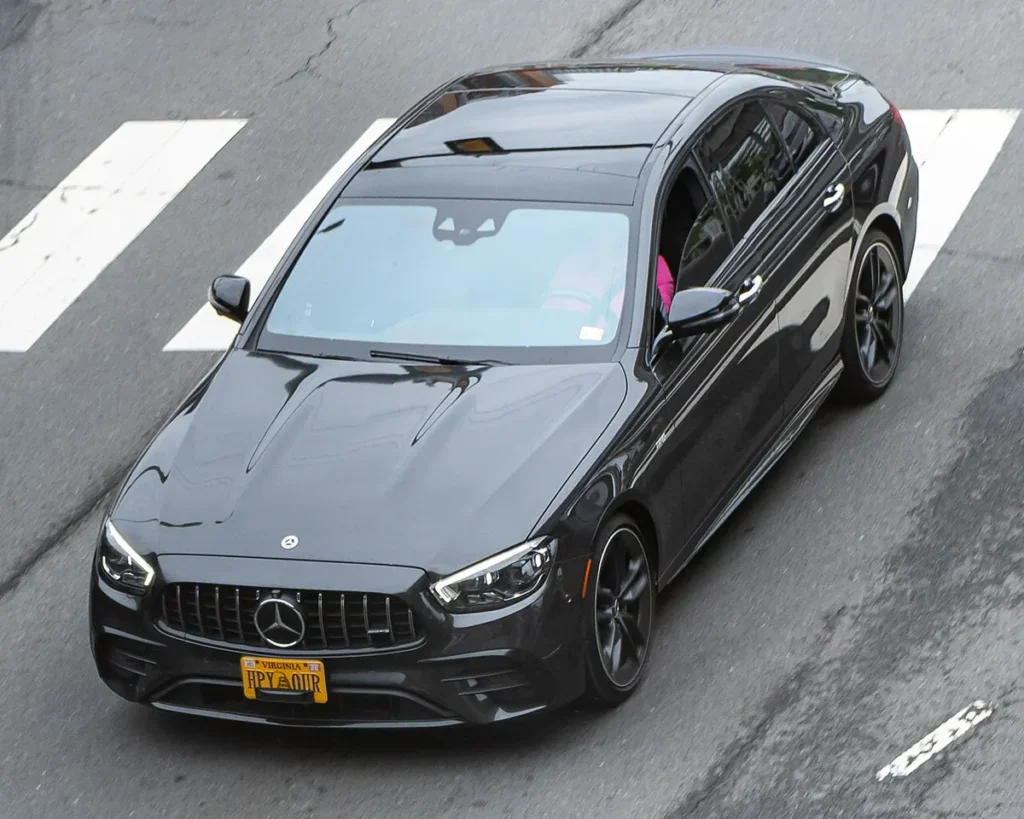
Verified Specs: W213 E53 and W214 E 53 Hybrid
Figures below come from Mercedes-Benz USA (W213 E 53 sedan, E 53 Hybrid), the Mercedes-Benz E 53 Hybrid press release (March 2024) and the EPA’s fueleconomy.gov. US and European ratings differ because of rating methods, so the table shows the metric figure where Mercedes publishes it.
| Spec | W213 E 53 (2019–2023) | W214 E 53 HYBRID (2025) |
|---|---|---|
| Engine | 3.0 L inline-six turbo (2,999 cc) plus electric auxiliary compressor | 3.0 L inline-six turbo, higher boost pressure (1.5 bar instead of 1.1 bar, per the Mercedes press release) |
| Combustion output | 429 hp (US) | 443 hp (US); 330 kW / 449 PS |
| Electric assist | EQ Boost starter-generator, up to 21 hp and 184 lb-ft (US) | 120 kW (161 hp) motor in the transmission, 480 Nm |
| Torque | 384 lb-ft (US) | 553 lb-ft (750 Nm) system |
| System output | n/a (mild hybrid) | 577 hp; 604 hp with RACE START (US) |
| Transmission and drive | AMG SPEEDSHIFT TCT 9G, AMG Performance 4MATIC+ | Same |
| 0–60 mph | 4.4 s (sedan, est.) | 3.9 s; 3.7 s with RACE START (US est.) |
| Battery | 48V lithium-ion battery (capacity not given in MBUSA’s specification table) | 28.6 kWh gross, 21.2 kWh usable (Mercedes) |
| EPA electric range | None | 42 miles (EPA, via Mercedes-Benz USA); 59 MPGe combined (fueleconomy.gov) |
| US starting price at launch | n/a | $88,000 for the base trim, excluding the $1,150 destination charge (Mercedes-Benz USA, 31 October 2024) |
The 48V EQ Boost System: The Main AMG E53 Problem Area
The W213 E53’s mild-hybrid system includes a 48V battery, a DC/DC converter that also supplies the 12V system, the starter-generator between the engine and the transmission, and the electric auxiliary compressor. Mercedes’ own technical bulletin LI54.10-P-069698 (version dated 25 March 2025), filed with NHTSA and valid for model series 167, 257, 213, 238 and 290 with code B01, lists the documented 48V faults. The complaints are no start, a yellow or red 48V battery message, limp-home mode, overheating or an A/C that stops blowing cold, and a check-engine light. Listed causes include software that causes intermittent or permanent no-starts, a hardware short circuit in the battery, failure of the battery’s internal Peltier cooling element, and a battery that disconnects itself after detecting an abnormality. Remedies are mostly a 48V battery software update followed by a road test; a guided test decides whether the battery is replaced, and a failed Peltier cooling element calls for a new battery.
Mercedes-Benz USA also launched an emission service campaign (2025050001) in May 2025 to update the 48V battery management software on 100,866 model year 2019–2022 vehicles on the 206, 257, 213, 238, 167 and 290 platforms. The notice lists platforms rather than the E 53 by name, so confirm by VIN whether it is open on a given car. NHTSA’s complaint database holds only five complaints for the AMG E53, all for the 2021 model year; one (ODI 11534064, filed July 2023) describes a “-48v malfunction” followed by an overheat warning. That is an example, not a failure rate. For cars you are considering, ask for the 48V software history, scan for stored 48V and ISG fault codes and confirm the campaign is done.
The battery is not the only 48V item. Recall 24V-100 covers a 48V ground cable connection in the engine compartment that may not be tightened to the specified torque and could overheat, which increases the risk of a fire. NHTSA’s Part 573 report lists 1,665 2021–2023 AMG E 53 vehicles (built 21 October 2021 to 4 April 2023) among the 12,191 vehicles in the recall. The remedy is a torque check and correction at a dealer, free of charge.
Starter-Generator, Auxiliary Compressor and Rear Crankshaft Seal
Integrated starter-generator (ISG). The ISG replaces a conventional alternator and starter. CarChecker reports failures from around 60,000 km (about 37,000 miles), with most after 80,000–100,000 km (about 50,000–62,000 miles), and costs of €3,000–€6,000 (about $3,300–$6,600) because the transmission must be partly removed. These are guide estimates, not NHTSA figures.
Rear crankshaft seal. Mercedes bulletin LI03.20-P-078715 (December 2024) covers M254 and M256 engines up to listed engine numbers. A rear crankshaft radial seal can be rolled during installation, causing a low oil warning and an oil leak. The remedy is to find oil in the bell housing, replace the seal, and replace the starter-generator if it is oil-contaminated. The bulletin is a technician document and does not say how many cars are affected.
Electric auxiliary compressor (eBooster). The 48V-driven BorgWarner unit fills the gap before the turbo spools up. CarChecker describes failure as uncommon, giving weak low-end response and a check-engine light, and notes that some faults come from the 48V supply rather than the compressor. An ECU software update can sometimes resolve intermittent faults.
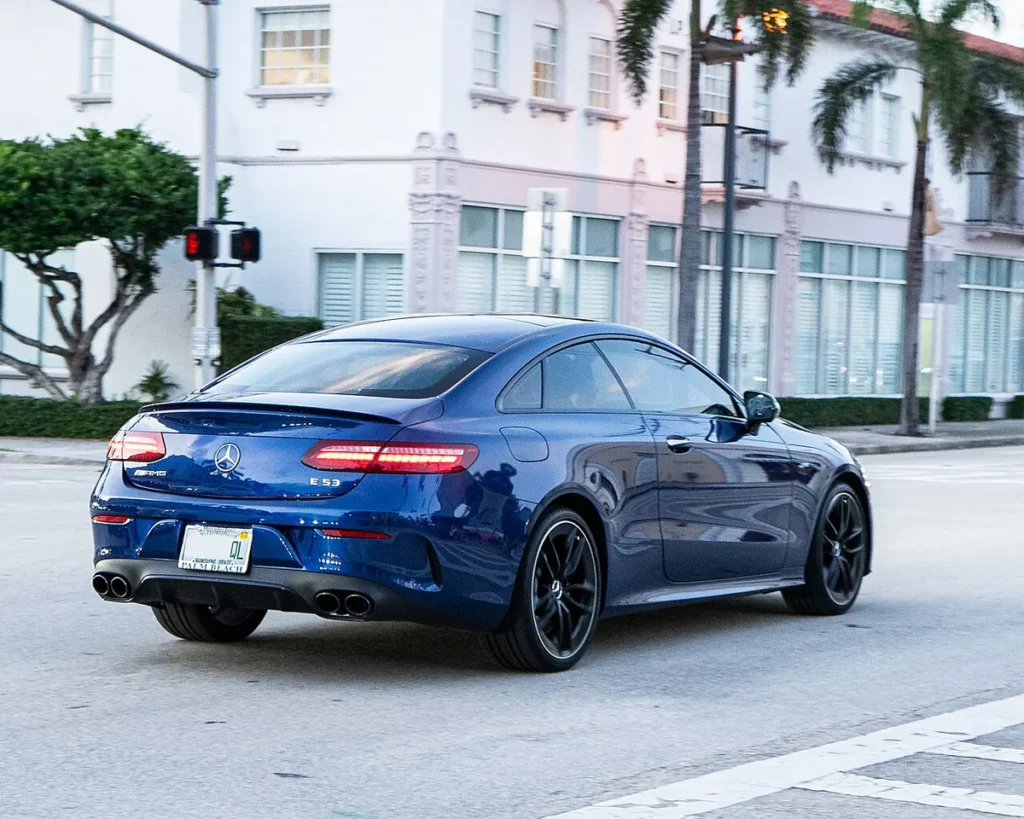
Other Documented M256 Bulletins
These two Mercedes bulletins are filed with NHTSA and apply to specific M256 variants (the oil-pressure bulletin excludes M256.8, the coolant bulletin applies to M256.9), so they do not necessarily apply to every E53.
- Oil pressure message (LI18.00-P-073137): Sporadic red “Engine oil pressure, stop” warnings on low-mileage cars can come from a sticking directional control valve. The bulletin is valid for M256.9 up to engine number 256 9xx 30 375024 and says to check oil level, run 10–15 starts, road test and replace the valve if the code returns.
- Red coolant warning (LI20.10-P-075374): Faults U019F00 or U019F87 on M256.9 before engine 2569xx30 599756 call for a guided test with Mercedes diagnostics.
CarChecker also lists oil consumption above the normal range on some M256 engines and carbon buildup on the intake valves, which is typical of direct-injection engines. No Mercedes action for the E53 is documented in the sources reviewed here, so treat these as things to check, not established defects.
Transmission Wiring Harness Recalls: Three Linked Campaigns
The most serious documented E53 issue is the transmission wiring harness. NHTSA recall 22V-533 (July 2022) covers 2019–2022 AMG E53 sedans (4,319), coupes (2,098) and cabriolets (1,806), plus the CLS 53, GT 43 and GT 53, 16,977 vehicles in all. The harness may be routed so that the connector is exposed to water and corrosion, which can cause a short circuit and a fire. Dealers inspect and repair the connector, reroute the harness and add a bracket.
Recall 24V-445 (June 2024) followed. NHTSA’s Part 573 report lists 2019–2023 E 53 4MATIC+ sedans (5,128), coupes (2,486) and cabriolets (2,244) among its 22,422 vehicles. NHTSA’s summary says the connection might not have been correctly wired during a prior recall repair, and during production. The fix is a new wiring harness and connector replacing the two-part version. Mercedes-Benz USA sent interim letters on 9 August 2024 and a second notice follows when the final remedy is available. The recall supersedes 22V-533, and vehicles repaired under the earlier recall still need the new remedy, so confirm that 24V-445 has been done.
The E 53 Hybrid wagon has its own version: recall 25V-865 (December 2025, 117 vehicles) says the transmission wiring harness may be routed too close to the front driveshaft, which can damage the harness and cause a loss of drive power. Dealers inspect the routing and repair it free of charge. Australia’s regulator lists a similar recall (REC-006530) for 18 AMG E53 Hybrid cars from 2024–2025.
Recalls That Apply to the AMG E53
This table lists only recalls whose official NHTSA Part 573 safety recall reports name the AMG E 53 (links go to the reports). Counts are the E 53 vehicles named in each report, with the campaign total where useful. Recall status changes, so always check the VIN on NHTSA’s recall lookup or with a Mercedes-Benz dealer.
| Campaign | E 53 vehicles named | Issue |
|---|---|---|
| 18V-761 | 2019 E 53 4MATIC sedan (1) and coupe (1); 119 vehicles across all models | Central powertrain controller could reset while driving, possibly causing an engine stall; software update |
| 19V-868 | 2019 E 53 4MATIC (53); 99 vehicles across all models | Incorrect driver air bag and software version may have been installed |
| 20V-673 | 2019–2021 AMG E53 (965) | Front passenger seat may be missing the mechanical adjustment range limit stop |
| 21V-216 | 2020–2021 E53 AMG (9) | Passenger seat limiter may allow the seat too close to the air bag |
| 21V-406 | 2021 E53 AMG cabriolet (12) | Rear headrests may be incorrectly mounted to the seatbacks |
| 21V-483 | 2021 AMG E53 (235) | Rear seat belt automatic locking retractors may deactivate early, so a child seat may not be secured properly |
| 21V-527 | 2021 AMG E 53, 2-door (10) | Side crash sensor connectors may come loose, which could delay air bag and seat belt activation |
| 22V-533 | 2019–2022 E53 sedan, coupe and cabriolet (8,223 of 16,977) | Transmission wiring harness misrouted; short-circuit and fire risk |
| 22V-733 | 2019–2022 AMG E53 (4,433) | 12V battery in the trunk may not be secured, disabling eCall, hazard lights and other functions in a crash |
| 23V-445 | 2021–2023 AMG E53 (1,231 of 143,551) | Fuel pump impeller may not meet material specifications; the pump may shut down and cause a loss of drive power |
| 23V-880 | 2021–2023 AMG E53 (740 of 79,676) | Expansion of 23V-445: same fuel pump issue and loss of drive power |
| 23V-574 | 2023 E53 coupe (3) and cabriolet (3) | Exit warning system alerts may fail because of a software error |
| 24V-100 | 2021–2023 AMG E 53 (1,665 of 12,191) | 48V ground cable may not be tightened to specification and may overheat; fire risk |
| 24V-445 | 2019–2023 E 53 4MATIC+ sedan, coupe and cabriolet (9,858 of 22,422) | Transmission harness connection; replaces the two-part harness and connector; fire risk; supersedes 22V-533 |
| 25V-865 (NHTSA record) | 2025 AMG E 53 4MATIC+ wagon (117) | Transmission wiring harness routed too close to the front driveshaft; loss of drive power |
| 26V-281 | 2025 AMG E 53 E 4MATIC+ (1,797), 2026 AMG E 53 4MATIC+ (27) and 2026 wagon (56); 144,049 vehicles across all models | Infotainment control unit may reset while driving and blank the instrument panel display; software update |
NHTSA’s vehicle lookup lists further broad Mercedes campaigns (software, rearview camera, seat belt, steering wheel and communication-module recalls) under the AMG E53. These are not listed above because their summaries do not name the model, so run the VIN to see which are open. All recall repairs are free.
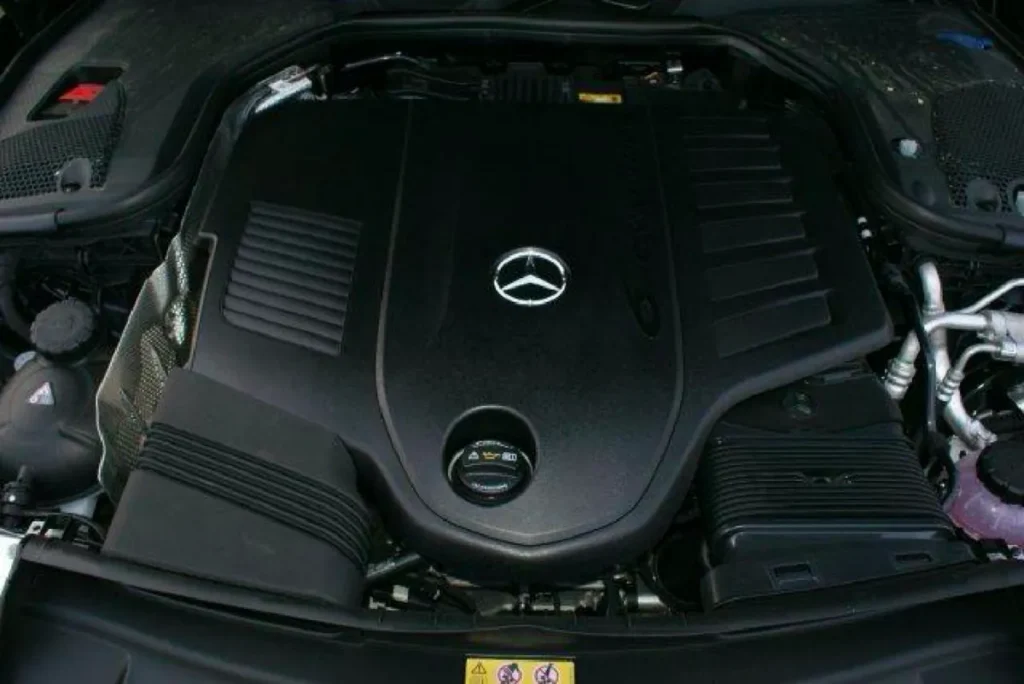
Suspension, Transmission and Other Wear Items
AIRMATIC. Every E53 has air suspension with adaptive damping. CarChecker says the rubber air springs can develop micro-cracks after 5–7 years, causing a corner to sag overnight, with an OEM strut at about €700–€900 (about $770–$990) and a dealer repair of up to €2,000–€3,000 (about $2,200–$3,300) if the compressor is also worn. That is a general guide for the platform, not an E53-specific recall.
Transmission. The AMG SPEEDSHIFT TCT 9G is based on the 9G-Tronic. CarChecker says some owners report rough downshifts when cold or in stop-and-go traffic, and that independent specialists strongly recommend fluid changes every 60,000–80,000 km (about 37,000–50,000 miles). Treat this as a test-drive item.
Maintenance. Use the oil approved for the engine, keep the 12V battery healthy because the car’s electronics rely on it, and keep a software log. CarChecker estimates maintenance of €1,600–€2,900 (about $1,750–$3,200) a year for the W213 at 15,000 km a year, including a repair buffer.
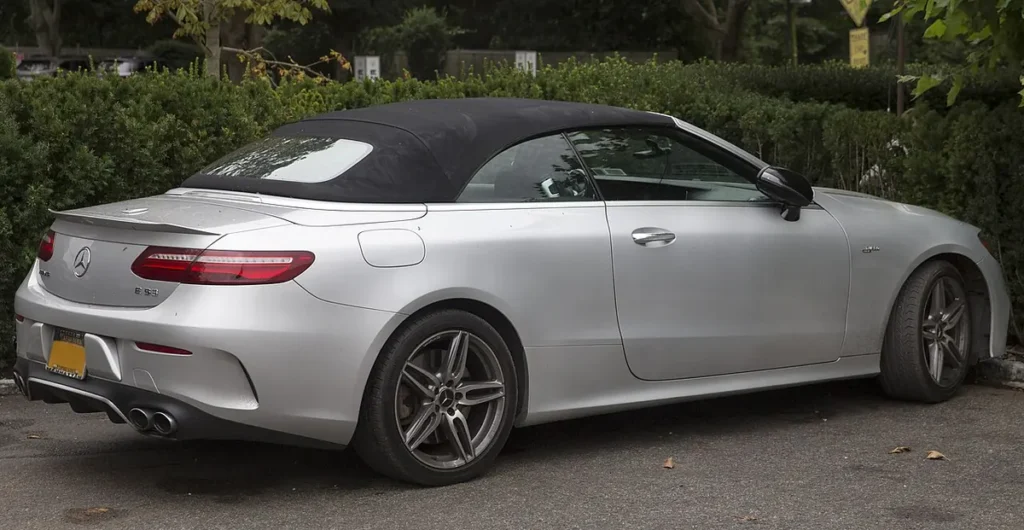
W214 E 53 Hybrid Problems: What Is Known So Far
The E 53 Hybrid is too new for a failure-rate verdict. The documented items so far are the transmission harness recall (25V-865 in the US, REC-006530 in Australia) and the infotainment recall 26V-281 (reset that can blank the instrument panel display, with a software fix). No long-term reliability data for this drivetrain was found in the sources reviewed. Before buying one, ask a dealer for the high-voltage battery warranty terms in your market, the charging history and any open software updates.
The hybrid system is also different from the W213’s mild hybrid. The 120 kW electric motor is integrated into the 9-speed AMG SPEEDSHIFT TCT 9G transmission, and Mercedes says up to 140 km/h (about 87 mph) is possible purely electrically (see the press release). Do not apply W213 failure patterns to it automatically, and do not assume it inherits the 48V faults without evidence. For the related coupe, see our Mercedes-AMG CLE 53 review.
Best and Worst AMG E53 Years
There is no honest “year to avoid” for a model with this much recall overlap and thin complaint data. This table shows how the available data points, and where to be careful.
| Model year | What the data shows | Verdict |
|---|---|---|
| 2019–2021 | CarChecker says early 2019–2021 cars were most affected by 48V failures; harness recall 22V-533 covers 2019–2022 | Buy with full recall, software and 48V history |
| 2022–2023 | Harness recalls 22V-533 and 24V-445, ground cable 24V-100, fuel pump recalls | Good, if all campaigns are completed |
| 2025 E 53 Hybrid (W214) | Two recalls so far (25V-865, 26V-281), no long-term data | Warranty-covered buy; too new to rank |
AMG E53 Buyer’s Checklist
- Run the VIN: Check NHTSA and Mercedes for open campaigns, especially 24V-445, 24V-100 and the fuel pump recalls.
- 48V history: Ask whether the 48V battery software was updated, whether any 48V faults were stored, and whether the battery was replaced.
- Start and idle: Check for no-start history, start-stop faults, A/C that is not cold and warning lights.
- Oil leaks: Look for oil at the bell housing, and check the oil level and consumption history.
- Air suspension: Let the car sit overnight and check ride height on each corner.
- Transmission: Test cold shifts and low-speed downshifts, and ask about fluid service.
- Software: Test MBUX, the rearview camera and driver-assist features.
- Hybrid cars: For the E 53 Hybrid, ask for charging logs, battery health data and proof the harness recall was handled.
- Warranty: A certified or extended warranty is worth considering for the 48V and air suspension components.
Frequently Asked Questions
What are the most common AMG E53 problems?
The best-documented problems are 48V mild-hybrid system faults (no start, limp mode, warnings), a series of safety recalls including the transmission wiring harness and 48V ground cable, rear crankshaft seal leaks on some engines and expensive AIRMATIC suspension repairs.
Is the Mercedes-AMG E53 reliable?
CarChecker describes the M256 six-cylinder itself as a fundamentally strong engine and says many E 53 owners report smooth ownership. Reliability depends mainly on the 48V system, completed recalls and service history. NHTSA complaint data for the E53 is limited, so there is no reliable failure rate.
Which AMG E53 years are best?
No year is clearly best. Cars from 2022–2023 benefit from earlier campaigns, but all years need a VIN check, and CarChecker says the early 2019–2021 cars were the most affected by 48V failures.
Is there a recall on the AMG E53?
Yes. NHTSA’s Part 573 reports name the AMG E 53 in 14 recalls for the 2019–2023 cars and in two more for the E 53 Hybrid. The notable ones are 22V-533 and 24V-445 (transmission harness, fire risk), 24V-100 (48V ground cable, fire risk), 23V-445 and 23V-880 (fuel pump, loss of drive power), 22V-733 (12V battery), and for the hybrid 25V-865 and 26V-281. Always check by VIN.
What is EQ Boost?
EQ Boost is Mercedes’ 48V mild-hybrid system. A starter-generator between engine and transmission adds up to 21 hp and 184 lb-ft in the US specification, and a 48V electric auxiliary compressor reduces turbo lag (Mercedes-Benz USA).
How much does a 48V battery cost to replace?
CarChecker puts it at about €800–€2,500 (about $880–$2,750) depending on dealer or independent shop, and its CLS 53 report at about €1,500–€2,200 (about $1,650–$2,400) including labor for the related CLS53. Mercedes bulletin LI54.10-P-069698 tries a software update first in most cases.
What is the difference between the E53 and E63?
The E53 uses the 3.0-liter inline-six with EQ Boost, while the E63 S used a twin-turbo V8. See our E63 S reliability guide for the V8 car.
Is the new E 53 Hybrid reliable?
It is too new to say. NHTSA’s reports name it in two recalls (25V-865 for 117 wagons and 26V-281, an infotainment software recall) and the hybrid system has no long-term track record. It has a different hybrid setup from the W213, so its history does not transfer.
How much power does the E 53 Hybrid make?
Mercedes-Benz USA lists 577 hp (604 hp with RACE START), 553 lb-ft, and an EPA electric range of 42 miles. In Europe Mercedes lists 585 PS (612 PS with RACE START) in its press release.
Where can I read more AMG reliability guides?
See our AMG reliability guide and the Common Problems hub.
The Bottom Line on AMG E53 Problems
Mercedes-AMG E53 problems are manageable if you buy on documentation. The engine has a good reputation, but the 48V system, the many recalls and the air suspension are where costs and risk sit. Run the VIN, ask for 48V and recall records, and treat the W214 E 53 Hybrid as promising but unproven.
Sources and notes: Recall data comes from NHTSA’s public recall database and the Part 573 safety recall reports linked in the recall table, checked on 19 November 2026 (the older version of this article missed recall 26V-281 and carried wrong recall details, now corrected). Mercedes technical bulletins LI54.10-P-069698, LI03.20-P-078715, LI20.10-P-075374 and LI18.00-P-073137 and emission service campaign 2025050001 are filed with NHTSA and linked above. Specifications come from Mercedes-Benz USA, the Mercedes-Benz press release and the EPA’s fueleconomy.gov, all linked. Cost ranges and failure descriptions marked as independent come from the CarChecker reports for the E 53 W213 and the CLS 53 and are indicative, not Mercedes figures. Euro amounts are converted at the ECB reference rate of 19 November 2026 (1 euro = 1.0992 US dollars) and rounded, so dollar figures are approximate. The Australian recall is REC-006530. This article is for general information. Confirm any diagnosis or recall status for a specific vehicle with a Mercedes-Benz dealer or qualified specialist.