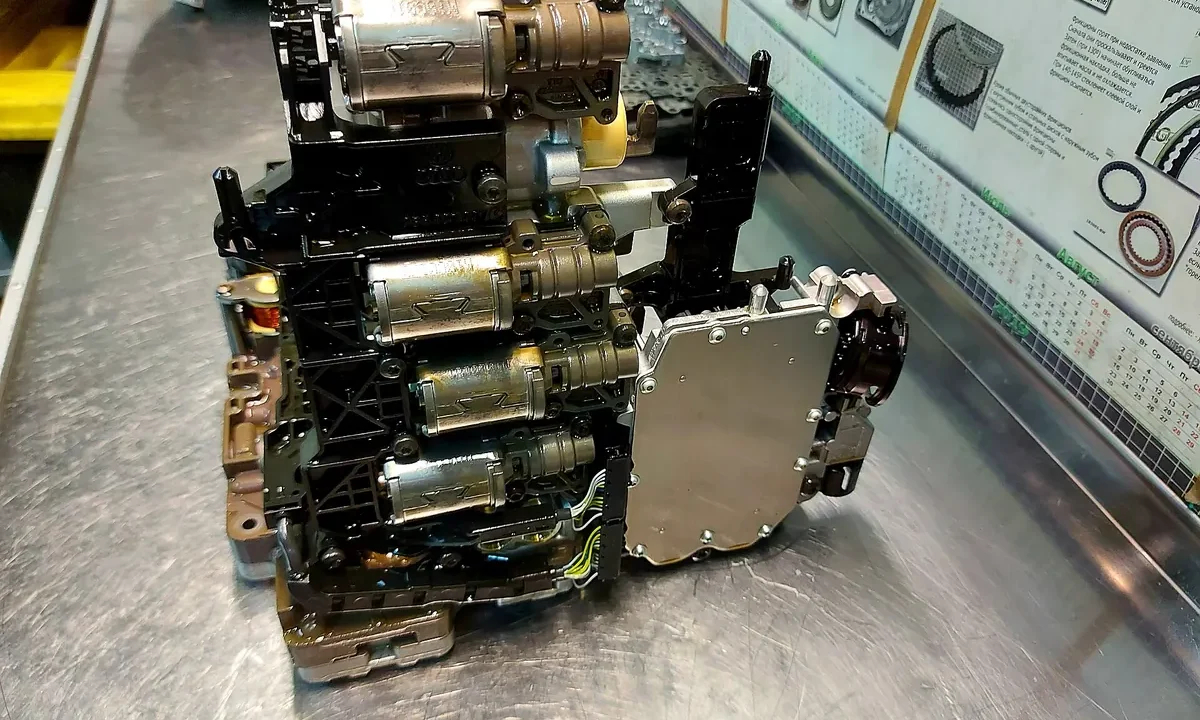
Audi S tronic problems almost always come back to one part: the mechatronic unit, the combined electronic control module and hydraulic valve body that operates the gearbox’s two clutches. S tronic is Audi’s name for its dual-clutch transmissions, and Audi’s own technology portal describes the mechatronic module as the block that holds the electronics and hydraulic controls. When it fails, owners see a “Gearbox malfunction” warning, harsh or missing gears, lost reverse or limp mode. Most other faults involve clutch slip, sensors or software, and many can be repaired without replacing the whole transmission.
This guide explains which S tronic your Audi has, the common symptoms and fault codes, what Audi’s own technical service bulletins (TSBs) say, typical repair costs in US dollars, official fluid intervals, recalls, the model years with the most complaints and a used-buyer checklist. It draws on Audi of America bulletins and maintenance schedules filed with NHTSA, NHTSA recall and complaint data, and independent specialists, and it says where the evidence is thin.
Short answer: The S tronic is a fast, efficient gearbox, but it needs its fluid changed on time and it can suffer mechatronic faults. The best-documented weak spot is the circuit board in the seven-speed DL501, which Audi TSB 2030477 addresses on the 2010–2013 S4 and S5 and the 2013 RS 5, S6 and S7. Newer DL382 gearboxes in the A4, A5 and Q5 have their own bulletins for parking-lock and speed-sensor faults. Check service records, scan the transmission control module and budget for a mechatronic repair on high-mileage cars.
This guide is part of the AMGRSM Audi RS problems and reliability hub. Owners of a transverse five-cylinder car should also read the Audi RS3 problems guide, which covers the DQ500 gearbox in detail.
Audi S tronic Problems at a Glance
The table summarizes the S tronic transmission problems that Audi bulletins, NHTSA complaints and independent specialists describe most often. Costs are covered in detail further down.
| Problem | Typical symptoms | Gearboxes most linked | Usual fix |
|---|---|---|---|
| Mechatronic circuit board failure | “Gearbox malfunction” message, judder, harsh shifts, limp mode | DL501 (2010–2013 S4/S5; 2013 RS 5, S6, S7) | Revised circuit board kit per TSB 2030477, or a new mechatronic unit |
| Valve, solenoid or pressure faults | Lost odd or even gears, no reverse, gearbox stuck in one gear | DL501, DL382, DQ500 | Diagnosis with Audi software; valve body or mechatronic repair |
| Clutch slip or overheating | Flare between shifts, shudder pulling away, torque limitation | All wet-clutch S tronic units | Fluid service and adaptation; clutch pack replacement if worn |
| Parking lock fault (P17F900) | Gearbox malfunction warning | DL382 (2021–2022) | Pressure filter bolts, valve body or parking lock solenoid per TSB 2064312 |
| Input speed sensor faults | No up- or downshifts, limp mode, “Reverse gear unavailable” | DL382 built June 15, 2020 to April 30, 2023 | Transmission control unit replacement per TSB 2067653 |
| Idle rattle in Park | Rattle at idle that quietens in D or R | DL382 | Often normal; check ignition, injection and flywheel per TSB 2072713 |
Which S tronic Does Your Audi Have?
Audi uses the S tronic name for several different dual-clutch gearboxes. Audi explains that longitudinal engines get a seven-speed design with all gears on one output shaft, while transverse engines use compact six- or seven-speed versions. The internal codes matter, because parts, bulletins and fault codes differ. Audi first used Volkswagen’s DSG name before renaming the gearbox S tronic, according to Wikipedia, so searches for Audi DSG problems usually concern the same gearboxes.
| Gearbox (code) | Layout | Examples in the US lineup | Sources |
|---|---|---|---|
| DL501 (0B5), 7-speed, wet clutches | Longitudinal | S4 (2010–2016), S5, RS 5 (2013–2015), S6 and S7 (2013–2018) | TSB 2076084, FCP Euro fitment, Wikipedia |
| DL382, 7-speed, wet clutches | Longitudinal | A4 (2017 on), A5 and Q5 (2018 on), A6 and A7 (2019 on) | TSB 2076084, TSB 2072713 |
| DQ500 (0BH), 7-speed, wet clutches | Transverse | RS 3 and TT RS | VAG Pulse, Wikipedia |
| DQ250 (0D9), 6-speed, wet clutches | Transverse | 2015 A3 2.0 TFSI quattro and earlier transverse A3 and TT models | Audi 2015 A3 training guide, Wikipedia |
| DQ381 (0GC), 7-speed, wet clutches | Transverse | A3 and S3 (8Y generation) | Audi A3 (8Y) training guide, Wikipedia |
| 0BZ, 7-speed dual clutch | Mid-engine | R8 (second generation) | Audi R8 gearbox training guide |
The easiest way to confirm the gearbox in a specific car is the build sticker or a dealer VIN lookup. Not every automatic Audi is an S tronic, so do not assume a bulletin applies until the gearbox code matches.
Common S tronic Gearbox Problems and Symptoms
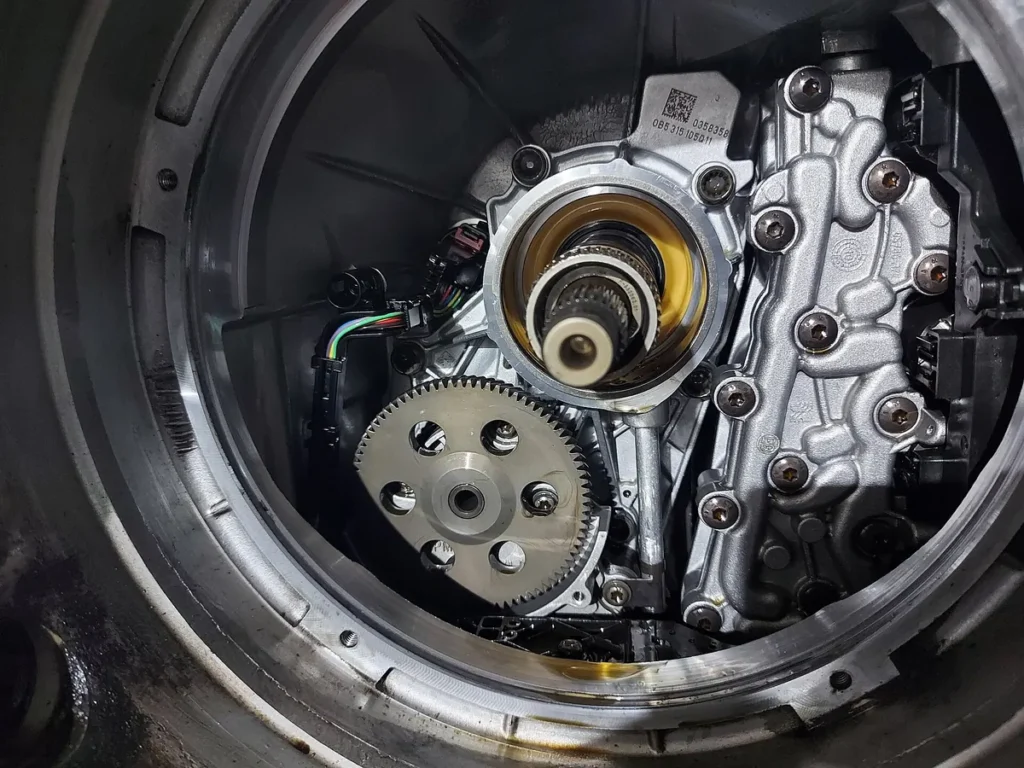
The gearbox has two clutches. According to Audi, the outer K1 clutch drives gears 1, 3, 5 and 7, while the inner K2 clutch drives gears 2, 4 and 6 plus reverse, and the next gear is preselected on the idle half. That explains a classic S tronic symptom: when one half fails, the car loses only the odd gears, or only the even gears and reverse.
Mechatronic circuit board failure (DL501)
This is the best-documented S tronic fault in the US. Audi TSB 2030477 (revision 6, November 4, 2013) covers 2010–2013 S4 and S5 and 2013 RS 5, S6 and S7 models with the seven-speed S tronic. It lists the message “Gearbox malfunction: you can continue driving” with codes such as P17D8, P0726, P174A, P174B, P174C, P174E, P174F, P179C, P179D and P1740. Audi’s technical background says poor internal contact on the circuit board leads to faults and that oil additives can make the plastic circuit plates delaminate. The production fix was an improved circuit board, and the repair is a circuit board replacement inside the existing mechatronic unit, provided the symptom codes match.
NHTSA owner complaints describe the same pattern. Reports for the 2010 S4 include the “Gearbox malfunction” message at highway speed, sudden loss of drive, and a car that lost 2nd, 4th, 6th and reverse until it was restarted.
Valve, solenoid and pressure faults
The mechatronic unit holds the pressure valves and solenoids that apply each clutch and move the shift forks. Faults here can cause harsh engagement, a gearbox stuck in one gear, missing reverse or limp mode. Independent specialists such as Trescothick Automotive stress that these symptoms do not automatically prove a failed mechatronic unit, because clutch, wiring, hydraulic and mechanical faults can look the same. Proper diagnosis with Audi’s ODIS software, which reads symptom codes and clutch adaptation data, is essential before parts are ordered.
Clutch slip, judder and overheating
All the S tronic units in this guide use wet multi-plate clutches running in fluid. Worn clutches or degraded fluid can cause shudder when pulling away, a flare in revs between shifts or torque limitation. Audi’s TSB 2076084 lists clutch slip codes for each family, for example P17CF00 and P17D000 (“Clutch 1/2 slip too high”) on the DL501 and P081100 and P081E00 (“excessive clutch slippage”) on the DL382 and DQ500. Codes P17D8 and P1740 relate to clutch temperature.
DL382 parking lock and speed sensor faults
The newer DL382 gearbox has its own bulletins. TSB 2064312 covers 2021–2022 S tronic models with a “Gearbox malfunction” warning and code P17F900 (parking lock mechanical malfunction); its earlier revision lists the DL382 in the A4, A5, A6, A7 and Q5. The fix depends on what the technician finds: loose pressure filter bolts, broken bolts that require a new valve body, or a new parking lock solenoid (N486).
TSB 2067653 covers DL382 cars whose gearbox was built between June 15, 2020 and April 30, 2023. Symptoms include “Gearbox malfunction”, no up- or downshifts, limp mode, “Reverse gear unavailable” and “You can continue driving (functions limited)”. Intermittent input speed sensor codes P071800 or P276800 lead to a new transmission control unit, and Audi notes an improved control unit was introduced in production. The bulletin’s warranty section refers to coverage up to 48 months or 50,000 miles, which matches Audi’s new vehicle limited warranty.

Idle rattle that may be normal
Some owners hear a rattle at idle in Park. TSB 2072713 for DL382 cars says the noise is caused by rotational irregularities in the engine, often reduces in D or R, and points technicians to misfires or uneven idle first. If no irregularity is found, the bulletin says the dual-mass flywheel is working as intended. This is worth knowing before paying for a flywheel that is not faulty.
S tronic Fault Codes Explained
These codes and descriptions come directly from the Audi bulletins linked in each row. Audi’s TSBs also require a matching symptom code, so a code alone does not prove that a bulletin applies.
| Code | Audi description | Gearbox | Bulletin |
|---|---|---|---|
| P17D8 | Torque limitation because of clutch temperature | DL501 | 2030477 |
| P0726 | RPM signal of engine control unit, implausible signal | DL501 | 2030477 |
| P174A / P174E | Valve 3 in sub-gearbox 1 / 2, electric fault | DL501 | 2030477 |
| P174B / P174F | Valve 4 in sub-gearbox 1 / 2, electric fault | DL501 | 2030477 |
| P179C | Main pressure valve, electric fault | DL501 | 2030477 |
| P179D | Coolant oil valve electrical fault | DL501 | 2030477 |
| P1740 | Clutch temperature monitoring | DL501 | 2030477 |
| P17CF00 / P17D000 | Clutch 1 / 2 slip too high | DL501 | 2076084 |
| P081100 / P081E00 | Clutch 1 / 2 excessive clutch slippage | DL382, DQ500 | 2076084 |
| P187A00–P187D00 | Gear actuator 1–4, engagement process not successful | DL382 | 2076084 |
| P17F900 | Parking lock mechanical malfunction | DL382 | 2064312 |
| P071800 / P276800 | Input/turbine speed sensor A / B circuit intermittent | DL382 | 2067653 |
TSB 2076084 also deals with a narrower issue: on some DL501, DL382 and DQ500 cars, a clutch-slip or gear-actuator code stays in the permanent (Mode $0A) memory after the repair and can fail an emissions inspection. A software update clears it. The bulletin says only the flashing procedure may be billed under warranty, and that the underlying mechanical fault is not covered by the bulletin or by Audi’s U750 warranty extension program.
What “Gearbox Malfunction: You Can Continue Driving” Means
This message means the transmission control module has detected a fault and switched to a protective mode. In Audi’s bulletins the wording appears with DL501 circuit-board faults (TSB 2030477) and, as “You can continue driving (functions limited)”, with DL382 speed-sensor faults (TSB 2067653). The car may keep only some gears, refuse reverse or limit torque.
- Drive gently and briefly: the wording allows you to continue, but NHTSA complaints describe sudden loss of drive at speed, so head to a shop rather than starting a long trip.
- Do not just clear the code: a restart may bring the gears back for a while, but the stored code and symptom code are what the technician needs.
- Get a full scan: ask for the transmission module’s codes with symptom codes, fluid condition and clutch adaptation values.
- Check bulletins and recalls: ask the dealer whether a TSB applies to the VIN and check open recalls on the NHTSA recall site.
S tronic Repair Costs
Repair prices vary by gearbox, region and shop. The ranges below come from US sources and should be used for comparison, not as a quote.
| Repair | Typical cost (USD) | Source |
|---|---|---|
| DL501 mechatronic repair kit (parts only) | About $800; a genuine Audi kit with fluid and filters is listed at $1,166.11 | Engine Patrol; FCP Euro (checked November 2026) |
| Mechatronic unit replacement | About $1,500–$3,500 | Engine Patrol ($2,000–$3,000); DART Auto ($1,500–$3,500, a range that also covers fluid service) |
| Replacement transmission | Over $5,000, and can exceed $8,000 | Engine Patrol; DART Auto |
The cheapest fix is not always the right one. A circuit board kit only makes sense when the codes and symptom codes match the bulletin. If metal debris or worn clutches are found, a mechatronic unit alone may not solve the problem. DART Auto warns that driving on with a failing unit can turn a mechatronic repair into a much larger rebuild. FCP Euro also says a complete new mechatronic unit has to be reprogrammed at an Audi dealer, one reason it suggests trying the kit first when the codes match.
Audi S tronic Fluid Change Interval
Fluid is the cheapest protection the gearbox gets. Audi of America’s maintenance schedules, filed with NHTSA, set these intervals:
- 2017 model year: the 2017 schedule calls for a DSG/S tronic ATF change with a new filter element every 40,000 miles on most models, ATF only on the RS 3 and some others, and an 80,000-mile interval for the A3 2.0L B-Cycle and S3.
- 2022 model year: the 2022 schedule lists an S tronic fluid change every 40,000 miles for the A4, A4 allroad, A5, A6, A7, Q5 and TT RS, fluid and filter every 40,000 miles for the R8, and every 80,000 miles for the A3 40 TFSI, S3, TT and TTS.
Intervals differ by model year and gearbox, so check the schedule for the exact car with Audi’s online maintenance tool.
Recalls That Name S tronic-Equipped Audis
Most S tronic faults are handled through bulletins, not recalls. NHTSA lists two gearbox recalls that name specific S tronic Audis:
| Recall | Models named in the official documents | Issue | Remedy |
|---|---|---|---|
| 09V-333 | 2009–2010 Audi A3, TT and TT Roadster with an S tronic Direct-Shift Gearbox (plus VW models) | A poorly crimped gearbox temperature sensor connector could falsely detect high oil temperature and make the transmission abruptly shift to neutral | Transmission control module software update |
| 22V-225 | 2021–2022 Audi R8 Coupe and 2022 R8 Spyder (8 vehicles) | Gearbox may have been filled with too little oil, causing clutch slip and loss of drive; on track, oil foam could exit the breather and create a fire risk | Inspect and correct the gearbox oil level |
TSBs such as 2030477, 2064312 and 2067653 are not recalls, so they will not appear in a VIN recall search. Ask an Audi dealer about bulletins for the VIN as well.
S tronic Years to Avoid and Safer Bets
NHTSA complaint data points clearly at the early DL501 cars. As of November 2026, NHTSA lists 60 complaints for the 2010 S4, 42 of them filed under power train, 26 for 2011 (22 power train) and 22 for 2012 (14 power train). The numbers drop for the 2013 S4 (9 of 33) and 2014 (3 of 17). The S5 pattern is less tidy: NHTSA lists 10 power train complaints for both the 2010 S5 (of 20) and the 2013 S5 (of 16). These are unverified owner reports and not every power train complaint concerns the gearbox, but the trend matches the bulletin history.

| Car | Verdict | Why |
|---|---|---|
| 2010–2013 S4 / S5 with S tronic | Highest risk | Inside TSB 2030477; most S4 complaints are 2010–2012 and S5 complaints peak in 2010 and 2013; check whether the revised circuit board or a new mechatronic unit was fitted |
| 2013 RS 5, S6, S7 | Verify records | Also named in TSB 2030477 |
| 2014–2016 S4 and later DL501 cars | Better, not immune | Far fewer S4 complaints; age, mileage and fluid history now matter most |
| DL382 cars (A4, A5, Q5, A6, A7) | Check bulletins | Gearboxes built June 15, 2020 to April 30, 2023 fall under TSB 2067653; 2021–2022 cars have the P17F900 bulletin |
| RS 3 / TT RS (DQ500) | Service-dependent | Robust hardware but needs fluid on schedule; see the RS3 guide linked above |
For the V8 RS 5 with the DL501, see the Audi RS5 problems guide. For how another brand’s automatic compares, read the Mercedes 7G-Tronic problems guide, and for the mid-engine car, the Audi R8 V10 guide.
Used Audi S tronic Buyer’s Checklist
- Identify the gearbox: confirm whether the car has an S tronic and which one, using the build sticker or a dealer VIN check.
- Service history: look for S tronic fluid (and filter, where specified) changes at Audi’s interval, with receipts.
- Mechatronic history: on 2010–2013 DL501 cars, ask whether the TSB 2030477 circuit board or a new mechatronic unit was fitted.
- Cold and hot test drive: drive for at least 20 minutes, including stop-and-go traffic, and check for judder, clunks, flares or delayed engagement in D and R.
- Every gear: use manual mode to select each forward gear, then test reverse; 2nd, 4th, 6th and reverse share one clutch, so a fault there shows up as a group.
- Scan the transmission: have a specialist read stored codes and clutch adaptation values, not just the engine module.
- Tuning: ask about engine or gearbox software tunes. Audi’s TSB 2076084 tells dealers to note third-party modifications and says Audi will not accept liability for damage linked to them during software updates.
- Recalls and bulletins: check the VIN on the NHTSA recall site and ask the dealer about open bulletins.
More guides: For other models, engines and fault codes, browse the Common Problems & Reliability Guides hub for BMW, Mercedes-AMG and Audi.
Frequently Asked Questions
What are the most common Audi S tronic problems?
The most common problems are mechatronic unit faults (especially the circuit board in the 2010–2013 DL501), valve and pressure faults that cause lost gears or no reverse, clutch slip or judder, and, on newer DL382 gearboxes, parking lock and speed sensor faults covered by Audi bulletins.
Is the Audi S tronic reliable?
It can be. Most documented trouble centers on the mechatronic unit rather than the gears themselves, and Audi sets fixed fluid intervals for a reason. NHTSA complaints are heavily concentrated in the 2010–2012 S4, while later cars show far fewer reports. A documented fluid history and a clean transmission scan are the best signs.
What does “Gearbox malfunction: you can continue driving” mean on an Audi?
It means the transmission control module has stored a fault and is running in a protective mode. Audi links the message to DL501 circuit board faults in TSB 2030477 and, with “functions limited”, to DL382 speed sensor faults in TSB 2067653. Drive gently to a specialist and have the codes read.
How much does an Audi mechatronic unit replacement cost?
US sources put a mechatronic unit replacement at roughly $1,500–$3,500 (Engine Patrol estimates $2,000–$3,000 and DART Auto $1,500–$3,500). On qualifying DL501 cars, a circuit board kit costs about $800 to $1,166 in parts. A replacement transmission is over $5,000 and can exceed $8,000, per the same sources.
How often should S tronic fluid be changed?
Audi’s schedules call for every 40,000 miles on most longitudinal S tronic models such as the A4, A5, A6, A7 and Q5, and on the TT RS, and every 80,000 miles on the A3 and S3, per the 2022 maintenance schedule. Check the exact car with Audi’s maintenance tool.
Can an S tronic fault be fixed without replacing the gearbox?
Is there a recall on the Audi S tronic?
Which Audi S tronic years are best avoided?
The 2010–2013 S4 and S5 with the DL501 gearbox carry the most risk: Audi TSB 2030477 covers their circuit board issue, and NHTSA complaints peak for the 2010–2012 S4 and the 2010 and 2013 S5. Buy one only with proof that the mechatronic repair was done. On DL382 cars, check whether TSB 2067653 or 2064312 applies.
The Bottom Line on Audi S tronic Problems
Most Audi S tronic problems are known, specific and repairable. The early DL501 in the 2010–2013 S4 and S5 has the clearest history, thanks to its circuit board bulletin and complaint record, while newer DL382 cars have narrower bulletins for parking-lock and speed-sensor faults. Change the fluid on schedule, scan the transmission before buying, use a specialist with Audi diagnostic software, and treat a “Gearbox malfunction” warning as a reason to stop for diagnosis, not as a sign the gearbox is finished.
Sources and notes: Bulletins and maintenance schedules are Audi of America documents filed with NHTSA and linked above: TSBs 2030477, 2064312, 2067653, 2072713 and 2076084, and the 2017 and 2022 maintenance schedules. Recall details come from NHTSA’s records for 09V-333 and 22V-225, and complaint counts from NHTSA’s complaint database, checked on November 20, 2026. Gearbox codes come from Audi training documents, the Audi Technology Portal and Wikipedia. Cost ranges come from Engine Patrol, DART Auto and FCP Euro, not from Audi, and may change. This article is for general information. Confirm any diagnosis, bulletin or recall status for a specific vehicle with an Audi dealer or a qualified specialist.