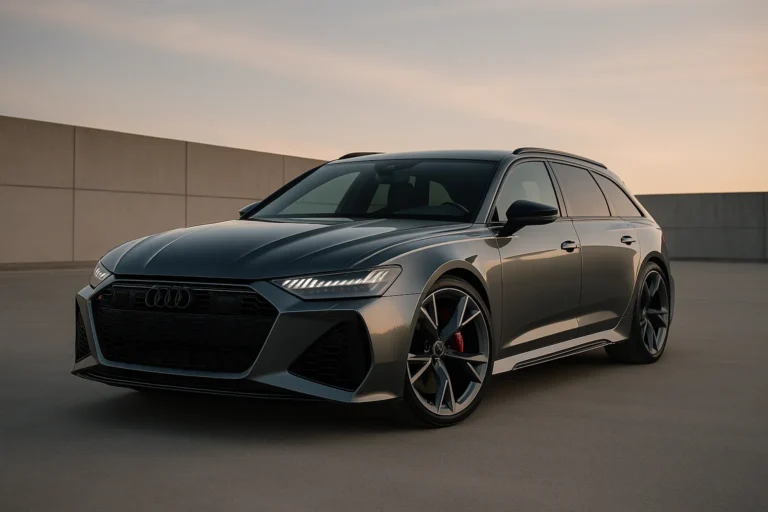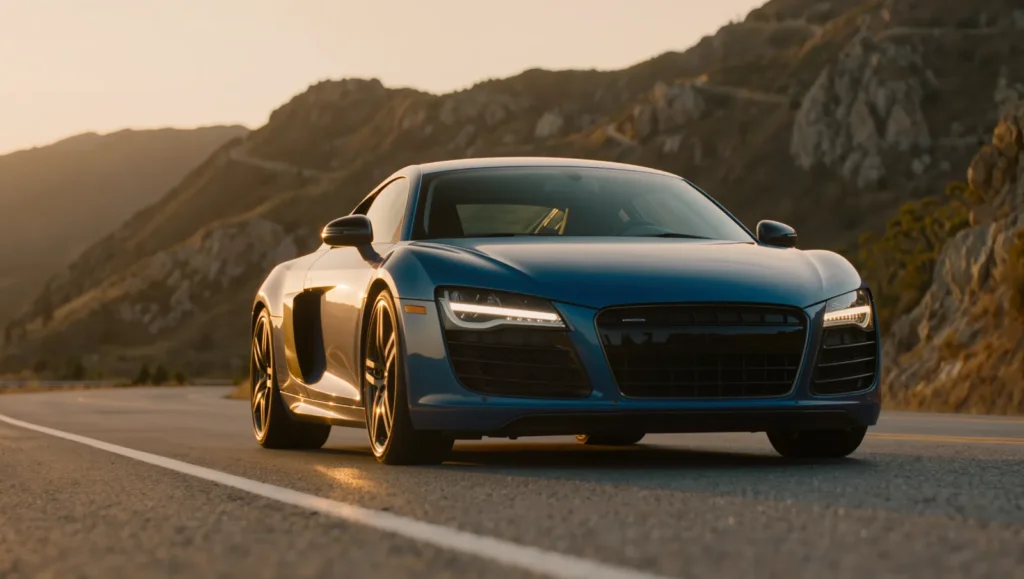
The Audi R8 V10 is the car that turned Audi from a maker of fast, sensible quattro sedans into a builder of genuine mid-engine supercars, and it bowed out with something modern performance cars almost never offer anymore: a large, high-revving, naturally aspirated engine with no turbochargers and no hybrid assistance. When production ended at the Böllinger Höfe facility near Neckarsulm in early 2024, it closed a chapter that had run since 2006 and spanned two generations of coupes and Spyders.
In this guide we look at why the 5.2-liter V10 matters, how the two generations differ, what the key versions actually deliver on paper, and what buyers should know before shopping for one on the used market. Every figure below is drawn from Audi data, published road tests and widely reported production records. Where reliable numbers are not available, we describe things qualitatively rather than guess.
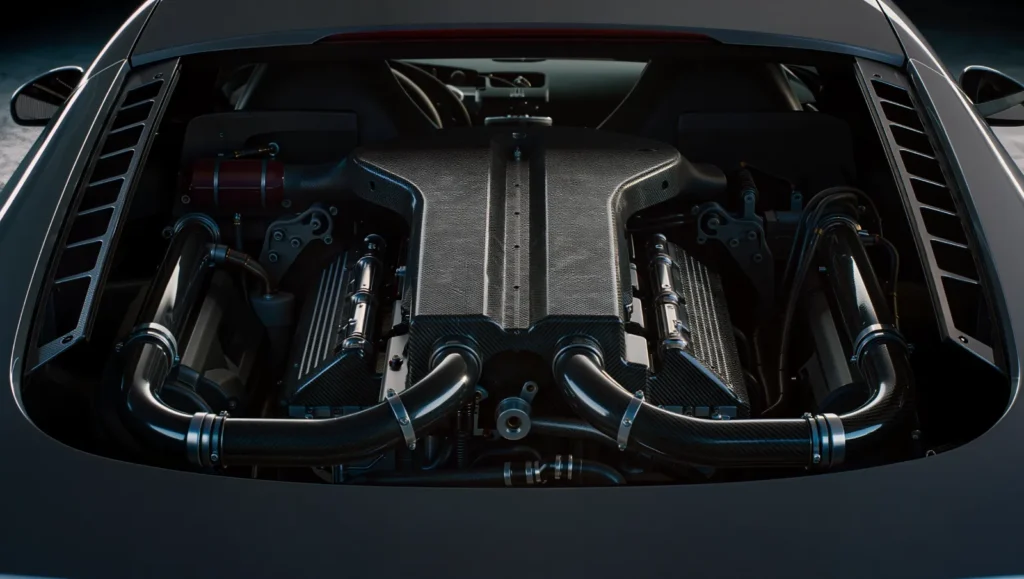
Table of Contents
- Why the Audi R8 V10 Matters
- The Last of Its Kind at Audi
- The 5.2 FSI V10 Engine Explained
- First-Generation Engine
- Second-Generation Engine
- Audi R8 V10 Generations and Key Versions
- First Generation (2007-2015)
- Second Generation (US Model Years 2017-2023)
- The R8 GT RWD: A Fitting Farewell
- Driving Character: What Owners and Testers Report
- quattro Versus Rear-Wheel Drive
- Everyday Usability
- Audi R8 V10 Reliability and Ownership Costs
- Common Issues Reported by Owners
- Maintenance Expectations
- Used Audi R8 Buying Guide: Who Should Buy Which Version
- The Purist: First-Generation V10 With the Gated Manual
- The Daily Driver: Second-Generation V10 quattro
- The Enthusiast: Performance RWD or GT RWD
- Who Should Look Elsewhere
- Frequently Asked Questions
- Is the Audi R8 V10 still in production?
- Does the Audi R8 have a Lamborghini engine?
- Which Audi R8 is the best to buy used?
- Conclusion
Why the Audi R8 V10 Matters
When the R8 first arrived as a V8 coupe, it was a bold statement from a brand better known for all-weather sedans and wagons. The V10 version that followed made that statement impossible to ignore. Audi took the 5.2-liter ten-cylinder engine developed within the Volkswagen Group alongside Lamborghini, put it behind the driver, and paired it with quattro all-wheel drive and a cabin that could be used every day.
That combination of exotic hardware and everyday usability became the R8’s identity. Reviewers consistently praised the car for being something a buyer could drive to the office on Monday and take to a track day on Saturday, without the temperament traditionally associated with Italian exotics. The fact that the same basic engine and much of the underlying architecture were shared with the Lamborghini Gallardo and later the Huracán only added to its credibility.
The Last of Its Kind at Audi
Audi has made clear that its future performance flagships will be electrified. The RS lineup has already moved toward turbocharged V8s, twin-turbo V6s and fully electric e-tron GT models. That leaves the R8 as the final Audi to be powered by a naturally aspirated engine of this size, which is a major reason values of clean, well-documented examples have held up so well. If you want background on how Audi’s performance badges fit together, our explainer on what Audi RS means and which models carry it is a useful starting point.
The 5.2 FSI V10 Engine Explained
At the heart of every Audi R8 V10 is a 5.2-liter ten-cylinder engine. Unlike nearly every rival in its later years, it uses no forced induction at all. Power builds progressively as revs climb, and the engine is famous among owners and testers for its willingness to rev well past 8,000 rpm, with a sharp, metallic soundtrack that turbocharged engines struggle to replicate.
First-Generation Engine
In the first-generation R8 (internally known as Type 42), the V10 produced 525 PS, which works out to about 518 hp, and 391 lb-ft of torque. It relied on FSI direct fuel injection. The later V10 plus raised output to 550 PS, roughly 542 hp, with 398 lb-ft. The limited R8 GT pushed things further, with 560 PS (about 552 hp) at 8,000 rpm and a weight-saving program that brought curb weight down to around 1,525 kg.
Second-Generation Engine
The second-generation R8 (Type 4S), which arrived in the US for the 2017 model year, carried a revised version of the V10. Audi added port fuel injection alongside direct injection. At launch, Audi of America rated the R8 V10 at 540 hp and 398 lb-ft and the R8 V10 plus at 610 hp and 413 lb-ft, according to Audi’s US pricing announcement. After the 2020 refresh, the top US model became the V10 performance quattro, rated at 602 hp and 413 lb-ft.
Audi R8 V10 Generations and Key Versions
Understanding the R8 lineup is essential, because the name covers almost two decades of evolution. Below is a simplified overview of the versions most relevant to American buyers.
| Version | Power | Torque | Drive | Transmission |
|---|---|---|---|---|
| Gen 1 V8 4.2 FSI | 420-430 PS (approx. 414-424 hp) | 317 lb-ft | quattro AWD | 6-speed manual, R tronic, later 7-speed S tronic |
| Gen 1 V10 5.2 FSI | 525 PS (approx. 518 hp) | 391 lb-ft | quattro AWD | 6-speed manual, R tronic, later 7-speed S tronic |
| Gen 1 V10 plus | 550 PS (approx. 542 hp) | 398 lb-ft | quattro AWD | 6-speed manual or 7-speed S tronic |
| Gen 2 V10 (2017-2019) | 540 hp | 398 lb-ft | quattro AWD | 7-speed S tronic |
| Gen 2 V10 plus (2017-2019) | 610 hp | 413 lb-ft | quattro AWD | 7-speed S tronic |
| Gen 2 V10 performance quattro | 602 hp (US rating) | 413 lb-ft | quattro AWD | 7-speed S tronic |
| Gen 2 V10 performance RWD | 562 hp | 406 lb-ft | Rear-wheel drive | 7-speed S tronic |
| Gen 2 R8 GT RWD (2023) | 602 hp | 413 lb-ft | Rear-wheel drive | 7-speed S tronic |
First Generation (2007-2015)
The first-generation car is the one many enthusiasts consider the purist’s choice, largely because of its transmission options. Buyers could choose a six-speed manual with an open metal shift gate, a design shared with Lamborghini, or the R tronic, a single-clutch automated manual. With the 2012 facelift, Audi replaced R tronic with the seven-speed S tronic dual-clutch, which was considerably smoother and quicker. Audi quoted 0-100 km/h in 3.9 seconds for the V10 with the manual or R tronic, and 3.6 seconds with S tronic.
Second Generation (US Model Years 2017-2023)
The second-generation R8 dropped both the manual gearbox and, in time, the V8, becoming a V10-only, S tronic-only car. A mid-cycle refresh arrived in the US for the 2020 model year, bringing sharper styling and the V10 performance quattro name. Audi also added rear-wheel-drive versions, first as the limited V10 RWS and later as the V10 RWD and V10 performance RWD. Audi quoted 0-60 mph in about 3.1 seconds for the performance quattro coupe.
The R8 GT RWD: A Fitting Farewell
Audi chose to end the R8 story with a limited-production send-off. The R8 GT RWD, revealed in October 2022, combined the strongest version of the V10 with rear-wheel drive. Production was capped at 333 units worldwide, and according to Jalopnik’s first-drive review, 150 of those cars were allocated to the United States.
In US trim the GT was rated at 602 hp and 413 lb-ft, with a 0-60 mph time of 3.3 seconds, a top speed of 199 mph and a curb weight of about 3,516 pounds. It was priced at a little over $250,000, more than $90,000 above a base rear-drive R8. For collectors, it is the definitive final chapter of the Audi R8 V10 story.
Driving Character: What Owners and Testers Report
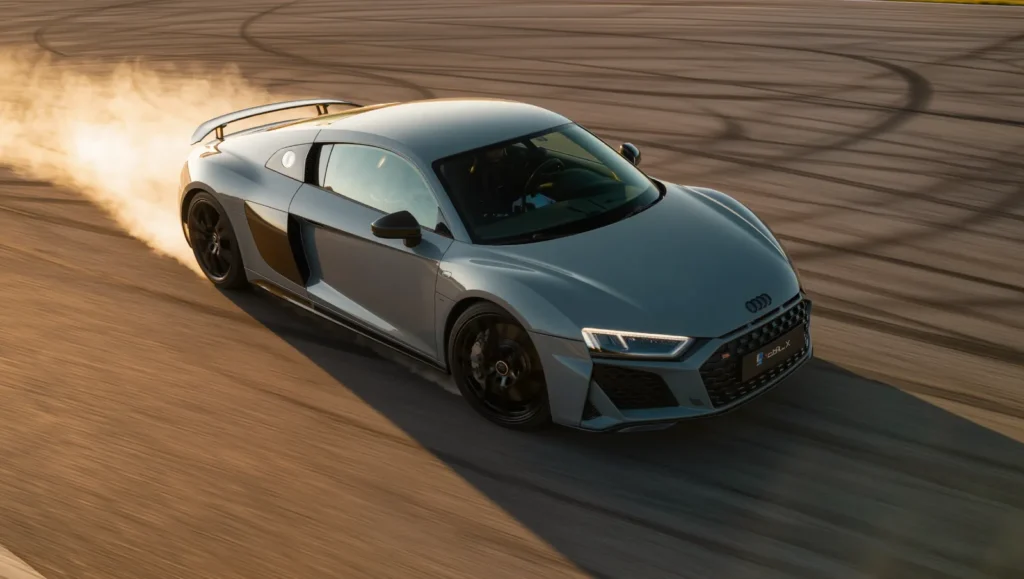
Road tests across both generations tend to highlight the same qualities. The V10 delivers its power in a linear, predictable way, which makes it easier to exploit than many turbocharged rivals with sudden torque surges. The sound is a recurring theme in reviews, with testers describing a wide-open-throttle howl that intensifies toward the redline.
quattro Versus Rear-Wheel Drive
The quattro cars offer tremendous traction and confidence in wet or cold conditions, which matters for owners in northern states who want to drive the car more than a few months per year. The rear-wheel-drive models, by contrast, are lighter and more playful, and reviewers note that they feel more like a classic sports car at the limit. Neither is objectively better; the right choice depends on climate and how the car will be used.
Everyday Usability
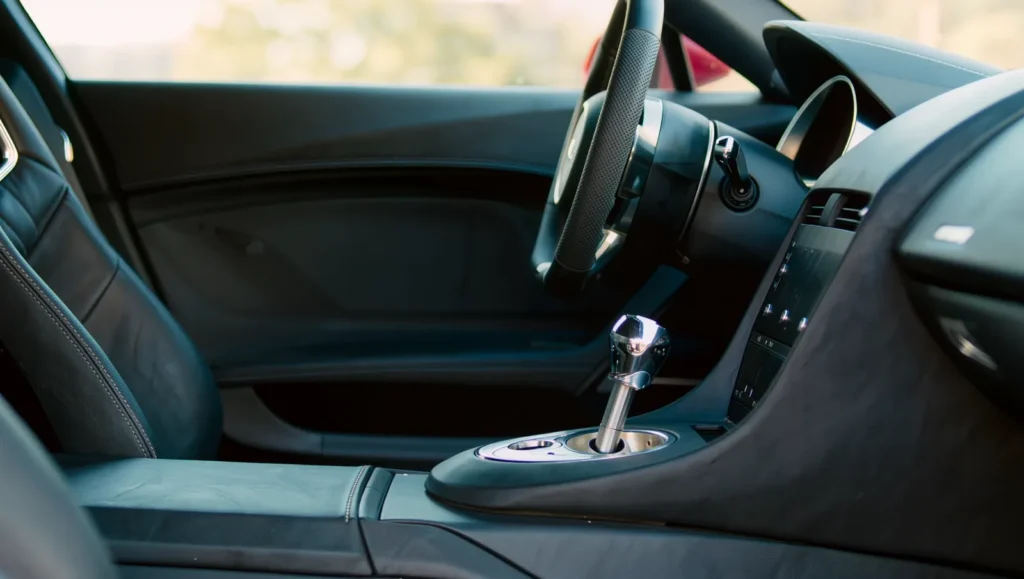
Part of the R8’s appeal has always been that it does not punish its driver. Visibility is good for a mid-engine car, the cabin follows familiar Audi ergonomics, and the second-generation car added Audi’s Virtual Cockpit digital display. Storage is limited to a small front trunk and space behind the seats, so it is not a long-distance luggage hauler, but owners commonly report using their cars for regular commuting.
Audi R8 V10 Reliability and Ownership Costs
Compared with many exotics, the Audi R8 V10 has a reputation in owner forums for relatively robust mechanicals, but it is still a supercar, and running costs reflect that. A pre-purchase inspection by a specialist familiar with the platform is strongly recommended.
Common Issues Reported by Owners
- R tronic clutch wear: Early cars with the single-clutch R tronic gearbox can wear clutches faster than expected, especially if driven heavily in traffic. Clutch condition and replacement history should be verified.
- Magnetic ride dampers: Owners have reported leaking adaptive dampers on higher-mileage cars, and replacements are expensive.
- Carbon buildup on first-generation engines: Because the first-generation V10 used direct injection only, intake valve deposits are a known topic on enthusiast forums. The second-generation engine added port injection, which addresses this concern.
- Brakes and tires: Carbon ceramic brakes were optional on many cars and are costly to replace, while performance tires wear quickly on these heavy, powerful cars.
- Electronics and convenience items: Minor issues such as sensors, infotainment glitches and Spyder roof components appear in owner reports and should be tested during inspection.
Maintenance Expectations
Routine services are more expensive than on a typical Audi, partly because of the specialized hardware and partly because fewer technicians are trained on the R8. Owners frequently recommend keeping a fund aside for unexpected repairs and choosing cars with complete dealer or specialist service records. A documented history often matters more than mileage alone.
Used Audi R8 Buying Guide: Who Should Buy Which Version
The used market offers an R8 for several different types of buyers, and choosing the right generation makes a big difference to both enjoyment and long-term value. For broader context on alternatives in the same budget range, see our roundup of the best German performance cars.
The Purist: First-Generation V10 With the Gated Manual
The Audi R8 gated manual, offered on first-generation cars with a six-speed gearbox and an open metal gate, is the version many enthusiasts consider the most collectible. Manual cars are scarce, and that scarcity is reflected in asking prices. Buyers who want the most analog experience and a likely appreciating asset should look here, with the caveat that these cars are now more than a decade old.
The Daily Driver: Second-Generation V10 quattro
For buyers who want modern technology, the seven-speed S tronic and all-weather capability, a second-generation quattro coupe is the most usable choice. It offers a better infotainment system, improved refinement and the dual-injection engine.
The Enthusiast: Performance RWD or GT RWD
Drivers who prioritize engagement will appreciate the rear-wheel-drive versions. The V10 performance RWD is the more attainable option, while the R8 GT RWD is a collector-grade car with values to match. Anyone comparing the R8 with Audi’s other performance models may also find our guide to the top Audi RS models helpful.
Who Should Look Elsewhere
Buyers on a tight maintenance budget, or who need rear seats and real luggage space, would likely be happier in an RS6 Avant or RS7. The Audi R8 V10 rewards owners who value the experience of the engine above practicality and running costs.
Frequently Asked Questions
Is the Audi R8 V10 still in production?
No. Audi ended R8 production in the first quarter of 2024, and the R8 GT RWD served as the final limited edition, closing out almost two decades of production. There is no direct successor yet, as Audi’s future performance flagships are expected to be electrified.
Does the Audi R8 have a Lamborghini engine?
The R8’s V10 was developed within the Volkswagen Group and shared with Lamborghini’s Gallardo and Huracán, with each brand applying its own tuning. The first-generation R8 also shared its chassis architecture and transmissions with the Gallardo.
Which Audi R8 is the best to buy used?
It depends on priorities. A first-generation manual V10 appeals most to collectors, a second-generation quattro is the best everyday choice, and the rear-wheel-drive models suit drivers who want the most engaging handling. In every case, service history and a specialist inspection matter most.
Conclusion
The Audi R8 V10 represents the end of an era for Audi and for the wider performance car world. It combined a naturally aspirated ten-cylinder engine, mid-engine balance and day-to-day usability in a way few rivals managed, and it never relied on turbochargers or batteries to make its point. Whether buyers choose an early Audi R8 gated manual, a modern quattro coupe or one of the final rear-drive cars, they are getting a piece of automotive history that will not be repeated. For anyone who wants to experience a high-revving V10 before such engines disappear entirely, the R8 remains one of the most compelling choices on the used market.