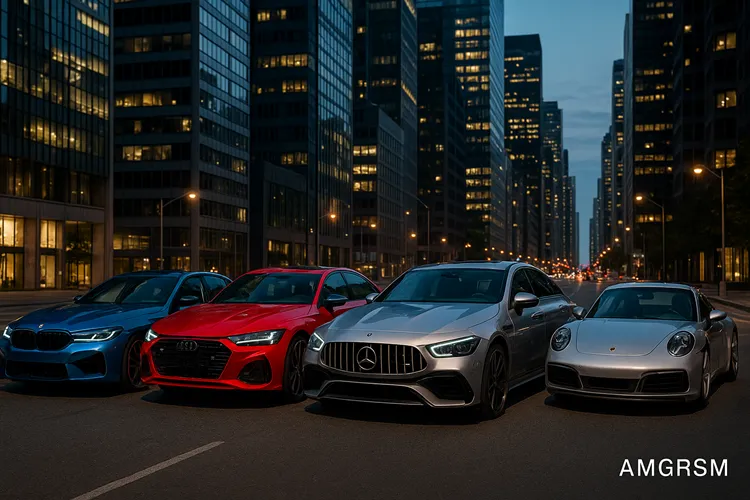
For enthusiasts, few rivalries are as exciting as the battle between the great German performance cars. BMW M, Audi Sport, Mercedes-AMG and Porsche have pushed each other for decades, and the latest generation of their cars brings together hybrid power, advanced chassis technology and record outputs. Some of these models mark the end of an era, while others show how German brands plan to keep driving excitement alive as electrification takes over.
Here are ten German performance cars that matter right now, with the key specifications, what makes each one special and why it deserves attention. If you are deciding between brands, also read our Audi RS vs BMW M comparison.
How These Cars Were Chosen
This list focuses on cars that are important for the direction of their brands, not only on the fastest numbers. Each model either introduces a major new technology, represents the best of its segment or marks the end of a significant era. Together they show the full range of German performance cars, from compact driver’s cars to luxury super sedans and high-performance SUVs.
1. BMW M5 (G90)
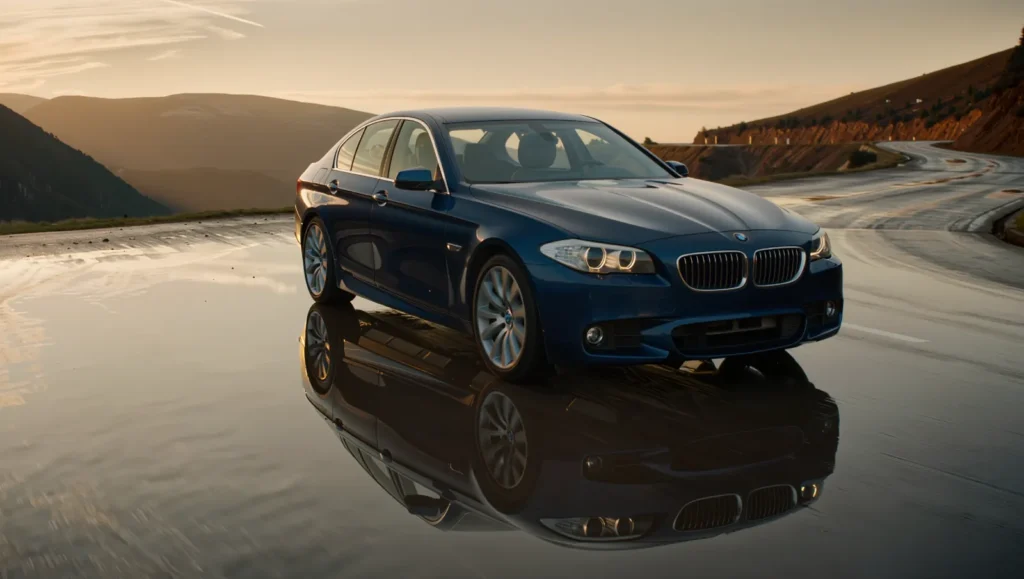
The seventh-generation BMW M5 rewrote the rulebook for the super sedan. It pairs a 4.4-liter twin-turbo V8 with an electric motor integrated into the eight-speed transmission, producing a combined 717 hp and 738 lb-ft of torque. M xDrive all-wheel drive with a rear-wheel-drive mode keeps it playful, and a plug-in battery allows short electric-only trips. The trade-off is weight, as the G90 is the heaviest M5 ever, but its performance and technology make it one of the most important BMW M cars of the decade.
A Touring wagon version is also available, and it is sold in the United States for the first time. Read our full BMW M5 G90 review.
2. Audi RS7 Performance
The Audi RS7 Performance is the fastback flagship of the Audi Sport range. Its 4.0-liter twin-turbo V8 produces 621 hp and 627 lb-ft of torque in US specification, and Quattro all-wheel drive delivers relentless traction. It reaches 60 mph in around three seconds and can reach 190 mph with the right options. Its blend of everyday comfort, technology and supercar-level speed makes it one of the best all-weather performance cars on sale. For a deeper look, read our Audi RS7 Sportback review.
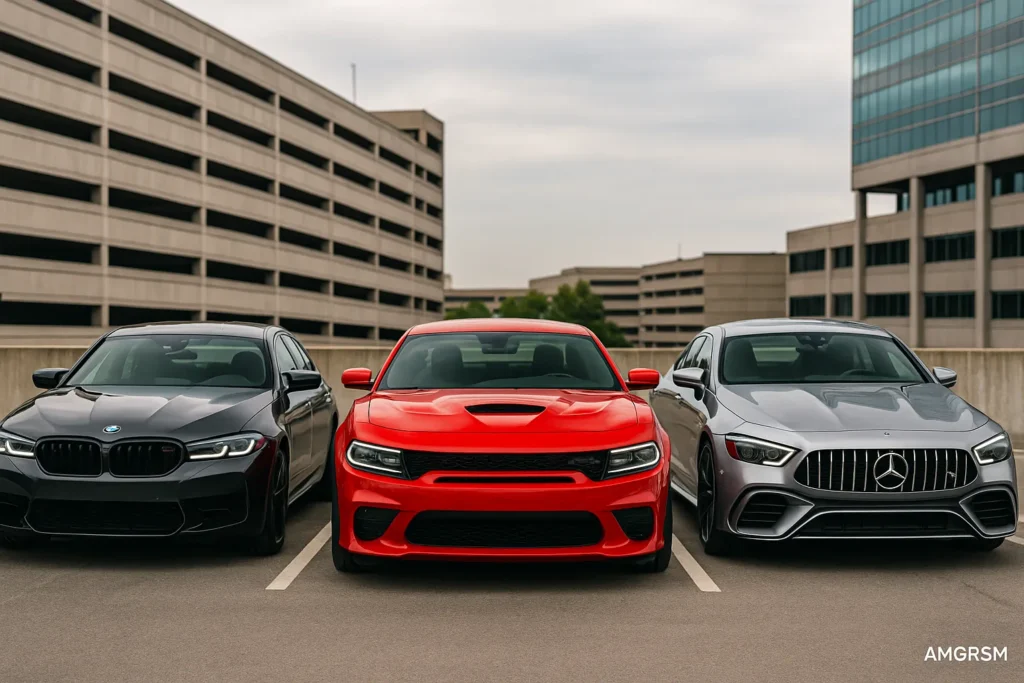
3. Mercedes-AMG GT 63 S E Performance
The four-door Mercedes-AMG GT 63 S E Performance combines AMG’s hand-built 4.0-liter twin-turbo V8 with a rear-mounted electric motor and a high-performance battery inspired by Formula 1 technology. Total output in US specification is 831 hp, making it one of the most powerful production cars Mercedes-AMG has ever built. It reaches 60 mph in well under three seconds, yet it can carry four adults in luxury. AMG has also applied the E Performance system to the new two-door AMG GT coupe.
4. Porsche 911 Carrera GTS T-Hybrid
Purists were nervous when Porsche announced a hybrid 911, but the 992.2 Carrera GTS T-Hybrid proved them wrong. It uses a new 3.6-liter flat-six with a single electric turbocharger and an electric motor inside the eight-speed PDK, producing 532 hp combined. The system is designed for performance, not electric driving, and it delivers instant response with only a modest weight increase. It shows how Porsche plans to keep the 911 relevant as emissions rules tighten.
5. BMW XM Label
The BMW XM is one of the most controversial models BMW has ever built, but there is no denying its performance. The top XM Label, previously known as the Label Red, uses a plug-in hybrid V8 producing 738 hp and 738 lb-ft of torque, making it the most powerful production BMW to date. It combines bold design, a luxurious cabin and the ability to drive on electric power alone for short distances.
6. Audi RS Q8 Performance
Audi’s answer to super SUVs like the Lamborghini Urus, with which it shares much of its engineering, is the RS Q8 Performance. Its 4.0-liter twin-turbo V8 produces 631 hp, and carbon ceramic brakes, all-wheel steering and active anti-roll bars help it handle like a much smaller car. Audi set a lap record for SUVs at the Nurburgring with a pre-production version, proving that its handling is more than marketing.
7. Mercedes-AMG C63 S E Performance
The current C63 is one of the most radical AMG models ever. It replaced the beloved V8 with a turbocharged 2.0-liter four-cylinder paired with a rear-mounted electric motor and a high-performance battery. Combined output is 671 hp and 752 lb-ft of torque, far more than the previous V8. In Europe it is also offered as a wagon. The car has received mixed reactions because of its weight and the loss of the V8 sound, but it remains a technological showcase.
8. Porsche Cayenne Turbo GT
The Cayenne Turbo GT is the most track-focused version of Porsche’s best-selling SUV. After its update, its 4.0-liter twin-turbo V8 produces 650 hp, and it features a lowered suspension, a titanium exhaust and lightweight wheels. Its blend of track-ready precision, family practicality and daily comfort makes it one of the most complete performance SUVs ever built.
9. BMW M2 CS (G87)
The G87 BMW M2 is the most compact car in the BMW M lineup and a favorite among driving enthusiasts. The new M2 CS raises output to 523 hp, removes weight with carbon fiber parts and adds a fixed rear spoiler and sharper chassis tuning. Unlike the regular M2, which still offers a six-speed manual, the CS uses the eight-speed M Steptronic automatic. It is one of the purest driver’s cars BMW currently builds.
10. Audi R8 GT
The Audi R8 GT closed an important chapter in German performance history. Limited to 333 units, it used the naturally aspirated 5.2-liter V10 with 602 hp, sent to the rear wheels through a seven-speed dual-clutch transmission. Audi ended R8 production in 2024, and with it the era of naturally aspirated Audi supercars. The R8 GT is already treated as a future classic and a tribute to high-revving, naturally aspirated engineering.
German Performance Cars Compared
| Model | Powertrain | Output |
|---|---|---|
| BMW M5 (G90) | 4.4L twin-turbo V8 plug-in hybrid | 717 hp |
| Audi RS7 Performance | 4.0L twin-turbo V8 | 621 hp |
| Mercedes-AMG GT 63 S E Performance | 4.0L twin-turbo V8 hybrid | 831 hp |
| Porsche 911 Carrera GTS T-Hybrid | 3.6L flat-six hybrid | 532 hp |
| BMW XM Label | 4.4L twin-turbo V8 plug-in hybrid | 738 hp |
| Audi RS Q8 Performance | 4.0L twin-turbo V8 | 631 hp |
| Mercedes-AMG C63 S E Performance | 2.0L turbo four-cylinder hybrid | 671 hp |
| Porsche Cayenne Turbo GT | 4.0L twin-turbo V8 | 650 hp |
| BMW M2 CS | 3.0L twin-turbo inline-six | 523 hp |
| Audi R8 GT | 5.2L naturally aspirated V10 | 602 hp |
Trends Shaping German Performance Cars
Three trends stand out. First, hybrid power is now common at the top of the range. BMW, Mercedes-AMG and Porsche all use electric motors to add performance and meet emissions rules. Second, weight is becoming a major challenge. Batteries and electric motors add hundreds of pounds, so engineers rely on active suspension, rear-wheel steering and torque vectoring to keep these cars agile. Third, the naturally aspirated engine is disappearing. The end of the Audi R8 V10 shows how rare high-revving engines without turbochargers have become, which makes the remaining examples highly desirable for collectors.
Ownership Costs to Consider
All of these German performance cars are expensive to run. Premium fuel, large high-performance tires, carbon ceramic brakes on many models and specialist servicing add up quickly. Hybrid models add battery and electric system maintenance, while older naturally aspirated cars like the R8 need careful care to protect their value. Insurance premiums are high across the board. Buyers should budget for maintenance from day one and choose cars with full service histories when shopping used. Depreciation can be steep for the luxury sedans and SUVs, which makes two- to three-year-old examples an attractive option for buyers who want the experience without the new-car price.
Which German Performance Car Is Right for You?
- Best everyday super sedan: the BMW M5 or the Audi RS7 Performance
- Best driver’s car: the BMW M2 CS or the Porsche 911 Carrera GTS
- Best performance SUV: the Porsche Cayenne Turbo GT or the Audi RS Q8 Performance
- Best future classic: the Audi R8 GT
- Most powerful: the Mercedes-AMG GT 63 S E Performance
Frequently Asked Questions
What is the fastest German performance car on this list?
The Mercedes-AMG GT 63 S E Performance has the highest output at 831 hp and is one of the quickest-accelerating cars on the list.
Are hybrid German performance cars reliable?
Hybrid systems add complexity, so long-term reliability is still being proven. Buyers should value factory warranty coverage and complete service records.
Final Thoughts
The latest German performance cars prove that the country’s automakers are not going quietly into the electric era. Instead, they are launching hybrid super sedans, brutally fast SUVs and emotional driver’s cars that blend mechanical passion with new technology. Whether you love BMW’s sharp M philosophy, Audi’s Quattro-driven speed, Porsche precision or AMG brutality, there has never been a more exciting time to follow German performance.
Current specifications and pricing are available on the official BMW USA, Audi USA, Mercedes-Benz USA and Porsche USA websites.
For a look at the ultra-luxury end of the market, read our Rolls-Royce Spectre vs Bentley Continental GT Speed showdown.