
BMW 535d reliability is a question that comes up again and again among American buyers looking at a used diesel luxury sedan, and the honest answer is best found in a car that has actually covered the miles. This report is based on a 2014 BMW F10 535d xDrive owned and driven every day by the founder of AMGRSM. The car now shows 230,000 km on the odometer, roughly 143,000 miles, and it has been through the full range of real-world ownership: daily commuting, long highway trips, routine servicing, a few electrical gremlins and one stubborn warning light that several workshops could not explain.
Rather than repeating brochure figures, this guide focuses on what living with a high-mileage 535d is really like: fuel consumption, maintenance costs, the problems that appeared, how they were diagnosed with a simple OBD tool and what a buyer in the United States should check before buying one. If you are comparing it with more performance-focused BMWs, our guide to BMW M Performance vs BMW M explains where the 5 Series diesels fit in the range.
Table of Contents
- The Car: 2014 BMW F10 535d xDrive
- BMW 535d Reliability After 230,000 km
- Oil Consumption and Engine Health
- Real-World Fuel Consumption
- Maintenance Costs and Service Schedule
- Recommended Maintenance Habits
- Problems We Have Experienced
- The Warning Light That Workshops Could Not Explain
- Battery Discharge Warnings
- ABS Sensor and Limp Mode After a Wheel Bearing Job
- Why DIY OBD Diagnostics Saves Money
- What a Basic Diagnostic Setup Can Do
- Comfort, Power and Everyday Driving
- Buying a Used BMW 535d in the United States
- Pre-Purchase Checklist
- Is the BMW 535d Reliable? Our Verdict
- Frequently Asked Questions
- Is the BMW 535d a reliable car?
- What are the most common BMW 535d problems?
- How much does it cost to service a BMW 535d?
The Car: 2014 BMW F10 535d xDrive
The F10 is the sixth-generation BMW 5 Series, built from 2010 to 2016. The 535d sits at the top of the diesel range, powered by the N57 3.0-liter inline-six with two-stage twin turbocharging and paired with the eight-speed ZF automatic transmission. Our car is a European-specification model, which matters when comparing numbers. From the 2013 facelift onward, the European 535d was rated at 313 PS and 630 Nm of torque.
The version BMW sold in the United States for the 2014 to 2016 model years used a detuned variant of the same engine family rated at 255 hp and 413 lb-ft, according to BMWBLOG, with an EPA rating of 26 mpg city, 37 mpg highway and 30 mpg combined for the xDrive model, as reported by Green Car Reports.
The basic hardware is the same on both sides of the Atlantic: the inline-six diesel, the eight-speed automatic, xDrive all-wheel drive and the comfortable, solidly built F10 body. That is why the experience of a European car remains relevant for American owners, especially when it comes to long-term durability.
| Specification | Our car (European 535d xDrive) | US-market 535d xDrive |
|---|---|---|
| Engine | 3.0L twin-turbo inline-six diesel (N57) | 3.0L twin-turbo inline-six diesel |
| Rated output | 313 PS / 630 Nm | 255 hp / 413 lb-ft |
| Transmission | 8-speed automatic | 8-speed automatic |
| Drivetrain | xDrive all-wheel drive | xDrive all-wheel drive (RWD also offered) |
| Mileage on our car | 230,000 km (about 143,000 miles) | – |
| Official fuel economy | – | 26 city / 37 highway / 30 combined mpg (EPA) |
BMW 535d Reliability After 230,000 km
The most important finding about BMW 535d reliability from this car is simple: the core of the car has been very strong. At 230,000 km the engine runs smoothly, pulls hard and does not consume oil between services. The eight-speed automatic still shifts cleanly, and the xDrive system has needed no special attention. The car feels stable and planted at highway speeds, which is exactly what a long-distance diesel sedan should deliver.
That matches what many owners report in long-running enthusiast communities: the N57 inline-six and the ZF eight-speed form one of the more durable drivetrain combinations BMW has built in the last 15 years, provided the car receives regular oil changes. Most of the issues that do appear on high-mileage examples are related to electronics, sensors and emissions equipment rather than to the engine itself, and that has been the pattern with our car as well.

Oil Consumption and Engine Health
Between oil changes, the engine does not need top-ups. For a twin-turbo diesel with this mileage, that is a good sign of healthy piston rings, turbochargers and valve stem seals. Any buyer inspecting a used 535d should ask the seller how often oil is added. A car that needs regular top-ups is one to approach with caution.
Real-World Fuel Consumption
Fuel economy is one of the strongest reasons to buy a 535d, and real-world numbers from our car confirm it. It is also linked to BMW 535d reliability, because a big, unstressed diesel that cruises at low engine speeds tends to last longer. In city driving, the car averages about 10.5 liters per 100 km, which is roughly 22 mpg.
On open roads and highways, consumption drops to between 8 and 9 liters per 100 km, or about 26 to 29 mpg. These figures come from mixed European driving with a heavier right foot than the official test procedures assume, and they are achieved with a car that offers strong performance and all-wheel drive.
The US-specification car carries an EPA highway rating of 37 mpg, and American owners on long interstate trips at steady speeds often report results in that range. Either way, few luxury sedans with this level of torque and comfort can cover long distances so economically.
Maintenance Costs and Service Schedule
When discussing BMW 535d reliability, maintenance cost is just as important as breakdowns. One of the biggest surprises for people who assume a high-mileage BMW is always expensive is how reasonable routine maintenance has been. Our car receives an oil and filter service every 10,000 km, roughly every 6,200 miles. That interval is shorter than the maximum interval that BMW’s condition-based service system allows, and it is a deliberate choice: frequent oil changes are one of the best ways to protect turbochargers and the timing chain on a diesel engine that covers long distances.
A typical oil and filter service costs around 200 euros, or roughly 220 US dollars, at an independent workshop. Prices in the United States vary by region and by whether the work is done at a dealer or an independent BMW specialist, but independent shops are usually much cheaper than dealers for the same work.
Recommended Maintenance Habits
- Change engine oil and filters every 10,000 km (about 6,000 to 7,500 miles) rather than waiting for the maximum interval
- Use the BMW-approved low-ash diesel oil specification
- Replace the battery only with the correct type and register it to the car
- Scan the car with an OBD tool whenever a warning appears, before visiting a workshop
- Keep records of every service, since they protect resale value
Problems We Have Experienced
No car reaches 230,000 km without some issues, and an honest picture of BMW 535d reliability has to include them. What matters is how serious they are and how easy they are to fix. Here are the real problems that appeared on our 535d, along with what caused them.
The Warning Light That Workshops Could Not Explain
The most frustrating problem was an engine warning light that kept returning, usually after the car had been parked for some time. The car drove normally, with no loss of power and no unusual noises. The car was taken to several workshops, but none of them could identify the cause, and the light kept coming back.
The breakthrough came with a simple step: reading the fault codes with an inexpensive OBD diagnostic tool at home. The stored codes pointed clearly to the AdBlue system, the selective catalytic reduction equipment that injects diesel exhaust fluid to reduce nitrogen oxide emissions. Once the fault was correctly identified, a specialist workshop was able to resolve it.
For American owners, the lesson is clear. On the 535d, AdBlue faults are among the most common sources of warning lights on high-mileage cars, and the typical causes include NOx sensors, the diesel exhaust fluid heater, the dosing pump or software calibrations. These systems are required by federal law and must be repaired, not removed. Owners should check whether BMW has issued service bulletins or software updates for the specific fault, and confirm whether any emissions warranty coverage still applies. The NHTSA recall database is a useful first stop when checking a VIN.
Battery Discharge Warnings
Another recurring message warned that the battery was discharging while the car was parked. The battery was replaced with a Würth AGM 95Ah unit, and the new battery was registered to the car using an app-based diagnostic tool, which is essential on modern BMWs so the charging system knows a new battery has been fitted. The investigation also showed that a USB charger left plugged in was a likely source of parasitic drain. It is a small detail, but a common one: accessories that stay powered can slowly drain the battery on cars that sit for long periods.
ABS Sensor and Limp Mode After a Wheel Bearing Job
When a rear wheel bearing was replaced, the car later displayed a drivetrain warning and went into limp mode. The cause turned out to be the ABS wheel speed sensor, which had been disturbed during the bearing replacement. Because the xDrive and stability systems rely on wheel speed data, a faulty or poorly seated sensor can trigger warnings that look far more serious than they are. Once the sensor issue was addressed, the warnings stopped.
Why DIY OBD Diagnostics Saves Money
The biggest takeaway from owning this car, and one that directly affects BMW 535d reliability costs, is the value of doing basic diagnostics at home. Modern BMWs store detailed fault codes, and affordable OBD tools and BMW-specific apps can read them in minutes. In our experience, that step saved several unnecessary workshop visits and led directly to the correct repair after multiple shops had failed.
Diagnosing a car yourself does not mean doing every repair yourself. It means arriving at the workshop knowing exactly which system has a problem. That shortens diagnostic time, reduces labor costs and makes it much harder for a shop to replace parts that do not need replacing. BMW-specific apps can also perform tasks such as battery registration and service resets, which normally require a workshop visit.
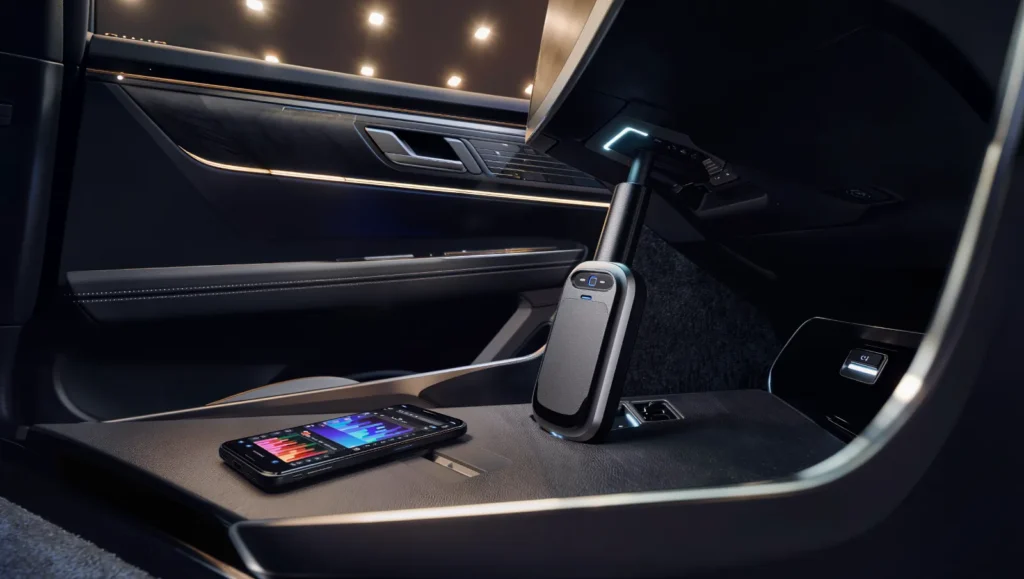
What a Basic Diagnostic Setup Can Do
- Read and clear fault codes from the engine, transmission, ABS and other modules
- Show live data such as sensor readings and temperatures
- Register a new battery to the car
- Reset service intervals after an oil change
Comfort, Power and Everyday Driving
Problems aside, the reason to own a 535d is the way it drives. The inline-six diesel delivers enormous torque from low engine speeds, which makes overtaking effortless and gives the car a relaxed, confident character at any speed. The eight-speed automatic keeps the engine in its sweet spot, and xDrive provides excellent traction in rain and snow.
The F10 also delivers the luxury and comfort expected of a large BMW sedan. The cabin is quiet at highway speeds, the seats are comfortable on long trips and the build quality has held up well over the years. For drivers who want a car that combines strong performance, all-weather capability and low fuel consumption, the 535d is a rare combination. If you prefer gasoline power and more aggressive performance, our BMW M5 Competition review covers the top of the F10 range.
Buying a Used BMW 535d in the United States
The 535d was sold in the US for the 2014 to 2016 model years, so every example on the American market is now a high-mileage or older used car. That makes a careful inspection essential, because BMW 535d reliability depends heavily on how each individual car was maintained. Based on our experience and common owner reports, these are the areas to focus on.
Pre-Purchase Checklist
- Service history: regular oil changes are the single most important factor for the engine and turbochargers.
- Fault code scan: scan all modules, not only the engine, and pay special attention to AdBlue, NOx sensor and diesel particulate filter codes.
- Emissions equipment: confirm that all factory emissions systems are present and working, since tampered cars can fail inspection and are illegal to drive on public roads in the US.
- Oil consumption: ask how often oil is added between services.
- Battery and electrical system: check for warning messages and confirm the battery is the correct type.
- Wheel bearings and ABS sensors: listen for humming at speed and check for stored ABS or drivetrain codes.
- Recalls and service campaigns: check the VIN with a BMW dealer or the NHTSA database.
For buyers who are open to other options in a similar budget, our list of fast used cars under $40K includes several gasoline alternatives.
Is the BMW 535d Reliable? Our Verdict
After 230,000 km, our assessment of BMW 535d reliability is positive. The engine, transmission and all-wheel-drive system have proven durable, the car does not use oil and routine maintenance costs have stayed reasonable. The problems that did appear, an emissions system warning, battery discharge messages and an ABS sensor fault, were real but manageable, and none of them involved major mechanical failure.
The biggest lesson is that a high-mileage 535d rewards an informed owner. Frequent oil changes, the correct battery and a simple OBD tool can prevent many expensive surprises. For American buyers who find a well-maintained example with its emissions equipment intact and a clean diagnostic scan, the 535d remains one of the most impressive combinations of comfort, torque and efficiency in a used luxury sedan.
Frequently Asked Questions
Is the BMW 535d a reliable car?
In our experience, yes. Our 2014 535d xDrive has covered 230,000 km with a healthy engine and transmission. Most issues on high-mileage cars involve sensors, electronics and emissions equipment rather than major mechanical failures.
What are the most common BMW 535d problems?
Common issues on high-mileage cars include AdBlue and NOx sensor faults, battery and charging warnings, wheel speed sensor problems and normal wear items. Regular oil changes help protect the engine and turbochargers.
How much does it cost to service a BMW 535d?
Our oil and filter service costs about 200 euros, or roughly 220 US dollars, at an independent workshop every 10,000 km. US prices vary by region and by whether the work is done at a dealer or an independent specialist.