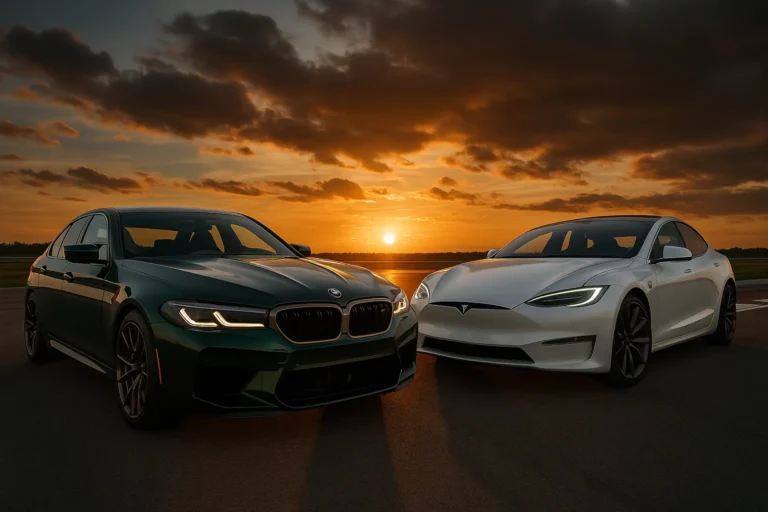
The BMW M3 is one of the most legendary nameplates in the world of high-performance cars. For nearly four decades it has combined everyday practicality with race-bred engineering, becoming the benchmark that every compact sports sedan is measured against. The current G80 generation remains true to that heritage while adding modern technology, more power and the option of all-wheel drive.
In this guide we cover the history of the BMW M3, its design, engines, performance, interior, technology, ownership costs and rivals, so you can decide whether this iconic sports sedan is right for you. For a broader look at BMW’s performance range, see our guide to the top M Performance BMW models of all time.
Table of Contents
- BMW M3 History: Four Decades of Performance
- Design: Bold and Aggressive
- BMW M3 Engine and Performance
- Performance Highlights
- How the BMW M3 Drives
- BMW M3 on Track
- Interior: Luxury Meets Technology
- Special Versions: M3 CS and M3 Touring
- Safety and Technology
- Fuel Economy and Daily Comfort
- BMW M3 vs Rivals
- Ownership Costs and Reliability
- Buying a Used BMW M3: Which Generation?
- Who Should Buy the BMW M3?
- Conclusion: Is the BMW M3 Still the Benchmark?
BMW M3 History: Four Decades of Performance
The first BMW M3 arrived in 1986 as the E30 generation. It was built so BMW could compete in touring car racing, and it used a high-revving four-cylinder engine, wide box-flared fenders and a lightweight body. It became one of the most successful touring cars in history and is now a highly sought-after classic.
The E36 M3 of the 1990s introduced inline-six power and brought the M3 to a much wider audience, including in the United States. The E46 M3, with its high-revving 3.2-liter inline-six, is still considered by many enthusiasts to be one of the best-balanced M cars ever made. The E90 and E92 generation surprised fans with a naturally aspirated V8, while the F80 moved to a twin-turbo inline-six. The current G80 continues with an even more powerful twin-turbo six and a bold new design.
Design: Bold and Aggressive
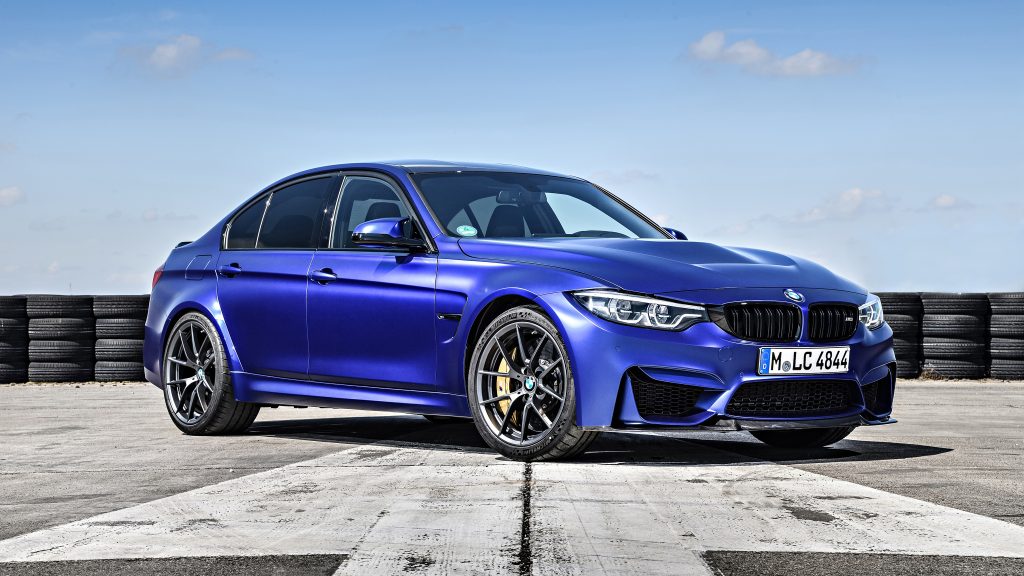
The design of the current BMW M3 is a statement of power. Every exterior detail reflects its high-performance purpose:
- Front fascia: the large vertical kidney grille is controversial, but it gives the M3 a distinctive and aggressive face.
- Aerodynamics: a sculpted hood, large air intakes and optional carbon fiber elements improve cooling and airflow.
- Wide body: flared front and rear fenders accommodate a wider track and larger tires.
- Rear design: quad exhaust outlets, a diffuser and a subtle trunk spoiler emphasize its sporting character.
- Personalization: BMW offers a wide palette of colors, including bold M shades, and many wheel designs.
BMW M3 Engine and Performance
At the heart of the BMW M3 is the S58 3.0-liter twin-turbocharged inline-six. It is offered in several configurations:
| Version | Power | Torque | Transmission | Drivetrain |
|---|---|---|---|---|
| M3 (base) | 473 hp | 406 lb-ft | 6-speed manual | Rear-wheel drive |
| M3 Competition | 503 hp | 479 lb-ft | 8-speed M Steptronic | Rear-wheel drive |
| M3 Competition xDrive (2025 update) | 523 hp | 479 lb-ft | 8-speed M Steptronic | M xDrive AWD with 2WD mode |
The availability of a six-speed manual transmission on the base car is one of the reasons enthusiasts love the M3. For buyers focused on maximum acceleration, the Competition xDrive is the quickest version, with a 0-60 mph time of around 3.4 seconds according to BMW. Limited editions such as the M3 CS have pushed output even higher.
Performance Highlights
- Adaptive M suspension: precise handling on track and comfort on the road
- M Drive modes: customizable throttle response, steering, suspension and braking settings
- M xDrive: all-wheel-drive traction with a rear-wheel-drive mode for experienced drivers
- Optional carbon ceramic brakes: for drivers who use the car on track
How the BMW M3 Drives
Road testers consistently describe the G80 M3 as fast, precise and highly capable. The twin-turbo six delivers strong torque from low engine speeds and pulls hard to its redline, while the chassis offers excellent grip and stability. The steering is quick and accurate, and the car feels balanced and confidence-inspiring when driven hard.
The rear-wheel-drive manual version offers the most traditional and involving experience, while the Competition xDrive is the best all-weather choice and the fastest in a straight line. All versions can be comfortable daily drivers thanks to adaptive dampers and configurable drive modes.
BMW M3 on Track
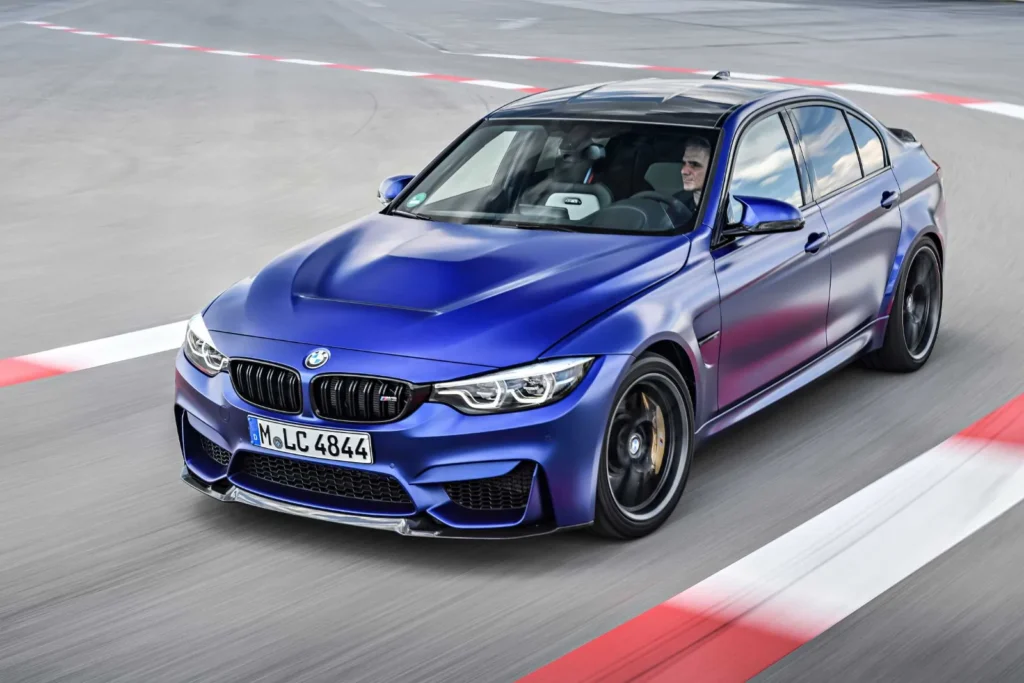
The M3 has always been closely connected to motorsport, and the current model is no exception. With the optional M Carbon ceramic brakes, M Carbon bucket seats and track-focused tires, it can lap a circuit with impressive consistency. The M Drive Professional package adds tools such as M Traction Control with adjustable intervention levels, letting drivers gradually explore the limits of the car in a controlled way.
BMW also offers performance driving courses for owners through its driving experience centers in the United States. These programs are a great way to learn how to use the car’s capabilities safely, and many owners consider them an essential part of the M3 experience.
Interior: Luxury Meets Technology
Step inside the BMW M3 and you are greeted by a driver-focused cockpit with plenty of luxury:
- M sport seats: supportive seats trimmed in premium leather, with optional M Carbon bucket seats
- Curved display: a large digital instrument cluster and central touchscreen combined in one curved panel on newer models
- Connectivity: wireless Apple CarPlay and Android Auto with BMW’s latest iDrive software
- Luxury touches: carbon fiber trim, ambient lighting and a Harman Kardon sound system
The rear seats are usable for adults, and the trunk is large enough for everyday shopping or weekend luggage, which makes the M3 one of the most practical performance cars on sale.
Special Versions: M3 CS and M3 Touring
BMW has expanded the M3 family with special versions. The M3 CS is a lighter, more powerful and more track-focused model, using extensive carbon fiber, a higher-output version of the S58 engine and standard all-wheel drive. It is built in limited numbers and appeals to collectors and serious drivers.
The M3 Touring is the first-ever M3 wagon, combining the Competition xDrive powertrain with a practical estate body. It quickly became one of the most talked-about BMWs of recent years. Unfortunately for American enthusiasts, BMW has not offered the M3 Touring in the US market, which has only increased its cult status.
Safety and Technology
The BMW M3 is packed with advanced safety and driver assistance features, including adaptive cruise control, lane-keeping assistance, blind-spot monitoring, parking assistance with a surround-view camera and an available head-up display. On track, the optional M Drive Professional package adds features such as lap timing and a drift analyzer.
Fuel Economy and Daily Comfort
For a car with more than 470 horsepower, the BMW M3 is reasonably efficient in relaxed driving, especially on the highway in its most comfortable settings. Adaptive dampers soften the ride on rough roads, and the cabin is quiet enough for long trips. That everyday comfort is a big reason many owners use the M3 as their only car.
BMW M3 vs Rivals
The M3’s main rivals are the Mercedes-AMG C 63 S E Performance and the Audi RS5. The AMG uses a plug-in hybrid four-cylinder with more total power but significantly more weight, while the Audi offers quattro all-wheel drive and a more relaxed character. For more on the AMG, read our guide to Mercedes C63 AMG reliability. Compared with these rivals, the M3 is widely seen as the most balanced driver’s car in the segment.
Ownership Costs and Reliability
The S58 engine has built a solid reputation among owners since its introduction, and the M3 is generally considered a dependable performance car when maintained on schedule. Running costs are still higher than a regular 3 Series: high-performance tires wear quickly, brakes are expensive, and insurance can be costly. Owners who plan track days should budget for extra tire and brake wear.
Buying a Used BMW M3: Which Generation?
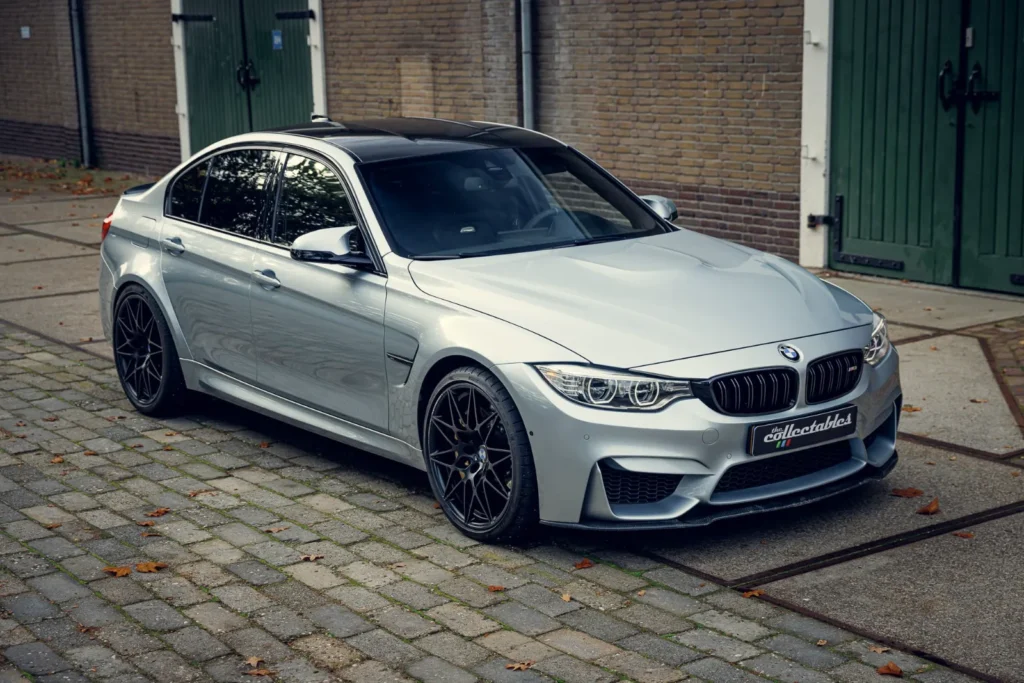
Because the M3 has such a long history, buyers on the used market have many options, each with its own character:
- E30 (1986 to 1991): a motorsport icon and now a valuable collector car, best suited to enthusiasts and collectors.
- E36 (1990s): an affordable entry into M3 ownership, with inline-six power and simple mechanics.
- E46 (2000s): loved for its high-revving inline-six and balanced chassis; values of clean examples have risen strongly.
- E90/E92 (V8 era): the only M3 with a naturally aspirated V8, prized for its sound and character.
- F80: the first turbocharged M3, offering strong performance at increasingly attractive used prices.
- G80: the most powerful and technologically advanced M3, with the option of all-wheel drive.
Whatever generation you choose, a complete service history and an inspection by a BMW M specialist are essential. Older generations have well-documented weak points that a specialist will know how to check.
Who Should Buy the BMW M3?
- Drivers who want a practical daily car with genuine track capability
- Enthusiasts who value a manual transmission option
- Families who need four doors and a usable trunk
- Buyers who want one of the most respected performance nameplates in the world
Conclusion: Is the BMW M3 Still the Benchmark?
The BMW M3 is a masterpiece of performance engineering, offering thrilling dynamics, everyday comfort and modern technology. Whether you are navigating city streets or attacking a racetrack, it delivers an experience that few competitors can match. Its blend of heritage, innovation and practicality keeps it at the top of its class.
Full specifications and current pricing are available on the official BMW USA website. If you are considering a larger BMW M car, our BMW M5 vs BMW M8 comparison is a good next read.