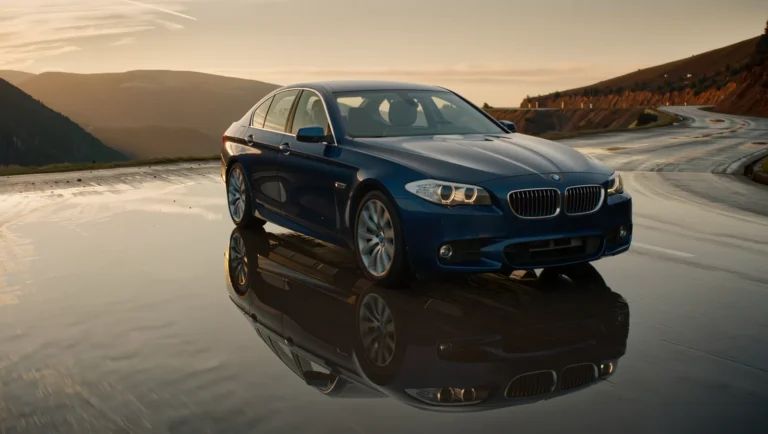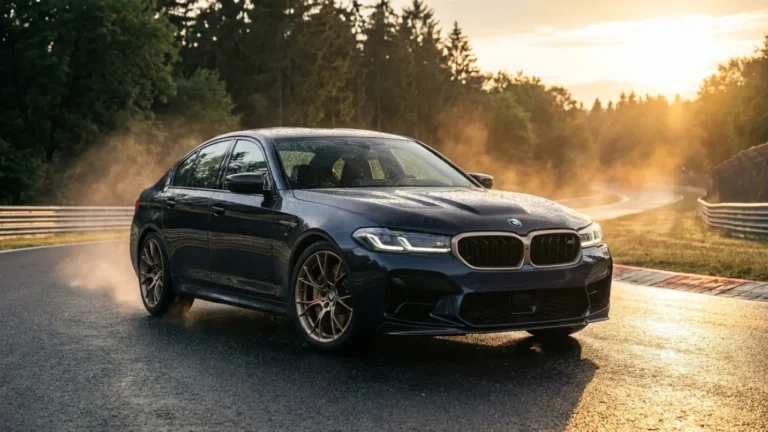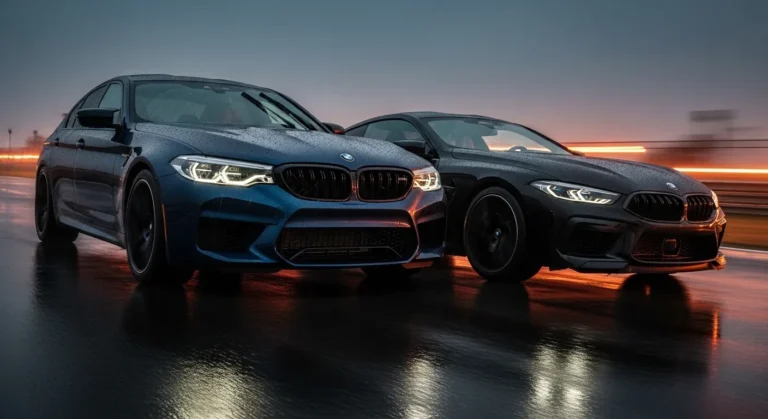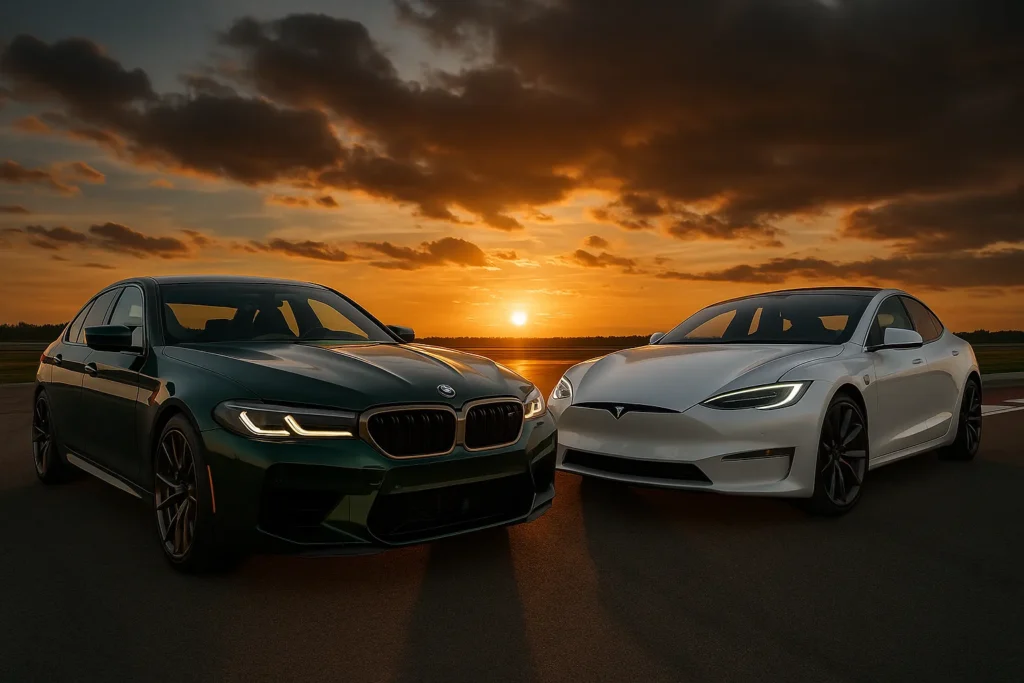
The BMW M5 CS vs Tesla Model S Plaid battle is one of the most fascinating comparisons in the performance sedan world. Both are four-door cars that can carry a family in comfort, and both can embarrass exotic supercars in a straight line. Yet they achieve that performance in completely different ways. One represents decades of German engineering, a twin-turbo V8 and the emotional connection that enthusiasts love. The other is an all-electric machine that has redefined what fast means for an everyday car.
In this comparison we look at the history, performance, driving experience, technology, practicality, running costs and long-term value of the BMW M5 CS and the Tesla Model S Plaid to help you decide which super sedan fits you best. For a deeper look at the BMW on its own, read our full BMW M5 CS review.
Table of Contents
- The Legacy of the BMW M5 CS
- The Tesla Model S Plaid: Speed Redefined
- BMW M5 CS vs Tesla Model S Plaid: Specifications
- Performance Showdown
- Track Performance
- Driving Experience: Emotion vs Efficiency
- Interior, Technology and Everyday Usability
- Safety and Driver Assistance
- Running Costs and Reliability
- Price, Depreciation and Long-Term Value
- BMW M5 CS vs Tesla Model S Plaid: Which One Should You Buy?
- Choose the BMW M5 CS If:
- Choose the Tesla Model S Plaid If:
- BMW M5 CS vs Tesla Model S Plaid: Frequently Asked Questions
- Which is faster, the BMW M5 CS or the Tesla Model S Plaid?
- Which car holds its value better?
- Final Verdict
The Legacy of the BMW M5 CS
The M5 CS is not just another BMW. It is the most powerful and most focused version of the F90 M5 generation, with 627 horsepower from a 4.4-liter twin-turbo V8. Compared with the regular M5 Competition, it is roughly 230 pounds lighter, has sharper suspension tuning and comes standard with carbon ceramic brakes. In the United States it was sold for the 2022 model year only, which makes it one of the rarest modern M cars.
The M5 CS is about heritage. It continues the philosophy that BMW’s M division established with the original E28 M5 in the 1980s: supercar performance combined with everyday usability. Slip into the carbon bucket seats, start the V8 and the car immediately feels special. The sound, the vibrations and the mechanical feedback connect driver and machine in a way that many enthusiasts still consider irreplaceable.
The Tesla Model S Plaid: Speed Redefined
On the other side, Tesla introduced the Model S Plaid in 2021 and changed expectations for sedan performance overnight. With roughly 1,020 horsepower from three electric motors, two at the rear and one at the front, it is one of the quickest-accelerating production cars ever built. Tesla quotes a 0-60 mph time of 1.99 seconds with rollout subtracted, and independent tests by publications such as MotorTrend have confirmed times close to that figure.
Step inside and the experience is minimalist. There is no engine noise and there are no gear changes, just instant torque and relentless acceleration. The Plaid does not rely on drama to impress; it simply delivers its performance with shocking ease, again and again, at the touch of the pedal.
BMW M5 CS vs Tesla Model S Plaid: Specifications
| Specification | BMW M5 CS | Tesla Model S Plaid |
|---|---|---|
| Powertrain | 4.4L twin-turbo V8 | Three electric motors |
| Horsepower | 627 hp | About 1,020 hp |
| Torque | 553 lb-ft | Not officially published |
| Transmission | 8-speed M Steptronic | Single-speed |
| Drivetrain | M xDrive AWD with 2WD mode | Tri-motor AWD |
| 0-60 mph | 2.9 seconds (BMW) | 1.99 seconds (Tesla, with rollout) |
| Top speed | 190 mph (limited) | Up to 200 mph with Track Package |
| Seating | 4 | 5 |
| Original US price | About $142,000 | Roughly $90,000 to $135,000 depending on year |
Performance Showdown
On paper, the Tesla wins the straight-line battle decisively. Its electric motors deliver maximum torque instantly, and its all-wheel-drive system puts that power down with remarkable efficiency. From a standstill, very few cars at any price can keep up with a Model S Plaid. In a drag race against the BMW M5 CS, the Tesla would usually be ahead from the first few feet.
But numbers do not always tell the full story. The BMW M5 CS offers steering feel, chassis balance and driver engagement that the Tesla does not match. The CS was developed with track driving in mind, and its carbon ceramic brakes, stiffer suspension and lighter weight allow it to handle repeated hard laps far better than a regular luxury sedan. The Plaid is blisteringly fast in a straight line, but its weight, which is well over 4,700 pounds, becomes more noticeable on a twisty road or a racetrack.
Track Performance
On a circuit, the comparison becomes more nuanced. The Plaid can post very impressive lap times, especially with its optional Track Package and carbon ceramic brakes, but managing battery temperature and power output over several laps is a challenge for any electric car. The BMW M5 CS is more consistent over a long session, and its feedback through the steering wheel and seat makes it easier for a skilled driver to find the limit with confidence.
Driving Experience: Emotion vs Efficiency
Behind the wheel, the differences become clear. The BMW roars with emotion, and every downshift echoes through the cabin. It encourages the driver to push harder and explore every curve of the road. The steering is precise, the chassis communicates clearly and the V8 rewards revs with a rising soundtrack.
The Tesla is almost too easy. Press the accelerator and the car simply goes, with no buildup and no noise. For some drivers this is the ultimate form of performance: effortless, repeatable and accessible to anyone. For others it feels detached, like pressing fast-forward on reality. The real question is whether you want the thrill of the drive or the shockwave of instant speed.
Interior, Technology and Everyday Usability
The M5 CS is crafted for enthusiasts. It has four individual seats, carbon fiber trim, Alcantara surfaces and a driver-focused cockpit with physical controls and the BMW iDrive system. It still offers navigation, a premium audio system and modern driver assistance features, but its priority is the driving experience. Its rarity also makes it feel like a collector’s car from day one.
The Model S Plaid is more practical in daily life. It seats five, offers a large rear cargo area plus a front trunk, and has a large central touchscreen that controls almost every function. Tesla’s over-the-air software updates regularly add features, and access to the Supercharger network makes long road trips straightforward. Its yoke-style steering wheel was controversial at launch, and Tesla later made a conventional round wheel available.
Safety and Driver Assistance
Both cars come with a strong list of safety features. The BMW M5 CS offers adaptive cruise control, lane departure warning, blind spot monitoring and a surround-view camera system, although some driver assistance options are tuned less aggressively than on standard BMW models. The Tesla Model S Plaid includes Autopilot as standard, with lane centering and adaptive cruise control, and buyers can add more advanced driver assistance software. In both cases the driver must remain fully attentive, and neither car is self-driving.
Running Costs and Reliability
Ownership costs differ significantly. The BMW M5 CS needs premium fuel, regular oil changes and expensive high-performance tires and brakes. Replacing carbon ceramic brake rotors can cost thousands of dollars. A complete service history and inspection by a BMW M specialist are essential for any used example.
The Tesla avoids oil changes and most traditional engine maintenance, and charging at home is usually much cheaper than buying premium fuel. However, the Plaid’s massive torque wears tires quickly, and repair costs for body damage or electronic components can be high. Like any electric car, its battery will gradually lose some capacity over time, although Tesla’s battery warranty provides protection during the early years of ownership.
Price, Depreciation and Long-Term Value
Both sedans target different buyers. The BMW M5 CS launched at around $142,000 and was built in limited numbers. Because of that rarity, used values have remained strong compared with most luxury sedans. The Tesla Model S Plaid has changed price many times since launch, and Tesla’s frequent price cuts have caused steeper depreciation for earlier owners.
For less money, the Tesla delivers more horsepower and quicker acceleration. But will it hold the same emotional value as a BMW M car in twenty years? Many collectors believe the M5 CS, as one of the last pure V8 M5 models before the hybrid era, is far more likely to become a future classic.
BMW M5 CS vs Tesla Model S Plaid: Which One Should You Buy?
Choose the BMW M5 CS If:
- You value sound, steering feel and driver engagement
- You plan to drive on track days or twisty roads
- You want a rare, collectible car with strong value retention
- You want to own one of the last great gasoline super sedans
Choose the Tesla Model S Plaid If:
- You want the quickest possible acceleration for the money
- You prefer low running costs and home charging
- You need five seats and maximum cargo space
- You enjoy the latest software and technology features
If you want to see how the BMW compares with another German rival, read our BMW M5 CS vs Audi RS7 comparison.
BMW M5 CS vs Tesla Model S Plaid: Frequently Asked Questions
Which is faster, the BMW M5 CS or the Tesla Model S Plaid?
In a straight line, the Tesla Model S Plaid is faster thanks to its instant electric torque and roughly 1,020 hp. On a racetrack over several laps, the BMW M5 CS is more consistent and engaging.
Which car holds its value better?
The BMW M5 CS has historically held its value better because of its limited production and collector appeal, while the Tesla has been affected by frequent new-car price changes.
Final Verdict
The BMW M5 CS vs Tesla Model S Plaid debate is not an easy one. If you want the fastest numbers, silent dominance and futuristic technology, the Tesla Model S Plaid is extraordinary. If you want heritage, emotion and the last great chapter of the gasoline super sedan, the BMW M5 CS is king.
The automotive world is shifting, and these two cars represent opposite ends of that change. Both are remarkable in their own way. What matters most is what you value as a driver: the thrill of tradition or the rush of innovation. Official details are available on the BMW USA and Tesla websites.