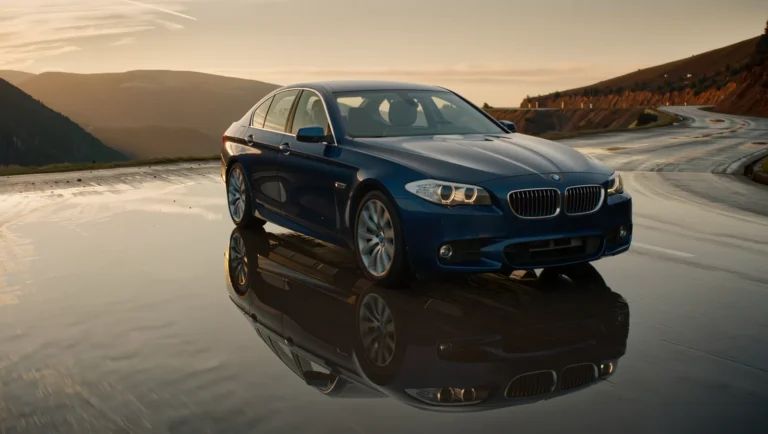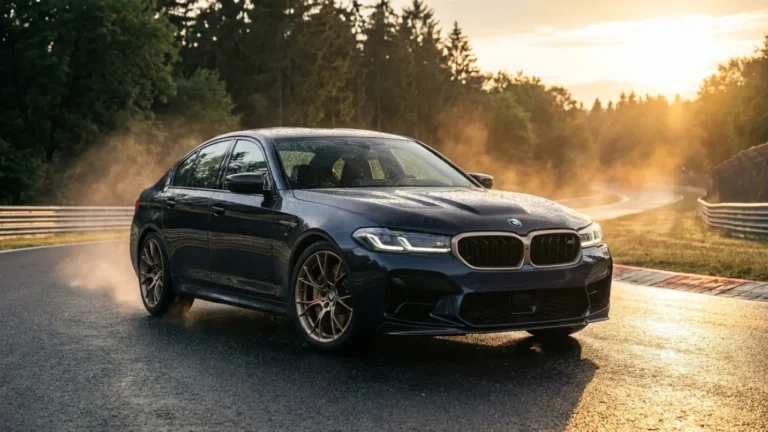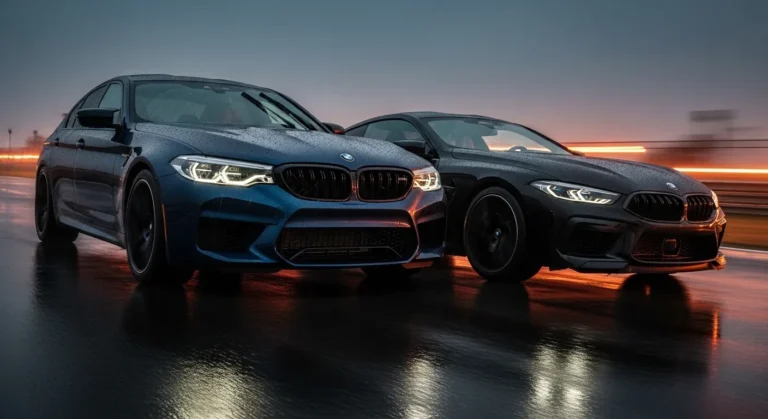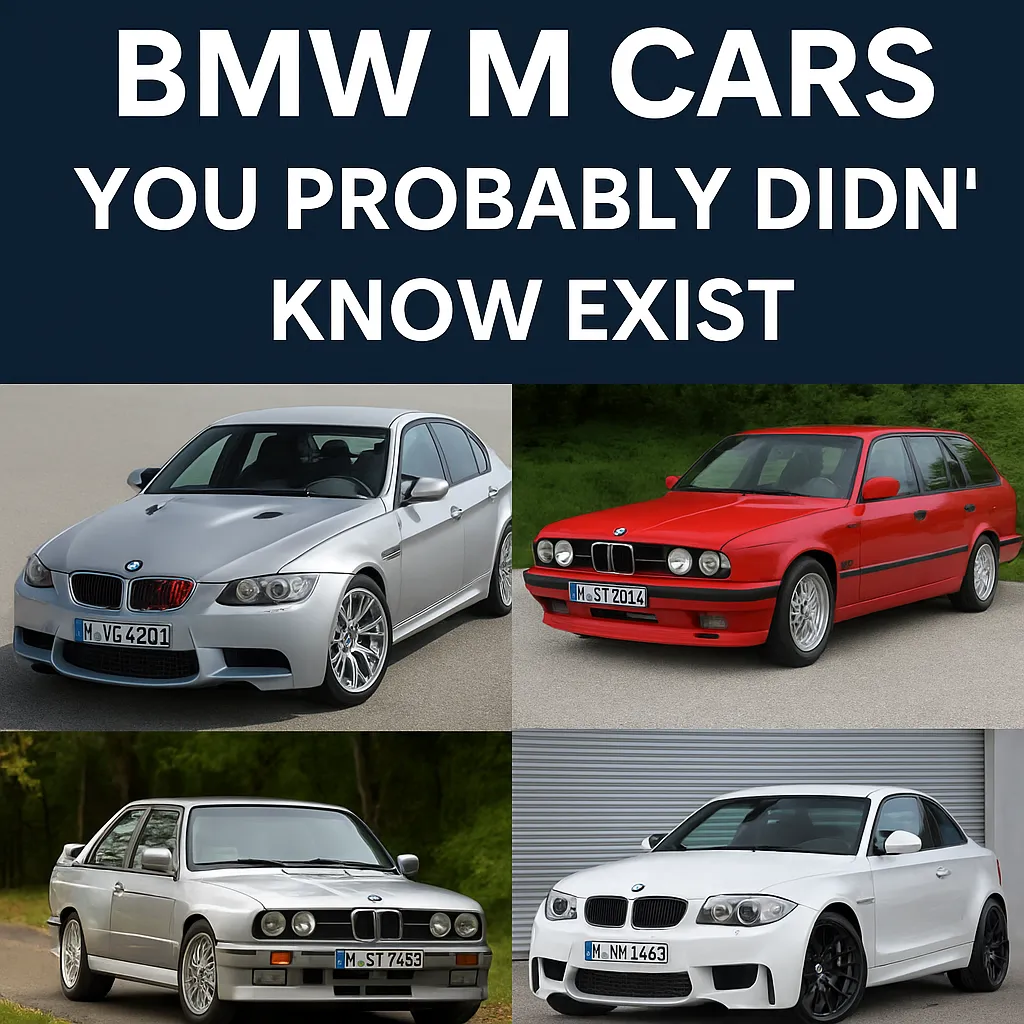
The rarest BMW M cars tell a fascinating story about the history of BMW’s M division. Most enthusiasts know the M3, M4 and M5, which have been built in large numbers over the decades. But hidden in M history are cars produced in tiny quantities, created for racing homologation, as engineering experiments or as special editions for the most loyal fans. Many were never sold in the United States, and some exist only as a single prototype.
In this guide we explore seven of the rarest BMW M cars ever made, with the key specifications, production numbers and the stories behind them. If you enjoy modern limited-edition M cars, also read our BMW M5 CS review.
Table of Contents
- Why Rare BMW M Cars Matter
- What Makes a BMW M Car Rare
- 1. BMW M3 CRT: Lightweight Performance Sedan
- 2. BMW M5 Touring (E34): The Practical Beast
- 3. BMW M3 GTR (E46): Street-Legal Race Car
- 4. BMW M8 Prototype (E31): The Forgotten V12 Monster
- 5. BMW M3 Sport Evolution (E30): Homologation Hero
- 6. BMW M635CSi (E24): The Early M Coupe
- 7. BMW 1 Series M Coupe: Instant Modern Classic
- Rarest BMW M Cars Compared
- Honorable Mentions
- Buying a Rare BMW M Car
- Frequently Asked Questions
- What is the rarest BMW M car ever built?
- Are rare BMW M cars a good investment?
- Final Thoughts
Why Rare BMW M Cars Matter
BMW M was founded in 1972 as BMW Motorsport GmbH, and racing has always been at the heart of the division. Many of its rarest road cars exist because racing rules required manufacturers to build a minimum number of road-going versions, a process known as homologation. Others were built to test new ideas or to celebrate the end of a model generation. Today these cars are highly sought after by collectors, and their values reflect both their rarity and their place in M history.
What Makes a BMW M Car Rare
Not every limited BMW M car is rare for the same reason. Some, like the E30 M3 Evolution models, were built in exact numbers to satisfy racing regulations. Others, like the M3 CRT, were deliberately limited to showcase new technology and create exclusivity. Prototypes like the E31 M8 were never meant for sale at all. Regional availability also plays a role, since several of the cars on this list were never officially sold in the United States. Finally, survival rates matter. Many older M cars were driven hard, raced or modified, so the number of original examples left today is often much lower than the original production figure.
Collectors usually value rarity combined with significance. A car that was rare and also important to BMW’s racing history or engineering development tends to be the most sought after, while rare special editions that were mostly cosmetic usually attract less attention.
1. BMW M3 CRT: Lightweight Performance Sedan

The M3 CRT, short for Carbon Racing Technology, is one of the most exclusive sedans BMW has ever produced. Built in 2011, it was based on the E90 M3 sedan but borrowed the larger 4.4-liter V8 from the hardcore M3 GTS. BMW used the car to showcase carbon fiber production techniques that were later used in the i3 and i8, with a carbon hood, carbon seats and other lightweight components.
- Engine: 4.4-liter V8
- Output: about 450 PS (444 hp)
- Production: 67 units
The M3 CRT was never offered in the United States, which adds to its mystique. It combined four-door practicality with GTS-level performance, making it one of the most unusual M3 variants ever built.
2. BMW M5 Touring (E34): The Practical Beast

The E34 M5 Touring was the first M5 wagon, combining family practicality with genuine M5 performance. It was assembled by hand at BMW M’s facility in Garching between 1992 and 1995, powered by the S38 3.8-liter inline-six with individual throttle bodies.
- Engine: 3.8-liter inline-six
- Output: 340 PS
- Production: 891 units
It was not sold in North America, which makes it a hidden gem for American collectors. Its blend of a hand-built engine and wagon practicality laid the foundation for later fast wagons such as the E61 M5 Touring.
3. BMW M3 GTR (E46): Street-Legal Race Car
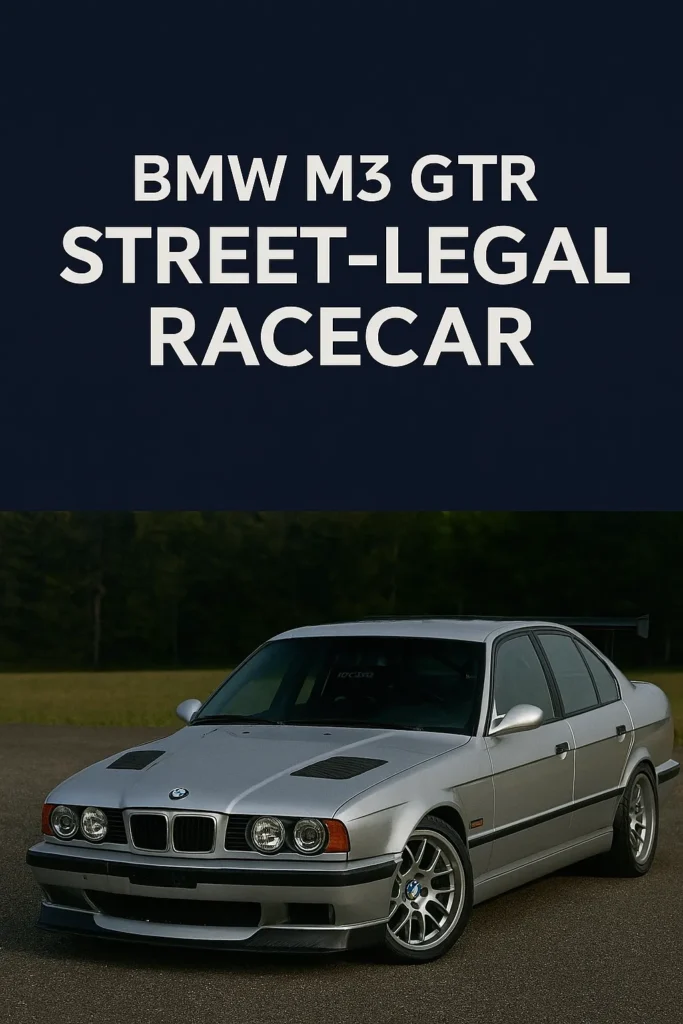
The E46 M3 GTR was built to compete in the American Le Mans Series, where it dominated the GT class in 2001 with a 4.0-liter V8 instead of the regular M3’s inline-six. When rule makers required road-going versions, BMW built a tiny number of street-legal cars with a detuned version of the V8.
- Engine: 4.0-liter V8
- Output: about 380 hp in road form
- Production: around 10 road cars
The road version is more race car than road car, and it became famous worldwide through the Need for Speed video game series. Very few have ever changed hands publicly.
4. BMW M8 Prototype (E31): The Forgotten V12 Monster
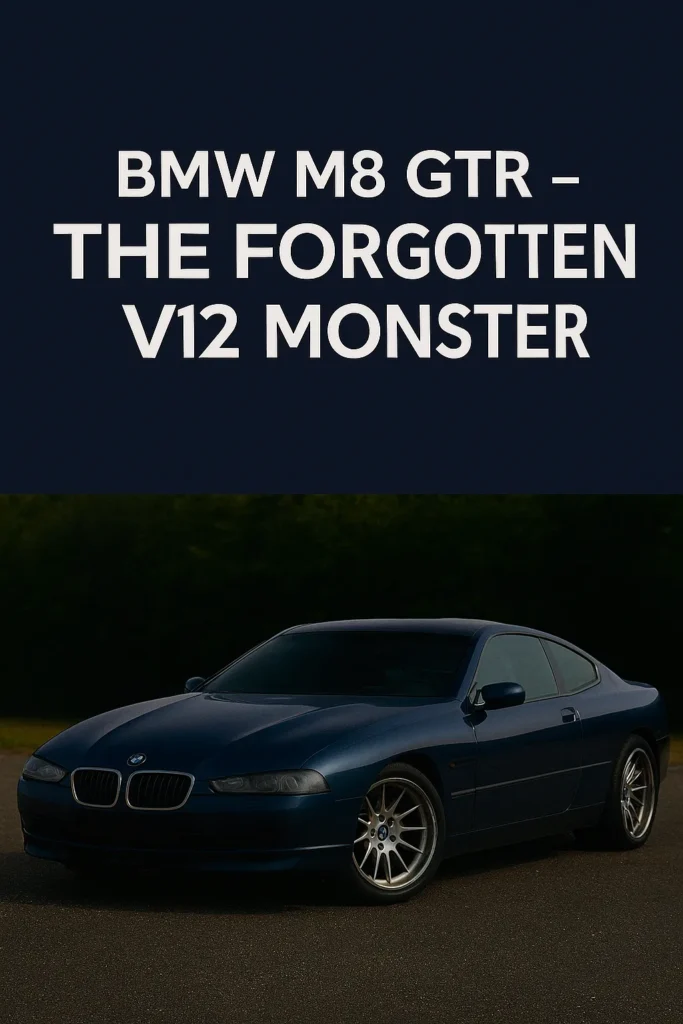
In the early 1990s, BMW developed a high-performance M8 version of the E31 8 Series coupe. It used a 6.1-liter V12 with four valves per cylinder, which later formed the basis of the engine in the McLaren F1 supercar. BMW ultimately cancelled the project, and the single prototype was hidden away.
- Engine: 6.1-liter V12
- Output: estimated around 550 PS
- Production: 1 prototype
The car was not shown to the public until 2010, after nearly two decades in storage. It remains one of the most legendary what-if stories in BMW history.
5. BMW M3 Sport Evolution (E30): Homologation Hero

The E30 M3 was created to win touring car races, and BMW built several evolution models to meet Group A homologation rules. The Evolution II added more power, lighter components and aerodynamic upgrades, while the final Sport Evolution was even more extreme with a larger 2.5-liter engine.
- Engine (Evolution II): 2.3-liter inline-four
- Output: 220 PS
- Production: 500 units
These evolution cars came with adjustable spoilers, special bumpers and unique colors such as Macao Blue and Nogaro Silver. Today they are among the most valuable E30 M3 models.
6. BMW M635CSi (E24): The Early M Coupe
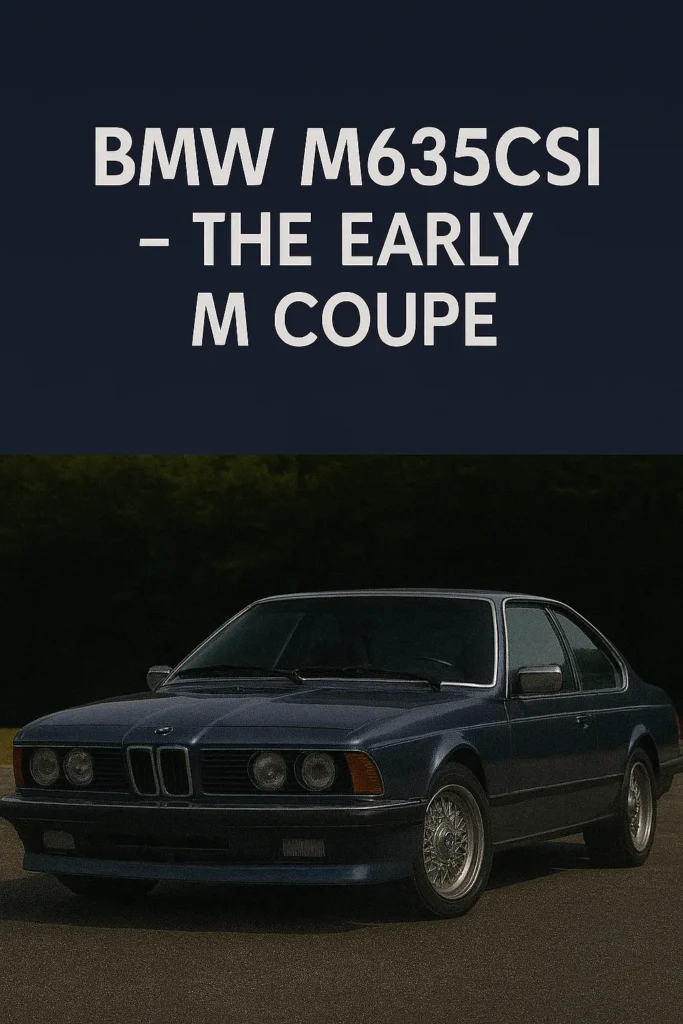
Often overshadowed by the M3 and M5, the M635CSi was one of the first BMW M road cars. It used a version of the M88 inline-six from the M1 supercar, giving the elegant E24 coupe genuine sports car performance. In North America it was sold as the M6 with a slightly less powerful engine.
- Engine: 3.5-liter M88 inline-six
- Output: 286 PS in European form
- Production: about 5,800 units including the US M6
Its production numbers are higher than the other cars on this list, but surviving examples in excellent condition are increasingly rare and highly valued.
7. BMW 1 Series M Coupe: Instant Modern Classic
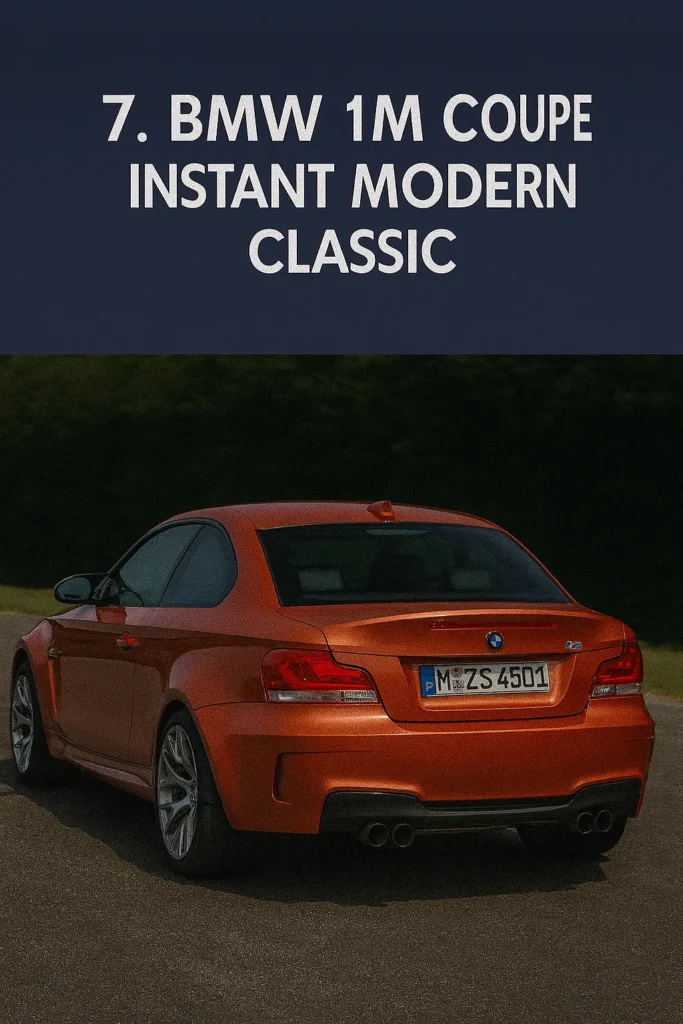
Built for just one model year, the 1 Series M Coupe earned instant respect. It combined a 3.0-liter twin-turbo inline-six with M3 suspension parts, wide fenders and rear-wheel drive, and it was only offered with a six-speed manual transmission.
- Engine: 3.0-liter twin-turbo inline-six
- Output: 335 hp
- Production: about 6,300 units worldwide
Because of its simplicity, compact size and aggressive character, the 1M became a modern collector’s item almost immediately, and it inspired the later M2.
Rarest BMW M Cars Compared
| Model | Engine | Production |
|---|---|---|
| BMW M8 prototype (E31) | 6.1L V12 | 1 |
| BMW M3 GTR road car (E46) | 4.0L V8 | About 10 |
| BMW M3 CRT (E90) | 4.4L V8 | 67 |
| BMW M3 Evolution II (E30) | 2.3L inline-four | 500 |
| BMW M5 Touring (E34) | 3.8L inline-six | 891 |
| BMW M635CSi / M6 (E24) | 3.5L inline-six | About 5,800 |
| BMW 1 Series M Coupe | 3.0L twin-turbo inline-six | About 6,300 |
Honorable Mentions
Several other limited M cars deserve recognition. The original BMW M1 supercar of the late 1970s was built in just over 450 examples and remains the most iconic M car of all. The E46 M3 CSL, with its carbon roof and lightweight construction, was limited to around 1,400 units and was never sold in the US. The E92 M3 GTS, with its 4.4-liter V8, roll cage and orange paint, was built in only a few hundred examples. More recently, the M4 CSL and the M5 CS have continued the tradition of limited, focused M models that collectors quickly snap up.
Buying a Rare BMW M Car
Buying one of the rarest BMW M cars requires patience and careful research. Many of these models were never imported to the United States, so buyers may need to consider import rules. In general, cars older than 25 years can be imported into the US more easily, which is why models like the E30 M3 Evolution and the E34 M5 Touring have become popular with American collectors.
Documentation is essential. Look for complete service records, original parts, matching engine numbers and confirmation from BMW Classic or a recognized marque expert. Rare cars are sometimes faked or modified, so a professional inspection is strongly recommended. Values for these cars have risen sharply in recent years, and the best examples are usually sold through specialist dealers or major auctions.
Frequently Asked Questions
What is the rarest BMW M car ever built?
The E31 M8 prototype is the rarest, since only one was built. Among cars sold to customers, the road-going E46 M3 GTR is one of the rarest, with only around ten examples.
Are rare BMW M cars a good investment?
Many rare M cars have increased in value, but prices can rise and fall with the market. Buyers should focus on condition, originality and history, and buy a car they will enjoy rather than treating it purely as an investment.
More background on the history of the division is available on the official BMW M website.
Final Thoughts
The rarest BMW M cars prove that the M division is about much more than volume sellers. Each of these models represents a special moment in M history, where racing, engineering and exclusivity came together. Whether built for homologation, as a technology showcase or simply out of passion, they remain legends on four wheels.