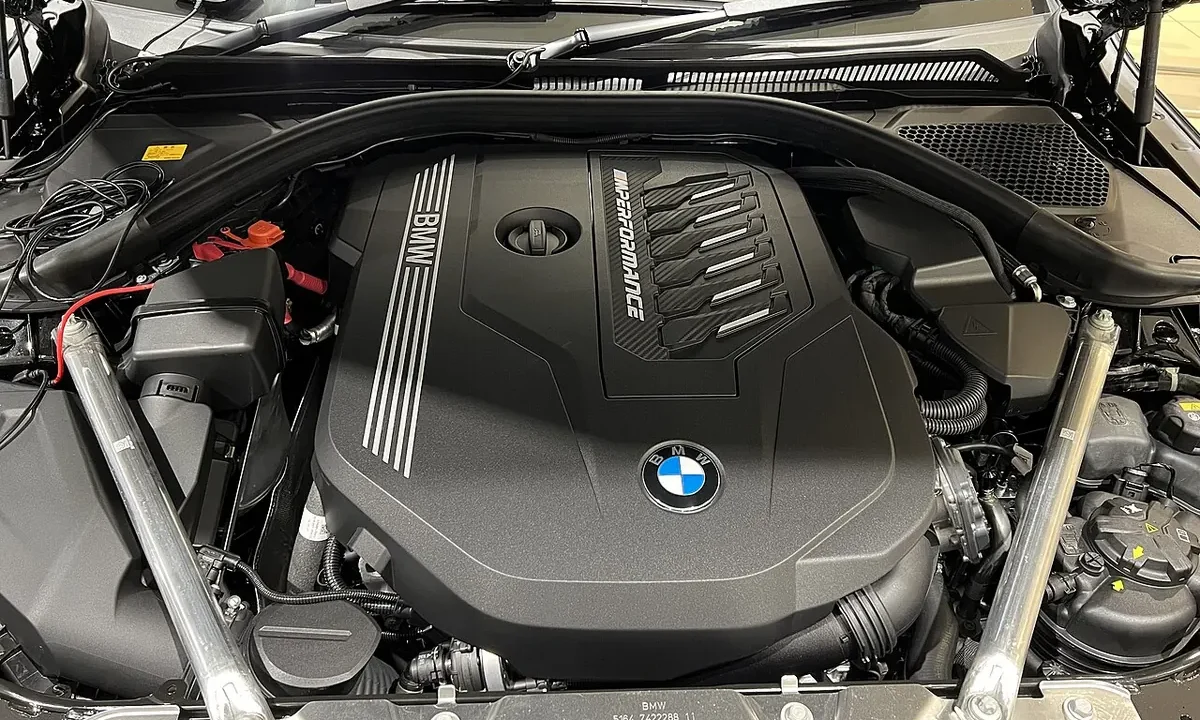
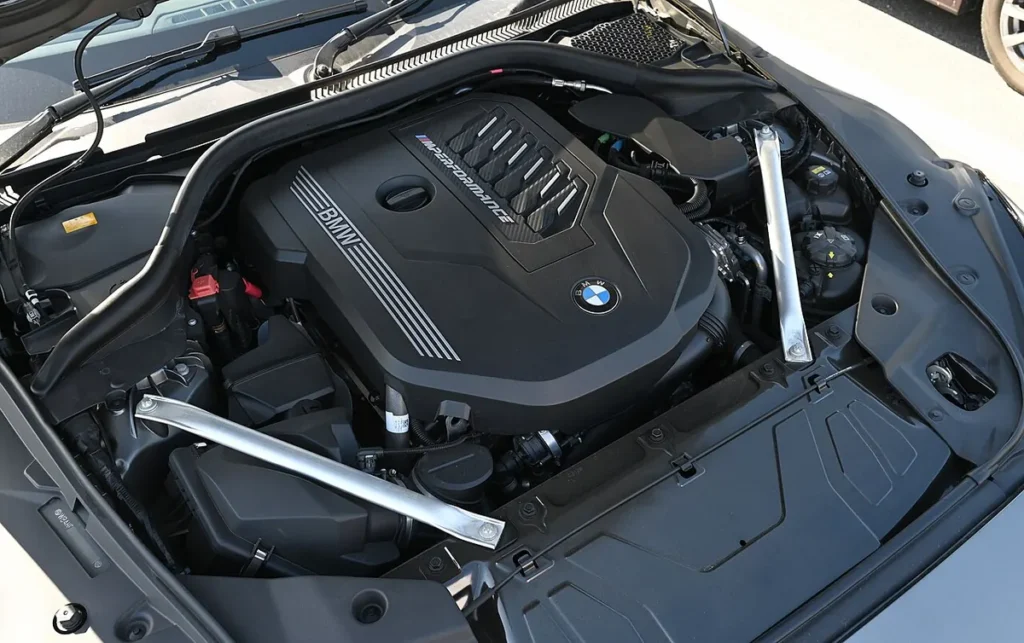
BMW B58 problems are mostly leaks and age-related plastic parts, not catastrophic engine failures. The B58 is the 3.0-liter turbocharged straight-six that replaced the N55 and launched in the 340i (Wikipedia). It now powers the M240i, M340i, M440i, 540i, X3 and X4 M40i, X5 xDrive40i, Z4 M40i and the Toyota GR Supra, according to Wikipedia. It has a strong reputation, and most owners never see a major fault. But a handful of issues are common enough, and expensive enough, to price into any used purchase: the plastic oil filter housing, coolant leaks, the PCV diaphragm on early engines, and on 2019–2020 builds a reported oil pump concern.
This guide covers the real BMW B58 common problems by generation: symptoms, causes, repair cost ranges, the NHTSA recalls and BMW bulletins that apply, which years to check hardest and a buyer’s checklist. Every figure is hedged where sources disagree. If you are comparing it with the four-cylinder sibling, read our BMW B48 engine problems guide.
Short answer: The BMW B58 is one of BMW’s most dependable modern engines. The usual problems are a leaking plastic oil filter housing, coolant leaks, and on 2016–2019 “Gen 1” engines a torn PCV diaphragm that BMW covers with a 15-year/150,000-mile extended warranty (BMW bulletin SIB 01 14 23). On 2019–2020 cars, owners and the press report oil pump failures, so check that the oil level reads in iDrive when the engine is hot. There is no NHTSA recall for the oil filter housing or the oil pump, and every car should still be checked for recalls by VIN.
This guide is part of the BMW and BMW M problems and reliability hub, which links every engine, gearbox and fault-code guide for the brand.
BMW B58 Problems at a Glance
This table summarizes what owners, specialists and BMW bulletins report most often. Costs are US ranges from owner-reported prices and estimates on BimmerBench (oil filter housing, coolant pump, valve cover and PCV, oil pump) and The Autopian (oil pump article), not BMW figures, and they vary by region and by what the quote includes.
| Problem | Typical symptoms | Which engines | Approx. cost |
|---|---|---|---|
| Oil filter housing and gasket leak | Low coolant warning, coolant or oil residue at the back of the engine, burning smell | Gen 1 and Gen 2 | Independent about $1,575–$3,013; dealer about $3,125–$3,900 |
| Oil pump (plastic rotor housing) | iDrive oil level check fails when hot, oil pressure warnings, whine | Reported mainly on 2019–2020 builds | Parts about $1,200 plus heavy labor; one forum quote of about $6,000 reported; owner-paid independent bills $2,865–$3,600 |
| Coolant pump leak | Falling coolant, dried crust at the front of the engine, overheating warning | Gen 1 and Gen 2 | Independent about $758–$1,063 (estimate); dealer about $2,400–$2,532 |
| PCV diaphragm in the valve cover | Whistle at idle, blue or white smoke, rough running, cylinder 6 misfire codes | Gen 1 (B58M) | Dealer about $3,049–$4,450; free if covered by the BMW warranty extension |
| Charge pipe (aftermarket upgrade) | Boost leak after an aftermarket pipe or clamp job | Mostly tuned cars | No sourced repair price |
| Intake valve carbon buildup | Rough cold idle, misfires | Direct-injection engines | Shop job; no sourced B58 price (about $720–$990) |
| Starter overheating (recalls) | Starter fails, repeated cranking attempts | Models sold with the B58 (24V-576 and 25V-644 name models, not engines) | Free under recall |
What Is the BMW B58 Engine? Gen 1, Gen 2 and Gen 3
According to Wikipedia, the B58 began production in 2015 and was launched in the F30 340i, where it replaced the N55. It uses a closed-deck engine block, and it was revised in 2018 (the “B58TU”) with 75% more fuel pressure, a one-part timing chain in place of the earlier two-part chain and separate cooling circuits for the cylinder head and crankcase, and a 2022 revision added port fuel injection to the direct injection system. Knowing which version you are looking at matters, because parts, problems and bulletins differ.
| Version | Engine codes | Years | Typical cars | Key differences |
|---|---|---|---|---|
| Gen 1 | B58B30M0 | 2015–2019 (M240i until 2021) | 340i, 440i, M240i (F22), 540i (2017–2019), 740i, X3 M40i (early) | Two-piece timing chain, PCV built into the valve cover |
| Gen 2 (B58TU) | B58B30M1 (335 hp), B58B30O1 (382 hp) | 2018–2019 onward | M340i, M440i, M240i (G42), X5 40i, Z4 M40i, 840i, GR Supra | 75% higher fuel pressure, one-part timing chain, split cooling circuits |
| Gen 3 | B58B30M2 | 2022 onward | Newer 40i models | Port fuel injection added; too new for a reliability record |
Wikipedia lists the 382 hp “O1” engine in the M340i, M440i and G42 M240i, and the 335 hp version in cars such as the X5 xDrive40i, 840i and 540i. The Toyota GR Supra 3.0 appears in both lists. The B58 is not an M3 or M4 engine: those use the S58, which Wikipedia calls the high-performance version of the B58 (see our BMW S55 problems guide for the earlier M3/M4 engine).

BMW B58 Oil Filter Housing Problems
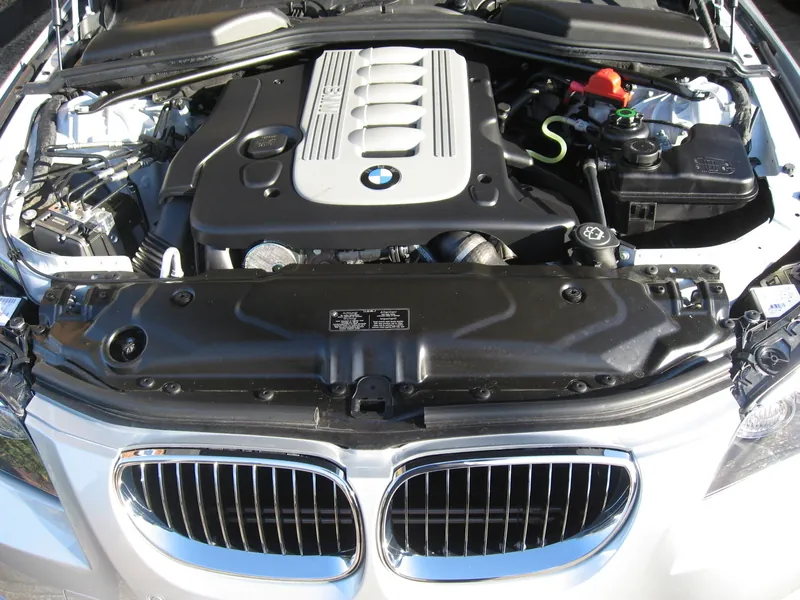
This is the most discussed B58 issue. The oil filter housing is made of plastic and carries oil and coolant passages. According to The Autopian (March 2025), the plastic can become brittle and crack over time, so a leak can show up as oil, coolant or both, and the cap for the cartridge filter can be overtightened if oil gets on its sealing rings, which can break the housing during filter removal. The same article says the problem also affects the B48 four-cylinder.
- Symptoms: a low coolant warning with no puddle, coolant or oil residue at the back of the engine on the driver’s side, a sweet or burning smell, and sometimes a cracked housing found at an oil change.
- Cost: BimmerBench puts the middle half of owner-paid independent shop bills at about $1,575–$3,013 and dealer bills at about $3,125–$3,900, with a wider overall spread of $1,200–$4,360. The same page shows quotes that add the thermostat or heat management module, so compare line items.
- Filter breakage: BMW service bulletin SIB 11 03 21 says the lower plastic section of the filter insert can break apart and remain stuck in the oil filter housing, and BMW introduced an Oil Catch special tool to use when removing the filter.
Be careful about one popular claim. BMW’s coolant-leak bulletin SIB 11 10 25, dated December 2025, lists only vehicles with the four-cylinder B46D, B48P or XB1G engines, not the B58. There is no NHTSA recall for the B58 oil filter housing. A proposed class action, Eiger v. BMW AG and BMW of North America (D.N.J. No. 2:26-cv-00753), was filed on January 23, 2026 and names vehicles with B46, B48 and/or B58 engines, according to ClassAction.org, but those are allegations, not findings.
BMW B58 Oil Pump Problems (2019–2020 Builds)
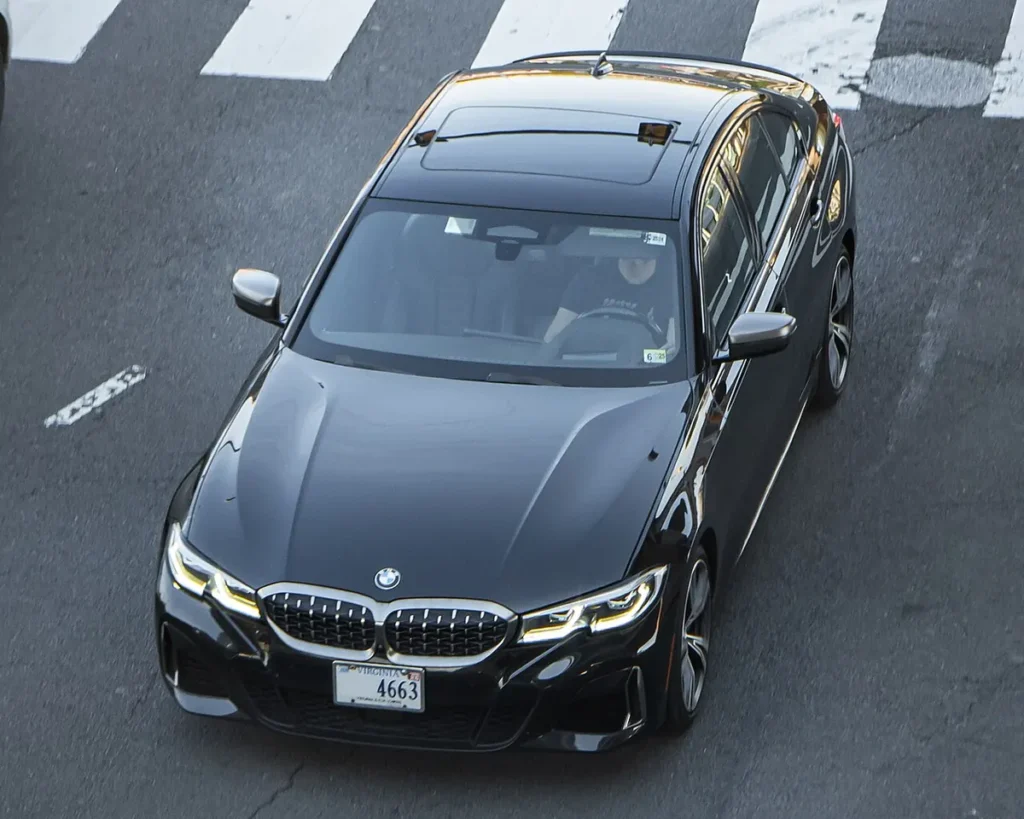
The second big topic is the oil pump. The Autopian reported in June 2024 that many 2019 and 2020 B58s without the ZTK performance cooling and tire package (and mid-2020 and earlier X5 and X7 models) came with an oil pump with a plastic rotor housing, and that owners have reported failures, sometimes with fewer than 30,000 miles. The article’s evidence is owner reports, and Motorfiable notes the same. Because BMW has not published a campaign, treat this as a documented owner and press pattern, not a confirmed defect rate.
- Symptoms: abnormal oil pressure, a whine and warnings (as described by Motorfiable), and owners report the iDrive oil level check cancelling or failing when the engine is hot.
- Cost: The Autopian figures about $1,200 in parts, with heavy labor because the subframe has to be lowered, and cites one forum poster quoted $6,000 for an X5. BimmerBench lists owner-paid independent bills of $2,865–$3,600 (the middle of 3 prices; full spread $2,730–$4,200).
- What changed: The Autopian notes that the ZTK oil pump, part number 11419895359, has superseded the earlier regular pump. Confirm the pump fitted to your VIN with a BMW dealer rather than trusting a forum post.
NHTSA’s complaint database, which holds unverified owner reports, shows the same pattern. As of 19 November 2026, the 2020 M340i has 57 complaints, of which 43 mention oil in the complaint text. The 2021 M340i has 12 complaints with 8 mentioning oil, and the 2022 M340i has 7 with none. The 2019 and 2020 X5 have 196 and 117 complaints with 41 and 18 mentioning oil. These counts show a pattern to check, not a failure rate: a mention of oil is not proof of an oil pump fault, and NHTSA files some B58 cars, such as the 340i, under “3 Series”, so complaints cannot be split by engine.

BMW B58 Coolant Leaks and Water Pump Problems
Coolant loss is a common complaint, and the leak can come from the coolant pump, the oil filter housing, the expansion tank, or hoses and connectors, so find the source before buying parts. For a general guide to the warning, see our article on the BMW coolant level low warning.
- Symptoms: a low coolant warning, dried pink or blue crust on seams and hoses, a sweet smell after driving, rising temperatures under load.
- Cost: BimmerBench shows dealer bills of $2,400–$2,532 (the middle of 3 owner prices) and an independent-shop estimate of $758–$1,063, based on only 2 owner prices, so the independent figure is thin. One owner-reported independent quote for a 2022 X3 M40i was $3,350 for the pump, bracket and O-rings including labor.
- Service action SIB 11 05 21: BMW’s bulletin covers G05, G06, G07, G20, G22, G23 and G30 vehicles produced from September 2020 to May 24, 2021 and calls for replacing the mechanical coolant pump. It shows as “Open” on affected VINs when checked by a dealer, and it addresses the pump rather than a coolant leak.
BMW B58 PCV and Valve Cover Problems (Gen 1)
On Gen 1 engines the crankcase pressure control valve (PCV) is built into the valve cover. BMW’s bulletin SIB 01 14 23 describes a warranty extension for the PCV, which it says can fail over time.
The important detail is the warranty. In November 2023 BMW of North America issued SIB 01 14 23, extending the limited warranty for the PCV to 15 years or 150,000 miles from the original in-service date. It lists B58M cars including the 340i (built June 2015 to October 2018), 440i, M240i, 740Li, 540i, X3 M40i, X4 M40i and the 640i xDrive Gran Turismo, with production dates in the bulletin. It is not a recall, and a dealer must confirm that the notice appears on the VIN. BimmerBench lists dealer bills for the valve cover and PCV job of $3,049–$4,450 (the middle of 3 owner prices) and an independent-shop estimate of $1,248–$2,352.
Other BMW B58 Issues: Charge Pipe, Carbon, Fuel and Wear Items
Plastic charge pipe
Cracking plastic charge pipes are a documented N55 and S55 problem, but BimmerBench says stock B58 and B48 charge pipes are a different design and are not assumed to fail the same way, and that many B58 “charge pipe” threads are about optional aluminum upgrades on tuned cars. It lists no sourced repair price for a failed stock B58 pipe.
Carbon buildup
Per Wikipedia, the 2022 engine revision added port fuel injection to the existing direct injection system, so earlier engines are direct-injection only. Direct-injection engines can collect deposits on the intake valves; the added port injection is intended for better emissions and functionality, but the Gen 3 engine is too new to judge. Intake valve cleaning costs for the B58 are not published in the sources reviewed.
High-pressure fuel pump and injectors
Fuel faults produce long cold starts, hesitation, misfires and lean trims, so the sensible approach is a live fuel-pressure test under load rather than replacing parts from a code. No published failure rate for the B58 high-pressure fuel pump or injectors was found in the sources reviewed, so treat this as a diagnosis tip, not a known defect.
Oil and spark plugs
Use the oil BMW specifies. For wider reading on BMW fault codes, see our BMW 2A82 and 2A87 VANOS codes guide.
BMW B58 Recalls and Bulletins (NHTSA)
The table lists NHTSA campaigns that name models sold with the B58, such as the 340i, M340i, 540i, 740i, X5 xDrive40i, Z4 M40i and Supra, checked against NHTSA’s recall database and Part 573 reports. NHTSA notices name models and years, not engines, and several campaigns also cover other engines, so confirm your own VIN at nhtsa.gov/recalls or with a BMW dealer. Recall repairs are free.
| Campaign | Models and years (B58-related) | Issue and remedy |
|---|---|---|
| 18V-465 | 2018–2019 340i, 440i, M240i, 540i, 740i and others (5,309 BMW and MINI vehicles) | Crankshaft sensor firmware may cause a stall; dealer replaces the sensor |
| 20V-465 | Certain 2020 X5 xDrive40i and sDrive40i, one X7 xDrive40i (21 vehicles) | Extra bolt on the starter motor could fall into the transmission housing and stall the engine |
| 21V-598 | 2020 M340i, 540i, X3 M40i; 2019–2021 Z4 M40i; 2020–2021 X4 M40i, Supra (50,024) | Engine software may cause loss of brake assist at engine start; software update |
| 24V-576 | 2019–2020 X5, X7; 2020 3 Series, 7 Series, 8 Series and more (105,588) | Failed starter can overheat from repeated start attempts and cause a fire; software update. NHTSA’s Part 573 report lists models including the M340i, 340i xDrive, 740i, 840i, X5, X6 and X7 and describes an engine starter of a certain production configuration; it does not name the engine |
| 25V-644 | 2020 340i, X5, X6, X7, 740Li, 840i and more (145,102) | Starter may overheat; starter replacement, including cars repaired under 24V-576. Part 573 report lists the 340i, 740Li, 840i, X5, X6 and X7; the notice does not name the engine |
| 20V-700 | 2020–2021 Z4 and Supra | Fuel tank weld may fail and leak fuel; fuel tank replacement |
Two further starter recalls, 25V-636 and 26V-056, are not listed as B58 recalls because their reports name mainly 30i and 230i/330i/430i/530i models (for example the Z4 sDrive30i, X3 xDrive30i and X4 xDrive30i) and the Supra, without naming the engine. Check the VIN anyway if you own a Z4, X3, X4, 3 Series or 5 Series.
Service bulletins are different from recalls and will not show in a VIN recall lookup. The bulletins covered above are SI B11 03 21 (oil filter removal procedure and tool), SIB 11 05 21 (coolant pump service action) and SIB 01 14 23 (PCV warranty extension). Ask a dealer to check the VIN for all three.
Which BMW B58 Years Are Best and Worst?
There is no simple “avoid this year” label, because most B58 issues come with age and mileage rather than a specific production year. The evidence points to a few checks by period:
| Car | Verdict | What to check |
|---|---|---|
| 2016–2018 340i, 440i, M240i, 540i (Gen 1) | Well documented | Oil filter housing, PCV diaphragm (warranty extension), crank sensor recall 18V-465. NHTSA files the 340i under “3 Series”, so complaints cannot be split by engine |
| 2019–2020 Gen 1 and early Gen 2 (M340i, X5, X7) | Check hardest | Oil pump history, iDrive oil level test, starter recalls, coolant pump service action |
| 2021 onward (Gen 2) | Better data on oil pump, thinner overall record | Starter recalls, coolant pump, oil filter housing |
| 2022 onward (Gen 3) | Too new to judge | Verify recalls and warranty status |
For context, the B58 replaced the N55 (Wikipedia). If you are weighing it against the BMW M cars, our BMW M Performance vs BMW M guide explains why an M340i is not an M3, and our Audi RS3 vs BMW M240i comparison puts the M240i against a rival.
BMW B58 Buyer’s Checklist
- Oil level test: on a 2019–2020 car, run the iDrive oil level check with the engine hot. A canceled or failed test is a warning sign.
- Oil pump history: ask whether the oil pump has been replaced, and have a dealer confirm the pump fitted to the VIN.
- Coolant: check the level, look for dried crust near the oil filter housing and the pump, and ask when the housing was last serviced.
- Smoke and whistle: on Gen 1, watch for blue or white smoke after a cold start and listen for a whistle at idle. Ask a dealer whether the PCV warranty notice shows on the VIN.
- Recalls and bulletins: check NHTSA by VIN, including the starter campaigns 24V-576 and 25V-644, and ask about SIB 11 05 21 on 2020–2021 builds.
- Service records: look for oil changes at sensible intervals with the BMW specified oil, and proof of coolant service.
- Modifications: a tuned car stresses the charge pipe, plugs, coils and fuel system, so ask what has been changed.
- Warranty: check whether BMW Certified Pre-Owned or an extended warranty still applies. A pre-purchase inspection from a BMW specialist is cheap insurance.
Looking for other guides? Browse our Common Problems & Reliability Guides hub.
Frequently Asked Questions
What are the most common BMW B58 problems?
The most common are a leaking plastic oil filter housing, coolant leaks from the pump or hoses, and on Gen 1 engines a torn PCV diaphragm. On 2019–2020 cars, owners and the press also report oil pump failures.
Is the BMW B58 reliable?
Generally yes. Most B58 issues are leaks and wear items rather than internal engine failures, and a well-maintained engine can cover high mileage. The oil pump pattern on 2019–2020 builds and the plastic housing leaks are the main exceptions to check.
What are the BMW B58 years to avoid?
There is no single year to avoid. Check 2019–2020 cars hardest because of the reported oil pump pattern, and confirm recalls, bulletins and service history on any year. The 2022-on Gen 3 is too new for a verdict.
How much does a B58 oil filter housing replacement cost?
BimmerBench puts the middle half of owner-paid independent shop bills at about $1,575–$3,013 and dealer bills at about $3,125–$3,900. The final number depends on whether the thermostat, hoses and coolant are included.
Is there a recall for the B58 oil filter housing or oil pump?
No. NHTSA lists no recall for either. BMW’s coolant-leak bulletin SIB 11 10 25 covers only certain four-cylinder cars, and the oil pump concern is based on owner reports and press coverage, not a BMW campaign.
How can I tell if the B58 oil pump has a problem?
Warning signs are a failed or canceled iDrive oil level check when the engine is hot, oil pressure warnings and a whining noise. Have a dealer confirm the pump on your VIN if you have a 2019–2020 car.
Does BMW cover the B58 PCV valve?
For eligible Gen 1 B58M cars, yes. SIB 01 14 23 extends the PCV limited warranty to 15 years or 150,000 miles from the in-service date, and a dealer must confirm that the notice appears on the VIN.
Is the B58 better than the N55 or the B48?
According to Wikipedia, the B58 has a 20% increase in boost pressure over the N55 and a closed-deck block. Like the B48, it shares the plastic oil filter housing concern (The Autopian), so neither is free of leaks.
Can the B58 handle tuning?
The Autopian calls the B58 a darling of the tuning scene, with a closed-deck block and forged connecting rods. Tuning still increases stress on the cooling, fuel and ignition systems, and it can affect warranty coverage.
Which cars use the BMW B58 engine?
According to Wikipedia: the 340i, 440i, M140i, M240i, M340i, M440i, 540i, 740i, 840i, X3 and X4 M40i, X5 and X7 xDrive40i, Z4 M40i and the Toyota GR Supra 3.0. The M3 and M4 use the S58 or, earlier, the S55, not the B58.
The Bottom Line on BMW B58 Problems
Most BMW B58 problems are known and checkable. Expect leaks from the plastic oil filter housing and coolant system as the car ages, ask about the PCV warranty on Gen 1 cars, and treat the 2019–2020 oil pump pattern as a reason to inspect rather than to panic. Buy on service history, run the VIN for recalls and bulletins, and keep a repair reserve.
Sources and notes: Recall campaigns are linked by number to NHTSA and were checked in November 2026; complaint counts link to NHTSA’s complaint database. Cost ranges come from BimmerBench (oil filter housing, coolant pump, valve cover and PCV, oil pump) and The Autopian, not from BMW. Specifications come from Wikipedia’s BMW B58 article. Bulletins: SIB 11 03 21, SIB 11 05 21, SIB 01 14 23 and SIB 11 10 25. This article is for general information. Confirm any diagnosis or recall status for a specific vehicle with a BMW dealer or qualified specialist.