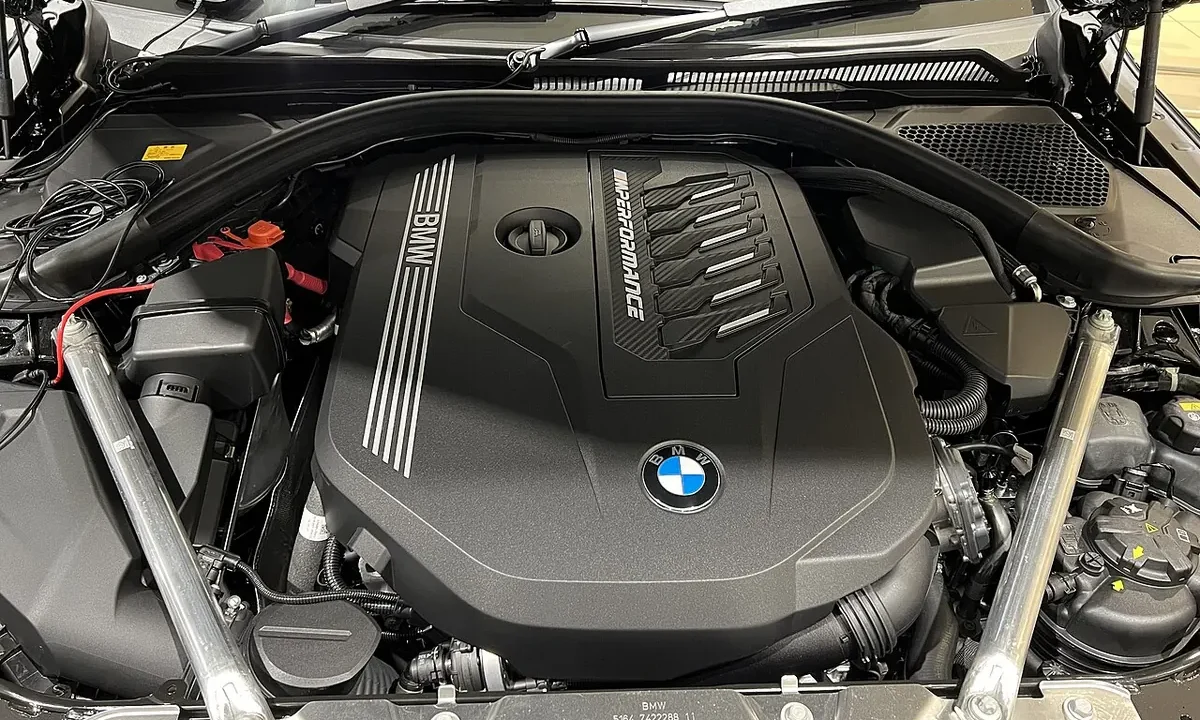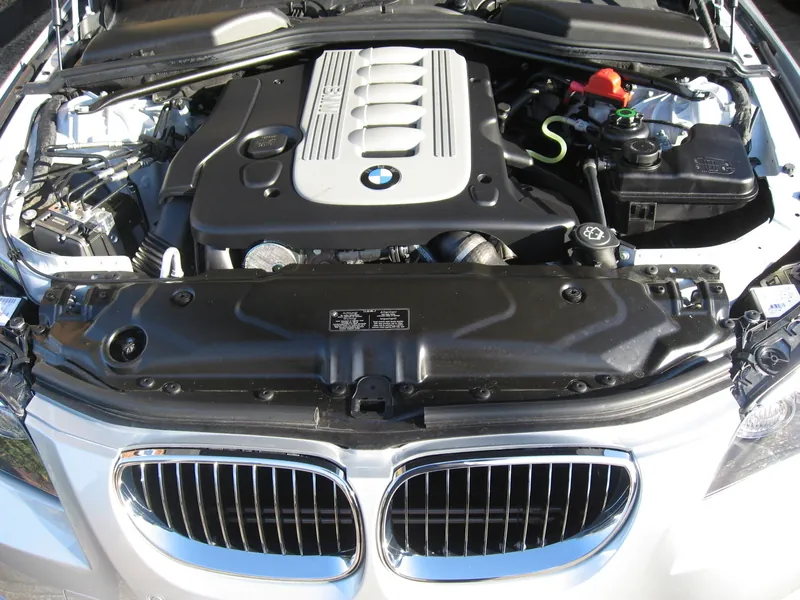
BMW M57 problems are well known, and most of them are preventable. The M57 is the 2.5- and 3.0-liter turbo-diesel straight-six that BMW built at Steyr, Austria, from 1998 (Wikipedia) and fitted to the 330d, 530d, 535d, 730d, X3, X5 and X6, among others. It has a reputation for covering very high mileage (Motorfiable says well-maintained examples can exceed 500,000 km), and also for a short list of faults that can turn a cheap used car into an expensive one: the intake swirl flaps, the turbocharger and its actuator, injectors, the crankshaft pulley, and a few age-related items such as the thermostats, glow plug module and oil leaks.
This guide explains the M57 by version, then the common faults with symptoms and indicative costs, the recalls that apply (checked against NHTSA for the US-market 335d and X5 xDrive35d), which versions to prefer and a buyer’s checklist. Where sources disagree, the article says so instead of guessing. If you are comparing it with petrol or newer BMW engines, see our BMW B58 problems and BMW B48 engine problems guides.
Short answer: The BMW M57 is a durable engine, but check the intake swirl flaps first. On many automatic M57 and M57TU/TU2 engines, a flap or its screw can break off and destroy a cylinder, and blanking the flaps at a specialist typically costs a few hundred pounds or euros. After that, listen to the turbo, check the injectors and EGR, and look at the crankshaft pulley rubber. There is no BMW recall for the swirl flaps. NHTSA’s database lists an idler pulley bolt recall on the X5 xDrive35d and fuel filter heater recalls on early 2009–2010 X5 35d cars as the engine-related campaigns for the US-market diesels.
This guide is part of the BMW and BMW M problems and reliability hub, which links every engine, gearbox and fault-code guide for the brand.
BMW M57 Problems at a Glance
This table summarizes the faults that independent specialists and reliability guides report most often. Costs are indicative UK figures from the Bimmer.AI M57 guide unless stated, and they vary with the car, the region and what the quote includes.
| Problem | Typical symptoms | Mainly affects | Indicative cost |
|---|---|---|---|
| Intake swirl flaps | Often none until failure; sudden misfire, power loss, metallic noise | Many automatic M57, M57TU and TU2 engines (sources disagree on scope) | Blanking £150–£350 (about $200–$460); if a flap drops, about £3,500–£6,000 (about $4,600–$7,900) or an engine |
| Turbo and actuator | Limp mode, under/overboost codes, whistle, smoke | All; twin-turbo 335d/535d cost most | £900–£3,500 (about $1,200–$4,600) |
| Injector wear or leak-off | Rough idle, hard warm start, black smoke | All | £250–£500 (about $330–$660) |
| EGR and intake carbon | Sluggish response, EGR codes, soot in the manifold | All | £200–£500 (about $260–$660) |
| Crankshaft pulley (vibration damper) | Knocking at the front, wobble, belt squeal, cracked rubber | All | £250–£450 (about $330–$590) |
| Thermostats (main and EGR) | Slow warm-up, weak heat, higher fuel use | All | £150–£350 (about $200–$460) |
| Glow plugs and control module | Hard cold starts, glow plug fault codes | All | £150–£400 (about $200–$530) |
| Oil leaks and crankcase breather | Oil on the front of the engine, oil use, smoke, oil in intercooler pipes | All; breather design differs by version | Varies by item; breather and gaskets are modest, sump and seals are labor-heavy |
BMW M57 Versions and Power Outputs
“M57” covers several different engines, and the version decides which problems matter. BMW’s own engine code names are M57 (original, cast-iron block), M57TÜ (technical revision) and M57TÜ2 (aluminum block), according to Wikipedia. The TÜ2 came in three power classes, labelled UL, OL and TOP (the twin-turbo engine). Outputs below are from Wikipedia’s data table and the BMW Club Czech Republic engine database, converted to PS where BMW normally quotes them. Model years vary by market and source, so they are not listed.
| Version | Output | Typical cars |
|---|---|---|
| M57D25 (2.5 L) | 163 PS | E39 525d |
| M57D25TÜ (2.5 L) | 163 or 177 PS | E60/E61 525d |
| M57D30 (2,926 cc) | 184 or 193 PS | E39 530d, E46 330d, E38 730d, E53 X5 3.0d |
| M57D30TÜ (2,993 cc) | 204 or 218 PS | E46 330d, E83 X3 3.0d, E53 X5 3.0d, E60 530d, E65 730d |
| M57D30TÜ TOP (twin turbo) | 272 PS (200 kW) | E60/E61 535d, E63/E64 635d |
| M57D30TÜ2 UL/OL | 197 PS (UL), 231–235 PS (OL) | E90 325d/330d, E60 525d/530d, E70 X5 3.0d, E71 X6, E65 730d |
| M57D30TÜ2 TOP (twin turbo) | 286 PS (210 kW), 580 Nm | E90 335d, E60 535d, E63/E64 635d, E70 X5 3.0sd and xDrive35d, E71 X6 xDrive35d, E83 X3 3.0sd |
Two clarifications. First, the top M57 ratings are 272 PS (TÜ TOP) and 286 PS (TÜ2 TOP); higher figures are not M57 ratings. Second, production end dates vary by source: Wikipedia and the Bimmer.AI guide both give 1998–2013 for the engine overall, while Bimmer.AI recommends the N57 (2008 onwards) as the newer car. The M57 block was also used in the Range Rover L322 and the Opel Omega B (2.5 DTI), according to Wikipedia.
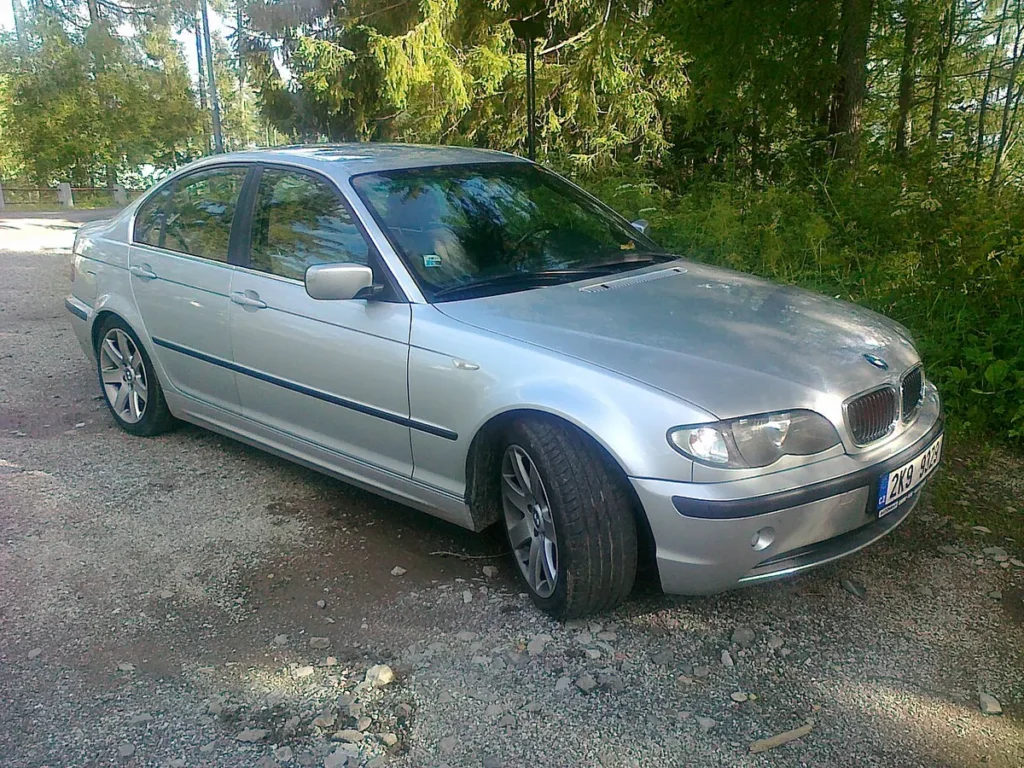
Swirl Flaps: The Big M57 Problem
The swirl flaps are six metal butterfly valves in the intake manifold, according to Motorfiable, and they vary intake-air turbulence with engine load, primarily for emissions, according to Bimmer.AI. Over time carbon builds up and the shafts and retaining screws wear, and a flap or screw can break off and be pulled into the engine. Bimmer.AI describes bent valves and damaged pistons or heads as the result. The failure often gives no warning: a specialist cited by Motorfiable says the engine can run normally until shortly before a flap breaks.
Which cars are exposed is where sources disagree. Motorfiable says most automatic M57 and M57TU engines (330d, 530d, 535d, 730d, X3 3.0d and others) have the flaps, while, according to a specialist workshop it cites, the E53 X5 3.0d and the manual first-generation 330d and 530d do not. The same site says the shaft size changed from 22 mm to 33 mm in 2004. A UK specialist, BMS Surrey, says engines built from 2009 no longer have the part. Because the evidence is inconsistent, the practical rule is to look, not to trust the model year.
The common remedy is to fit blanking plates and clean the manifold and EGR at the same time. Bimmer.AI quotes £150–£400 (about $200–$530) for a preventative delete at an independent specialist (its M57 engine guide gives £150–£350 (about $200–$460)), and CarChecker quotes €150–€300 (about $160–$330) for the E60. If a flap has already dropped, Bimmer.AI puts a rebuild or replacement at £3,500–£6,000 (about $4,600–$7,900) and CarChecker says full engine replacement can reach €5,000–€10,000 (about $5,500–$11,000). No BMW recall for this fault appears in the sources reviewed, and NHTSA’s database lists none for the US-market diesels. CarChecker says BMW offered partial goodwill in some cases, so ask a dealer if the car has full history.
Turbocharger and Boost Control Problems
Turbo trouble is the second most expensive M57 issue. The variable-geometry vanes can stick with soot, and the actuator that moves them can fail. Turbo specialist PT Turbo notes that many M57 “turbo failures” turn out to be a seized or leaking actuator rather than a dead cartridge, so test the control side first. Bimmer.AI lists limp mode, loss of boost, a whistle or whine that rises with revs, blue or black smoke and oil in the intercooler pipes as the symptoms. CarChecker names a clogged oil separator in the breather as the main cause of premature turbo failure on the E46 330d.
Bimmer.AI puts a single-turbo replacement at about £900–£1,800 (about $1,200–$2,350) and a twin-turbo 335d or 535d at £2,000–£3,500 (about $2,650–$4,600). It says the twin-turbo TÜ2 TOP engines are known for small-turbo and actuator failures with heavy labor.
Injectors, EGR, Intake Manifold and Throttle
Injectors. The first M57 runs 1,350 bar common rail; later engines run 1,600 bar. Wikipedia reports magnetic injectors on most versions and piezo injectors on the TÜ2 OL and TOP engines. Worn injectors cause rough idle, hard warm starts and black smoke. Bimmer.AI recommends a leak-off test to find the guilty injector, and replacing and coding the worst one, and quotes £250–£500 (about $330–$660). Bimmer.AI warns that leaving a leaking injector can eventually damage a piston crown.
EGR valve and intake. Carbon and oily soot clog the EGR valve and manifold, causing sluggish response, EGR codes and poorer economy. Bimmer.AI lists EGR valve and inlet manifold carbon clogging at £200–£500 (about $260–$660) and its maintenance table pairs swirl flap removal with an inlet clean.
Crankcase breather. According to bimmer-service.com, early M57 engines (before the M57TU) use a roll-type filter element that can clog, while later engines use a vortex separator that is generally maintenance-free. A blocked breather can cause oil consumption, oil leaks and accelerated turbo failure.
Other parts. Motorfiable also lists a failing air mass meter (garage repair €100–€300 (about $110–$330)) and a cracked exhaust manifold on the M57.
Crankshaft Pulley, Thermostats, Glow Plugs and Oil Leaks
Crankshaft pulley (vibration damper). The damper has a rubber ring between two metal parts. When the rubber cracks or delaminates, the pulley can wobble, the belt squeals, and in the worst case the pulley separates and the belt is thrown, which means losing power steering and charging together, according to Bimmer.AI. Bimmer.AI recommends inspecting the rubber at every service past 100,000 miles and replacing it preventatively, at about £250–£450 (about $330–$590). Parts maker Continental says torsional vibration dampers should be checked after 60,000 km and replaced after 120,000 km at the latest (Continental Aftermarket).
Thermostats. The M57 has a main thermostat and one for the EGR cooler. When either sticks open, the engine warms slowly, cabin heat is weak and fuel use rises, according to Bimmer.AI. It recommends replacing both together, at roughly £150–£350 (about $200–$460). For general coolant warnings on BMWs, read our BMW coolant level low guide.
Glow plugs. bimmer-service.com says glow plug faults more often come from the glow plug controller than from the plugs themselves. Bimmer.AI recommends replacing plugs as a set and the module if the fault persists, at about £150–£400 (about $200–$530) (see the Bimmer.AI guide).
Oil leaks. Common weeping points are the oil filter housing cap gasket or O-ring, the oil filter housing and oil cooler gaskets, and, at high mileage, the sump and valve cover gaskets. Check the cap is torqued correctly and the O-ring is not pinched.
Timing chain. The M57 is chain-driven, so there is no belt replacement interval, but ancillary parts such as the vacuum pump and chain tensioner need attention, according to the workshop gaga.ba.
DPF on Later M57 Engines
BMW began fitting a catalyzed diesel particulate filter on the six-cylinder 525d and 530d in February 2004 as standard equipment, according to a US Department of Energy presentation (PDF). Short trips prevent regeneration and can clog the filter. BMW’s bulletin SI B18 03 10 lists fault codes 480A and 481A for heavily contaminated M57 filters. Our full guide to BMW DPF problems covers regeneration, fault codes and fixes. Removing a DPF is illegal in many countries, including the US.
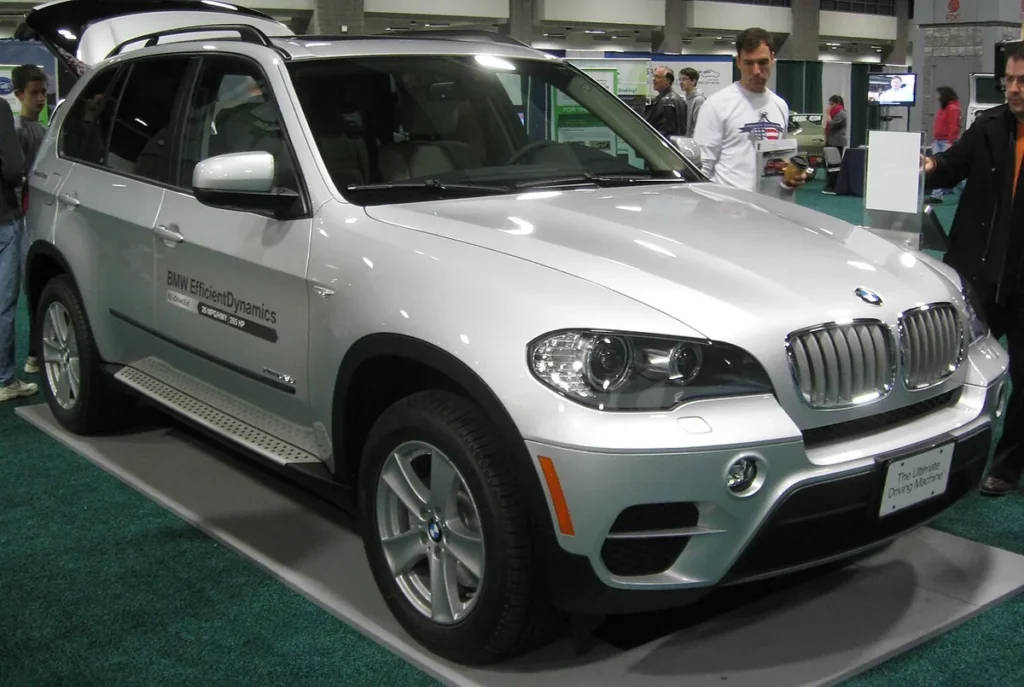
BMW M57 Problems by Model
The M57 was used across most of BMW’s diesel range. This table shows where it appears and what to check hardest on each car.
| Model | M57 versions | Check first |
|---|---|---|
| E39 525d / 530d | M57D25, M57D30 | Swirl flaps on automatics, crank pulley, breather |
| E46 330d / 330xd | M57D30, M57D30TÜ | Flaps on automatics, turbo vacuum system, crank pulley |
| E53 X5 3.0d | M57D30, M57D30TÜ | Sources disagree on flaps; borescope the manifold |
| E60/E61 525d / 530d / 535d | TÜ, TÜ2, TÜ TOP, TÜ2 TOP | Flaps, DPF, twin-turbo actuators on 535d, gearbox service |
| E63/E64 635d | TÜ TOP, TÜ2 TOP | Twin-turbo wear and costs |
| E65 730d (and E38 730d) | M57D30, TÜ, TÜ2 | Flap status (sources disagree on E38), age-related electronics |
| E83 X3 3.0d / 3.0sd | TÜ, TÜ2, TÜ2 TOP | Flaps, turbo, DPF |
| E90/E91/E92 325d / 330d / 335d | TÜ2 UL, OL, TOP | Flaps, injectors on piezo engines, twin turbos on 335d |
| E70 X5 3.0d / 3.0sd / xDrive35d, E71 X6 | TÜ2 OL, TOP | Turbo and actuator, idler pulley bolt recall on US 35d, SCR/DEF on US cars |
Recalls: What Applies to the BMW M57
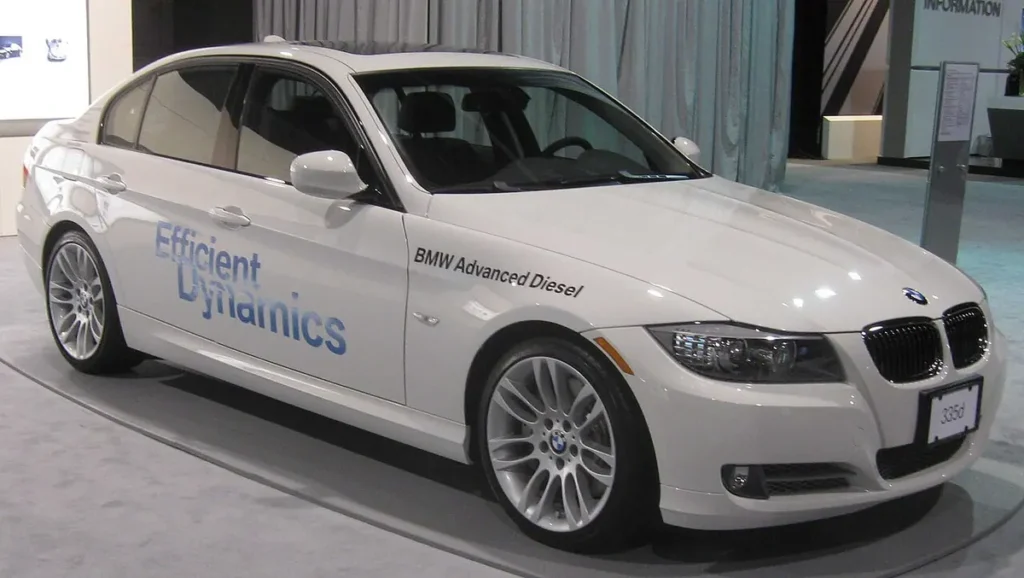
The M57 was sold mainly outside the US, so there are no NHTSA campaigns for most M57 cars. In the US BMW sold the 335d sedan and the X5 xDrive35d as 2009 model year cars, rated at 265 hp and 425 lb-ft, with urea (diesel exhaust fluid) injection to meet emissions rules in all 50 states, according to BMW’s press release. BimmerFile identifies the US engine internally as the M57N2 and lists changes such as offset wrist pins and a heated, monitored crankcase ventilation system. Some parts and fault patterns will differ from European cars.
NHTSA recalls for the 335d and X5 xDrive35d were pulled by vehicle and each campaign number was then checked individually against NHTSA’s record. The campaigns below name these diesels in NHTSA’s summaries and relate to the engine or its systems. Unit counts are NHTSA’s figures and often include other models. NHTSA lists recalls by model and year, not by engine, so a car at the late end of a model-year range may carry the later N57 diesel instead of the M57; check the engine code before assuming a recall is M57-related.
| Campaign | Vehicles | Issue | Remedy |
|---|---|---|---|
| 11V-441 | 2009 X5 xDrive35d built Oct 1, 2008–Jun 12, 2009 (2,120 vehicles) | Diesel fuel filter heater can overload and stay permanently on | Replace the heater, free |
| 13V-339 | 2009–2010 X5 xDrive35d built Jun 13–Nov 9, 2009 (1,540 vehicles) | Same fuel filter heater condition, later builds | Replace the heater, free |
| 18V-336 | 2009–2013 X5 xDrive35d diesel (33,214 vehicles) | Engine idler pulley bolt may loosen and break; NHTSA says the vehicle may lose power-assisted steering | Replace the bolt with an improved part, free |
| 18V-314 and 19V-472 | 2010–2011 335d (6,591), expanded to 2009–2011 335d and certain 328i and M3 models (16,641) | Positive battery cable connection at the fuse box may degrade, causing intermittent loss of power | Replace and secure the connector, free |
| 17V-067 | 2011 335d and other models (8,752) | Rear driveshaft CV joint may fatigue and break | Inspect and replace by production date, free |
| 16V-311 and 17V-138 | 2011 X5 xDrive35d and other models | Front driveshaft universal joint may let in water and fail | Replace front driveshaft, free |
| 17V-676 | 2009–2011 335d and many other 3 Series (702,965) | HVAC wiring and connectors may overheat | Replace wiring and connectors, free |
The 335d is also named in a 2024 recall on non-original sport steering wheels (24V-513). That is not an M57 fault, but run the VIN anyway. For European cars, use your national recall check, such as the UK government’s vehicle recall lookup, or ask a BMW dealer to read open campaigns from the VIN. BMW’s swirl flap issue is not a recall in any of the sources reviewed.
Best and Worst M57 Versions to Buy
There is no perfect M57, and condition and history matter more than the code. These are judgment calls from specialist guides, not BMW statements.
| Version | Verdict | Why |
|---|---|---|
| Cars with receipts for swirl flap removal or a redesigned manifold | Best | Removes the highest-risk fault |
| M57TÜ2 from 2005 (E60 530d, E90 330d, E70 X5 3.0d) | Often recommended | Bimmer.AI says revised injectors and EGR; check flap status regardless |
| E46 330d M57TÜ | Simple and popular | Fewer electronics and no twin-turbo complexity; check flaps on automatics |
| Twin-turbo 335d / 535d | Fast but costly | Two turbos and actuators; labor-heavy repairs |
| Any car with original flaps, no history and high mileage | Worst | Unknown flap condition, likely worn pulley, injectors and EGR |
| US 335d / X5 35d | Treat separately | SCR/DEF system, different parts and recalls |
For a newer diesel six, read our BMW 535d reliability owner report, which covers the N57-powered F10 rather than the M57. Bimmer.AI recommends the N57 (2008 onwards) if you need ULEZ compliance on a late build or want the newer car, and the M57 if you want the simpler engine.
BMW M57 Buyer’s Checklist
- Swirl flaps: Ask for the invoice for blanking or a new manifold. If there is none, assume risk, borescope the manifold and price the job.
- Turbo: Do a hard pull. Check for limp mode, whistle, smoke and oil in the intercooler pipes, and check the vacuum hoses and actuator.
- Crank pulley: Look for wobble, cracked or bulging rubber and belt squeal at idle.
- Injectors: Ask for a leak-off or smooth-running test, and listen for rough idle and hard warm starts.
- EGR and intake: Ask whether the manifold and EGR have been cleaned and look for sluggish response.
- Cooling and warm-up: The engine should reach temperature at a normal time and the cabin heater should be hot.
- DPF cars: Check for regeneration history, warning lights and the codes 480A and 481A. Avoid cars used only for short trips.
- Oil leaks: Inspect the filter housing, sump and front crank seal, and check oil service intervals and the oil specification.
- Recalls: Run the VIN and check the open campaigns before buying.
- Age: M57 cars are 15 years or older, so budget for suspension, cooling and electronics too.
Frequently Asked Questions
What are the most common BMW M57 problems?
The most common are broken or seized intake swirl flaps, turbocharger and actuator faults, worn injectors, clogged EGR and intake manifold, a failing crankshaft pulley damper, stuck thermostats and glow plug module faults. Oil leaks and breather problems are also reported.
Is the BMW M57 reliable?
Mechanically it is regarded as a durable engine, and high-mileage examples are common. Reliability depends on the swirl flaps, the turbo and maintenance history, so a cared-for car can be a good long-term proposition and a neglected one can be costly.
What is the M57 swirl flap problem?
The flaps in the intake manifold can seize and their shafts or screws can wear. A broken piece can enter a cylinder and cause serious engine damage. The usual fix is to fit blanking plates and clean the manifold, costing roughly £150–£350 (about $200–$460) at an independent specialist, according to the Bimmer.AI guide.
Which BMW M57 cars have swirl flaps?
Sources disagree. Motorfiable says most automatic M57 and M57TU cars have them, while a specialist workshop it cites says the E53 X5 3.0d and the manual first 330d and 530d do not. Inspect the manifold rather than relying on the model year.
How much does an M57 turbo replacement cost?
Bimmer.AI puts a single turbo at roughly £900–£1,800 (about $1,200–$2,350) and the twin-turbo 335d or 535d at £2,000–£3,500 (about $2,650–$4,600). Check the actuator and vacuum hoses first, because they are often the actual fault.
What is the difference between M57TU, TU2, UL, OL and TOP?
TÜ means technical revision. TÜ2 is the second revision with an aluminum block. UL, OL and TOP are the power classes, from the lower-output 325d and 525d to the upper-output 330d and 530d and the twin-turbo 335d and 535d.
How much power does the twin-turbo M57 make?
The twin-turbo TÜ TOP makes 272 PS and the TÜ2 TOP makes 286 PS (210 kW) with 580 Nm, according to Wikipedia and the BMW Club Czech Republic. The US-market 335d and X5 xDrive35d were rated at 265 hp and 425 lb-ft by BMW.
Is there a recall on the BMW M57?
For the US-market diesels, NHTSA lists an idler pulley bolt recall (18V-336) on the X5 xDrive35d and fuel filter heater recalls (11V-441 and 13V-339) on early X5 35d cars, among others. No swirl flap recall appears in NHTSA’s data. For European cars, check your national recall lookup or a BMW dealer by VIN.
M57 or N57, which is better?
The N57 is newer and cleaner and suits buyers who need a newer car. The M57 is simpler, but it is older and may not meet clean-air zone rules (Bimmer.AI says no M57 is ULEZ-compliant, per its M57 guide). Both need a thorough inspection. See our 535d owner report.
Can you remove the DPF on an M57?
Not legally in many countries, including the US, where the Clean Air Act prohibits it. Fix the cause of a clogged filter, drive long enough for regeneration and see our DPF guide.
The Bottom Line on BMW M57 Problems
The BMW M57 can be a long-lived engine if you buy the right car. Deal with the swirl flaps first, test the turbo and vacuum system, inspect the crankshaft pulley, and budget for injectors, EGR, thermostats and glow plugs. Buy on documented history and run the VIN for recalls. For more reliability guides, browse our Common Problems hub.
Currency note: amounts quoted in £ and € by the sources are converted to US dollars at the European Central Bank reference rate of 19 November 2026 (1 euro = 1.0992 US dollars; 1 British pound = about 1.3151 US dollars, from the ECB euro-pound rate of 0.83581) and rounded, so dollar figures are approximate. See the ECB reference rates.
Sources and notes: Specifications come from Wikipedia’s BMW M57 article, the BMW Club Czech Republic engine database and BMW’s US press release for the 335d and X5 xDrive35d. NHTSA recall data is linked by campaign number and was checked in November 2026. Cost ranges come from the Bimmer.AI M57 guide (UK, in pounds), CarChecker (Germany and France, in euros) and Motorfiable, so they are indicative, not BMW figures. Other sources are linked in the text, including bimmer-service.com, PT Turbo, Continental, BimmerFile, a US Department of Energy presentation and BMW bulletin SI B18 03 10. This article is for general information. Confirm any diagnosis or recall status for a specific vehicle with a BMW dealer or qualified specialist.