
BMW N63 engine problems are among the most searched reliability topics in the German car world, and for good reason. The 4.4-liter twin-turbo V8 has powered some of BMW’s most desirable models since 2008, from the 550i and 750i to the X5 xDrive50i, X6 and later the M550i and M850i. It delivers effortless torque and a sound that suits a luxury performance car, but its early versions earned a reputation that still follows the engine on the used market.
For American buyers, the N63 presents a real dilemma. Used BMW V8 models depreciate quickly, so a once-expensive 750i or X5 xDrive50i can look like a bargain. The question is whether that bargain survives the first repair bill. In this guide we break down the engine’s generations, the most common failures reported by owners and service bulletins, how BMW responded, and which versions make the most sense to buy today.
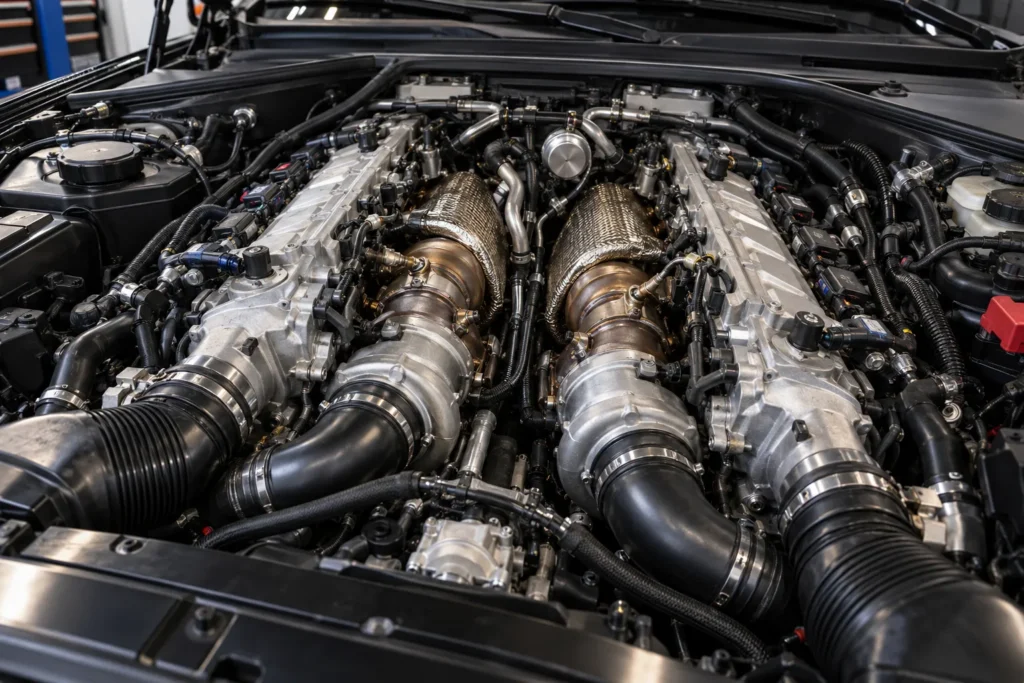
Table of Contents
- What Is the BMW N63 Engine?
- N63 Generations at a Glance
- The Most Common BMW N63 Engine Problems
- Excessive Oil Consumption
- Valve Stem Seals
- Timing Chain Stretch
- Fuel Injectors and High-Pressure Fuel System
- Coolant and Oil Leaks
- Carbon Buildup and Turbochargers
- How BMW Responded to BMW N63 Engine Problems
- BMW N63 Reliability by Generation
- N63 (2008 to 2013)
- N63TU (2013 to 2019)
- N63TU2 and N63TU3 (2016 onward)
- Repair Costs and Ownership Expectations
- Maintenance Tips That Help
- Buyer’s Advice: Should You Buy a Car with the N63?
- Who Should Buy
- Who Should Avoid It
- FAQ
- What years of the BMW N63 are the worst?
- Is the BMW N63TU reliable?
- How much oil does an N63 burn?
- Conclusion
What Is the BMW N63 Engine?
The N63 debuted in 2008 in the E71 X6 xDrive50i and soon spread to the F01 750i. It was BMW’s first turbocharged gasoline V8 and the first production car engine to place both turbochargers inside the V of the engine, a layout BMW calls the “hot-vee.” This design shortens the path from exhaust to turbo, which improves throttle response and keeps the engine compact. It also concentrates a great deal of heat in the center of the engine, and that heat is at the root of many of the problems owners report.
Over its long life the engine went through several major updates. Each generation addressed weak points of the one before it, which is why understanding the version under the hood matters more than the model badge on the trunk.
N63 Generations at a Glance
| Version | Engine code | Approx. years | Output (approx.) | Typical models |
|---|---|---|---|---|
| N63 | N63B44O0 | 2008 to 2013 | About 400 hp, 443 lb-ft | E70 X5 xDrive50i, E71 X6, F01 750i, F10 550i, F12 650i |
| N63TU | N63B44O1 | 2013 to 2019 | About 445 hp, 479 lb-ft | F10 550i, F15 X5, F16 X6, 650i, F01 750i |
| N63TU2 | N63B44O2 | 2016 to 2020 | About 445 to 456 hp, 479 lb-ft | G11/G12 750i, early G30 M550i, early G05 X5 xDrive50i, early G07 X7 xDrive50i |
| N63TU3 | N63B44M3 / T3 | 2018 onward | About 456 to 523 hp, up to 553 lb-ft | M850i, later 750i, later M550i, X5 M50i, X6 M50i, X7 M50i |
Figures vary slightly by market and model year, so buyers should confirm the exact rating for a specific car using the VIN.
The Most Common BMW N63 Engine Problems
Owner forums, independent BMW specialists and BMW’s own technical service bulletins point to a consistent list of BMW N63 engine problems. Most are concentrated in the first-generation engine, but several remain relevant to the updated versions as they age.
Excessive Oil Consumption
N63 oil consumption is the issue that defined the engine’s reputation. Early engines were reported to burn significant amounts of oil, with worn valve stem seals and piston ring problems commonly blamed. According to BimmerLife, as part of BMW’s N63 measures the threshold for using a single quart of oil was lowered to 750 miles, a figure many owners considered unacceptable. Oil consumption also became the focus of class action lawsuits in the United States, discussed below.
Valve Stem Seals
The extreme heat inside the hot-vee is believed to accelerate wear of the valve stem seals. Once they harden, oil seeps into the combustion chamber, causing blue smoke on startup, fouled spark plugs and higher consumption. Replacing the seals is labor-intensive, and independent shops typically quote it as one of the larger repair jobs on the engine.
Timing Chain Stretch
Timing chain wear was a known weakness of early engines and was among the components addressed in BMW’s later customer care program. Symptoms include a rattle on cold start and timing-related fault codes. Because the job requires extensive disassembly, it is costly, and ignoring it risks severe engine damage.
Fuel Injectors and High-Pressure Fuel System
Early N63 engines suffered injector failures that could cause misfires, rough running and, in some cases, fuel washing past the piston rings. BMW revised the injectors several times. Most affected cars should have received updated parts by now, but service records are the only way to confirm it.
Coolant and Oil Leaks
Heat also takes a toll on hoses, gaskets and plastic cooling components. Owners report leaks from the water pump, thermostat housing, coolant pipes in the valley, valve cover gaskets and turbo oil feed and return lines. These leaks can be small at first, but coolant or oil dripping onto hot exhaust parts is a fire risk and should never be ignored.
Carbon Buildup and Turbochargers
Like most direct-injection engines, the N63 can develop carbon deposits on the intake valves over time, leading to rough idle and reduced performance. Walnut blasting is the usual remedy. Turbocharger failures are less common but costly, partly because the turbos sit inside the V and require significant labor to reach.
How BMW Responded to BMW N63 Engine Problems
BMW acknowledged the scale of BMW N63 engine problems in December 2014 with service bulletin SI B11 06 14, the N63 Engine Customer Care Package. According to the bulletin filed with NHTSA, it covered N63 engines in E70, E71, E72, F01, F02, F04, F07, F10, F12 and F13 models.
It included a check, with replacement as needed, of the air mass sensors, piezo fuel injectors, engine vacuum pump, low-pressure fuel sensor and feed line, turbocharger fresh-air seals and crankcase ventilation lines, along with a timing chain check.
Owners also filed class action lawsuits in the United States over oil consumption. The first major case, Bang v. BMW, covered 2009 to 2014 model year cars with the original N63 and was settled in 2018.
A later case, Isley v. BMW, targeted the updated N63TU, and BimmerLife reported that its proposed settlement covered the 2013 to 2019 650i, 2013 to 2015 750i and 750Li, 2013 to 2017 550i, 2014 to 2016 550i GT, 2014 to 2018 X5 and 2015 to 2019 X6.
Buyers of a used car should ask whether the Customer Care Package work was completed and request the paperwork. Open recalls can be checked by VIN on the NHTSA recalls website, which also lists manufacturer service bulletins by model and year.
BMW N63 Reliability by Generation
BMW N63 reliability improved meaningfully with each update, and this is the most important point for shoppers.
N63 (2008 to 2013)
The first-generation engine has the weakest record. Most BMW N63 engine problems discussed online come from these years. Many specialists advise avoiding these cars unless there is complete documentation of major repairs, including the Customer Care Package work, valve stem seals and timing components.
N63TU (2013 to 2019)
The N63TU brought Valvetronic, revised turbochargers, lighter pistons, a forged crankshaft and connecting rods, new valve stem seals, an improved oil separation system in the valve covers, a revised fuel system and a second coolant pump. Specialists generally describe it as a significant improvement, though gasket leaks and cooling issues still appear as mileage climbs.
N63TU2 and N63TU3 (2016 onward)
The N63TU2 added twin-scroll turbochargers and moved the oil and coolant heat exchanger into the V of the engine. The N63TU3 brought improved thermal shielding for the crankcase and cylinder heads and a new ignition system, while the most powerful version added higher-pressure injectors, larger twin-scroll turbochargers, a redesigned intake manifold and extra cooling. These engines are considered the best of the family. They are still complex twin-turbo V8s, but owners report far fewer of the systemic issues that plagued the original.
Repair Costs and Ownership Expectations
Exact prices vary by region and shop, but owners dealing with BMW N63 engine problems should expect the major N63 jobs, including valve stem seals, timing chains and turbo replacement, to run into the thousands of dollars because of the labor involved. Routine items such as valve cover gaskets and coolant components are cheaper but can add up on a high-mileage car.
Maintenance Tips That Help
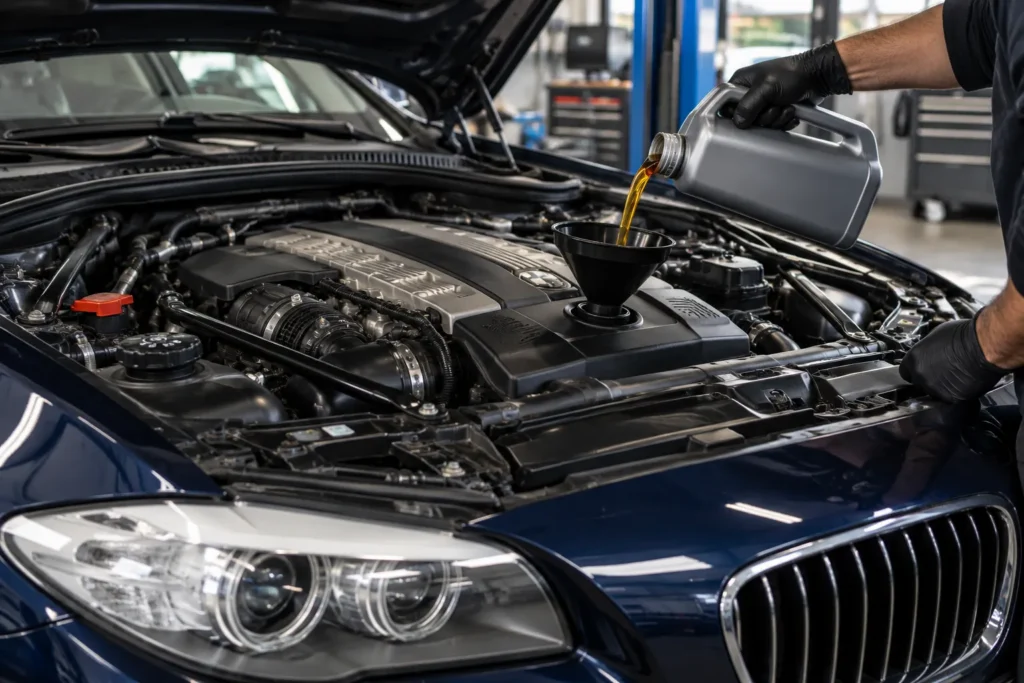
- Shorten oil change intervals well below the long factory intervals, a practice widely recommended by BMW specialists.
- Use a BMW-approved synthetic oil and check the level regularly between services.
- Let the engine cool briefly after hard driving to reduce heat stress on seals and turbo lines.
- Replace aging coolant hoses and plastic components before they fail.
- Keep a quality battery in good condition, as low voltage can trigger electronic faults.
For owners curious about how other BMW engines compare, our BMW 535d reliability report covers the diesel alternative from the same era.
Buyer’s Advice: Should You Buy a Car with the N63?
Whether BMW N63 engine problems should scare a buyer away depends on the generation and the history. A buyer who understands the risks and budgets for maintenance can enjoy one of the smoothest, most powerful V8s of its time at a fraction of its original price. A buyer looking for low-cost, worry-free transportation should look elsewhere.
Who Should Buy
- Enthusiasts who want V8 performance and luxury at a used-car price and can afford specialist maintenance.
- Buyers targeting N63TU3 models such as the later M550i, X5 M50i or M850i, ideally with remaining warranty or a certified pre-owned plan.
- Owners who keep detailed service records and plan to keep the car long term.
Who Should Avoid It
- Buyers considering a 2008 to 2013 car with no documentation of major repairs.
- Anyone who cannot set aside a repair fund for unexpected work.
- Drivers who prefer long oil change intervals and minimal maintenance.
A pre-purchase inspection by an independent BMW specialist is essential. It should include a check for oil and coolant leaks, a cold-start listen for timing chain noise, a scan for stored fault codes and a review of oil consumption history. Buyers deciding between the M550i and a full M car may find our explanation of BMW M Performance vs BMW M useful.

FAQ
What years of the BMW N63 are the worst?
The 2008 to 2013 first-generation engines are widely regarded as the most problematic, with oil consumption, valve stem seals, timing chains and injectors as the main complaints. These are the years most affected by BMW N63 engine problems.
Is the BMW N63TU reliable?
The N63TU is considered a substantial improvement over the original thanks to revised internals, cooling and fuel components. It is not trouble-free, and leaks and cooling issues are common as mileage rises, but with good maintenance it is far more dependable than the first version.
How much oil does an N63 burn?
Consumption varies widely by engine condition and generation. On early engines, BMW lowered the threshold for using one quart of oil to 750 miles, while healthy later engines typically use far less. Rising consumption is a warning sign worth investigating.
Conclusion
BMW N63 engine problems are real, well documented and concentrated in the earliest engines. BMW’s updates, the Customer Care Package and years of owner experience have made the later N63TU, TU2 and TU3 engines a much safer bet. For American buyers, the smart approach is simple: choose the newest generation the budget allows, insist on complete records and have the car inspected by a BMW specialist. Done right, an N63-powered BMW delivers the effortless V8 performance that made these cars so desirable when new. For more background on the engine’s development, see BMWBLOG’s N63 overview.