The BMW increased battery discharge warning is one of the most common electrical messages BMW owners see, and it often appears without any other obvious problem. The car may still start and drive normally, yet the message keeps returning. Left unchecked, it can end with a dead battery, a car that will not start and, in some cases, unnecessary parts being replaced.
In this guide we explain what the message means, the most common causes, how a technician diagnoses it, why a new BMW battery must be registered, and what owners can do to stop the warning from coming back. The information is based on published guidance from BMW specialists and parts experts, with figures attributed to their sources.
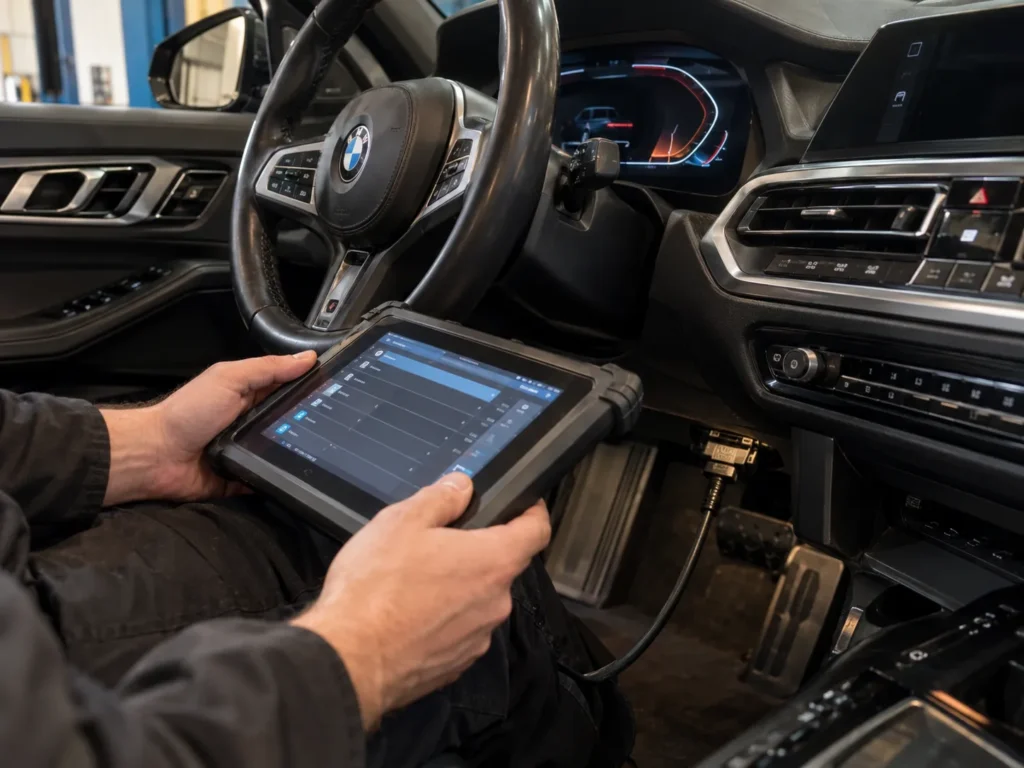
Table of Contents
- What Does BMW Increased Battery Discharge Mean?
- Why BMWs Are So Sensitive to Battery Condition
- Common Causes of the BMW Increased Battery Discharge Warning
- An Old or Weak Battery
- A New Battery That Was Not Registered
- Parasitic Drain From a Module That Will Not Sleep
- Aftermarket Accessories and Plugged-In Devices
- Short Trips and Charging Problems
- How to Diagnose a BMW Increased Battery Discharge Warning
- What Is a Normal Parasitic Draw on a BMW?
- BMW Battery Registration Explained
- Choosing the Right Battery
- How to Fix the BMW Increased Battery Discharge Warning
- Signs Your BMW Battery Is Failing
- Main Battery and Auxiliary Battery
- How to Jump-Start a BMW Safely
- Is It Safe to Drive With the BMW Increased Battery Discharge Warning?
- FAQ
- What does increased battery discharge mean on a BMW?
- Do I need to register a new BMW battery?
- Can a dash cam cause increased battery discharge on a BMW?
- How long do BMW batteries last?
- Why does my BMW battery keep dying overnight?
- How do I clear the increased battery discharge message?
- Conclusion
What Does BMW Increased Battery Discharge Mean?
BMW vehicles monitor the battery with an Intelligent Battery Sensor, known as the IBS, mounted on the negative battery terminal. According to Euro Premium Parts, the IBS tracks voltage, current flow and state of charge, and the battery management system uses that data to detect when the battery is losing charge faster than normal.
In practice, the BMW increased battery discharge message means the car has detected an abnormal energy loss, either while parked or because the battery is not being recharged properly. YOUCANIC explains that when voltage drops, the system may also switch off some non-essential electronics to protect the battery and keep enough power to start the engine.
Why BMWs Are So Sensitive to Battery Condition
Modern BMWs contain many control modules that stay partly active even when the car is locked, for features such as keyless entry, alarm and telematics. When everything works correctly, these modules go to sleep and draw very little current. If one module stays awake, or the battery is weak, the car notices quickly and displays the warning.
Common Causes of the BMW Increased Battery Discharge Warning
An Old or Weak Battery
The most common cause is simply an aging battery. Euro Premium Parts notes that as a battery ages, typically beyond four to five years, its internal resistance increases and it can no longer hold or accept a full charge. YOUCANIC also lists batteries older than five years as a leading cause. Cold weather makes a weak battery even more likely to trigger the message.
A New Battery That Was Not Registered
BMW’s charging system adapts to the battery as it ages. If a new battery is installed without being registered, the system keeps using charging settings intended for the old battery. Euro Premium Parts explains that the car will then continue applying charging parameters suited for a degraded battery, which can cause new warnings and shorten the new battery’s life.
Parasitic Drain From a Module That Will Not Sleep
A parasitic drain happens when something keeps drawing current after the car is locked. Euro Premium Parts says drain often occurs when one or more control modules fail to enter sleep mode, and it names the telematics unit, the infotainment head unit and the comfort access module as common culprits. YOUCANIC adds that a faulty comfort access module or EDC module can also be responsible.
Aftermarket Accessories and Plugged-In Devices
Dash cams, amplifiers, GPS trackers and phone chargers left in 12-volt sockets can all keep drawing power. YOUCANIC also warns that leaving a diagnostic scanner plugged into the OBD-II port can drain the battery. Removing these devices is one of the first and easiest checks.
Short Trips and Charging Problems
Frequent short trips do not give the alternator enough time to recharge the battery, especially in cold weather, which YOUCANIC lists as a common cause. A weak alternator, loose battery terminals, a poor ground connection or a faulty IBS sensor can also prevent proper charging.
How to Diagnose a BMW Increased Battery Discharge Warning
Because several different problems can cause the same message, a structured diagnosis saves time and money. Specialists generally follow this order:
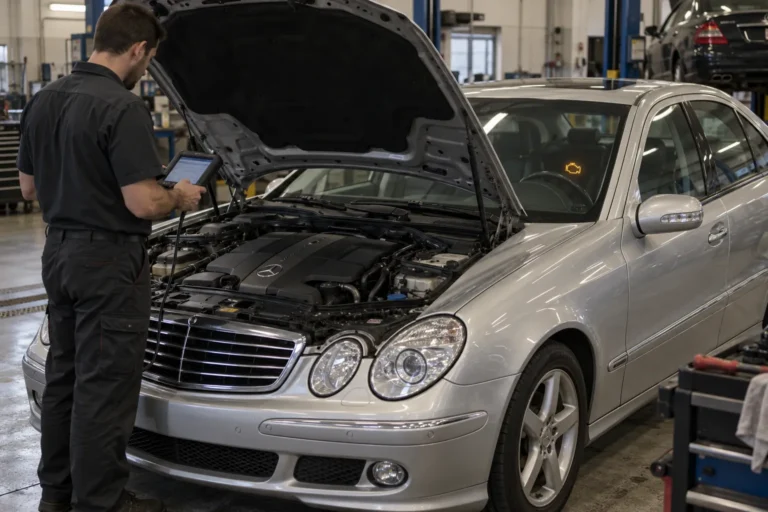
- Scan all modules: read fault codes from the engine, battery management and body modules before clearing anything, as Euro Premium Parts recommends.
- Check battery age and condition: note the battery’s date and have it load tested.
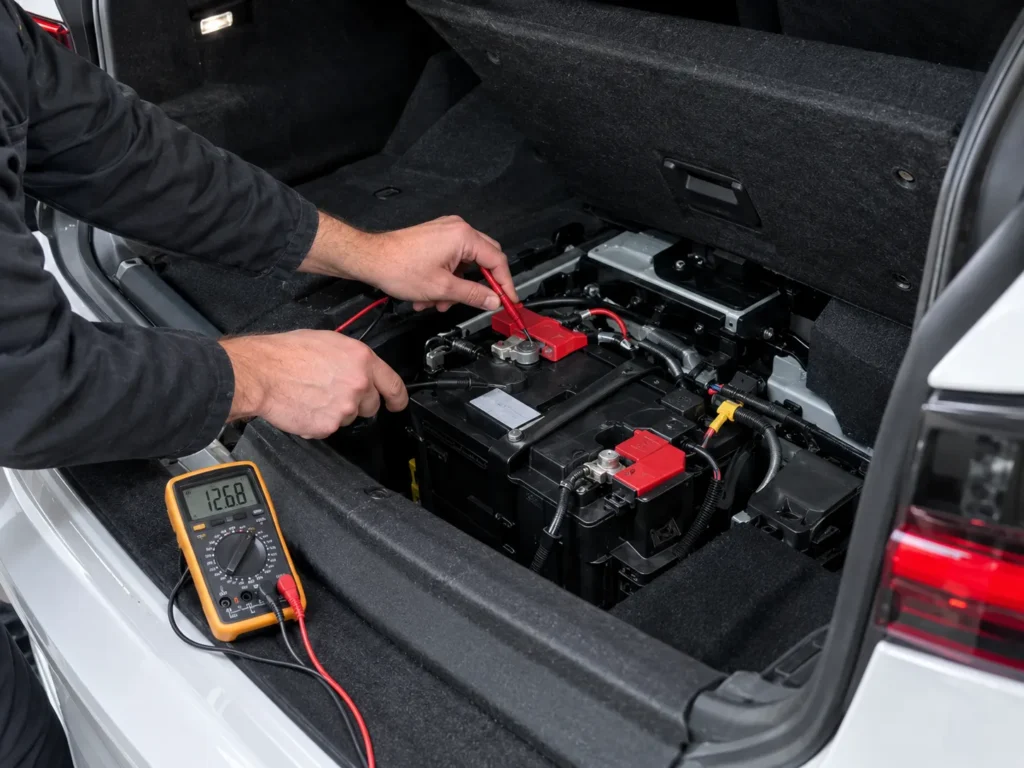
- Check resting voltage: YOUCANIC says a healthy battery should read at least 12 volts with the engine off.
- Check charging voltage: with the engine running, YOUCANIC gives a normal range of about 13 to 14.5 volts, while Euro Premium Parts cites 13.8 to 14.8 volts under load as acceptable.
- Measure parasitic draw: lock the car and wait for the modules to sleep before measuring.
- Confirm battery registration: if the battery was replaced, verify that it was registered correctly.
What Is a Normal Parasitic Draw on a BMW?
Specialist sources give slightly different figures, so they are best treated as a guide rather than a strict limit. YOUCANIC says a healthy BMW typically settles to about 30 to 50 milliamps once modules are asleep, which can take 20 to 40 minutes after locking. Euro Premium Parts says normal quiescent current is typically under 80 milliamps and that draws above 200 milliamps indicate a module is not sleeping.
| Measurement | Typical guidance | Source |
|---|---|---|
| Battery voltage, engine off | At least 12 volts | YOUCANIC |
| Charging voltage, engine running | About 13 to 14.5 volts (13.8 to 14.8 under load) | YOUCANIC, Euro Premium Parts |
| Normal parasitic draw after sleep | About 30 to 80 milliamps | YOUCANIC, Euro Premium Parts |
| Draw suggesting a module is awake | Above 200 milliamps | Euro Premium Parts |
If the draw is too high, a technician usually isolates the cause by removing fuses one at a time while watching the reading, which points to the circuit that is staying awake.
BMW Battery Registration Explained
Battery registration is one of the most misunderstood parts of BMW ownership, and skipping it is a common reason for a BMW increased battery discharge warning after a battery replacement.
According to Rick’s Free Auto Repair Advice, the charging system adjusts its routine as the battery ages to keep it fully charged, and it stores these adjustments. Registration resets that stored information so the system can adapt to the new battery. If the battery is not registered, the alternator keeps charging the new battery the same way it charged the old one, which the source says shortens the new battery’s life and adds unnecessary wear to the charging components.
Choosing the Right Battery
Many modern BMWs use AGM batteries, and Euro Premium Parts says BMW vehicles require high-capacity AGM batteries rated for their specific energy demands. The replacement should match the type and capacity specified for the car. A professional-grade scan tool or a BMW-compatible app can be used to register the new battery, and a specialist shop can do it quickly during installation.
How to Fix the BMW Increased Battery Discharge Warning
The right fix depends on what the diagnosis finds. The most common solutions are:
- Charge the battery: use a smart battery charger, or take a longer drive of at least 30 minutes, as YOUCANIC suggests.
- Replace an old battery: fit a battery of the correct type and capacity and register it.
- Remove accessories: unplug chargers, dash cams and other devices, and remove any scanner left in the OBD-II port.
- Clean and tighten connections: check the battery terminals, ground connection and IBS sensor cable.
- Repair the faulty module or alternator: if a module stays awake or the alternator is weak, the faulty part must be repaired or replaced.
- Update software: YOUCANIC recommends making sure the vehicle software is up to date.
If the car sits unused for long periods, a 12-volt smart maintainer helps keep the battery healthy and prevents the warning from returning.
Signs Your BMW Battery Is Failing
The BMW increased battery discharge message is often the first warning, but other signs usually appear as a battery weakens. Recognizing them early makes it easier to replace the battery before it leaves the car stranded.
- The engine cranks more slowly than usual, especially on cold mornings.
- The auto start-stop function stops working, because the car does not have enough battery reserve to restart the engine.
- Comfort features such as seat heating or the infotainment system switch off unexpectedly.
- Battery or charging warnings appear repeatedly, even after a long drive.
- The car shows several unrelated electrical faults at the same time, which can happen when voltage drops too low.
Main Battery and Auxiliary Battery
YOUCANIC notes that certain BMW models with gasoline or diesel engines also have an auxiliary battery in addition to the main battery. On these cars, both batteries should be checked during diagnosis, because a weak auxiliary battery can also trigger battery warnings. The owner’s manual and a BMW-capable scan tool show whether a specific car has one.
How to Jump-Start a BMW Safely
On many BMW models the battery is located in the trunk or under a floor panel, while dedicated jump-start terminals are provided in the engine compartment. The owner’s manual shows their exact location. Using those terminals, rather than connecting directly to the battery, is the method BMW describes for jump-starting.
- Switch off all electrical consumers in both cars before connecting the cables.
- Connect the cables to the designated jump-start terminals in the order shown in the owner’s manual.
- Start the donor vehicle first, then start the BMW.
- Disconnect the cables in reverse order once the engine is running.
- Drive for a while or use a battery charger afterward, and have the battery tested if it needed a jump-start.
A battery that has been fully discharged may be permanently weakened, so a jump-start should be followed by a proper battery test rather than treated as a fix.
Is It Safe to Drive With the BMW Increased Battery Discharge Warning?
The car can usually be driven, but the warning should be diagnosed quickly. Euro Premium Parts advises addressing it within a few days at most. A weak battery can leave the car unable to start, and repeated deep discharges shorten battery life. Until the cause is found, it helps to reduce electrical loads such as seat heaters, rear defrost and a high climate fan setting.
A battery warning combined with other starting problems can also point to different issues. Owners of newer four-cylinder models should also check whether their car is affected by the 2026 starter recall covered in our guide to BMW B48 engine problems.
FAQ
What does increased battery discharge mean on a BMW?
It means the Intelligent Battery Sensor and battery management system have detected that the battery is losing charge faster than normal, either because of a weak battery, a parasitic drain or a charging problem.
Do I need to register a new BMW battery?
Yes. BMW’s charging system adapts to the battery as it ages, and registration resets that information for the new battery. Without registration, the system may charge the new battery incorrectly, shortening its life.
Can a dash cam cause increased battery discharge on a BMW?
Yes. Aftermarket devices such as dash cams, GPS trackers and amplifiers can draw current continuously after the car is locked, which can trigger the warning and drain the battery.
How long do BMW batteries last?
Specialists commonly report that BMW batteries begin to weaken after about four to five years, although climate, driving habits and electrical load all affect battery life.
Why does my BMW battery keep dying overnight?
A battery that dies overnight usually points to a parasitic drain, such as a control module that will not go to sleep or an aftermarket accessory drawing power, or to a battery that can no longer hold a charge. Measuring the parasitic draw after the car has gone to sleep helps identify the cause.
How do I clear the increased battery discharge message?
The message usually clears after the battery is properly charged and the cause has been fixed. If it keeps returning, the battery, charging system or a module that will not sleep needs to be diagnosed.
Conclusion
The BMW increased battery discharge warning is usually caused by an aging battery, an unregistered replacement battery, a parasitic drain or a charging problem. Checking battery age and voltage, removing accessories, measuring parasitic draw and registering every new battery are the most effective steps. Dealing with the warning early prevents a dead battery and keeps the car’s sensitive electronics working properly.