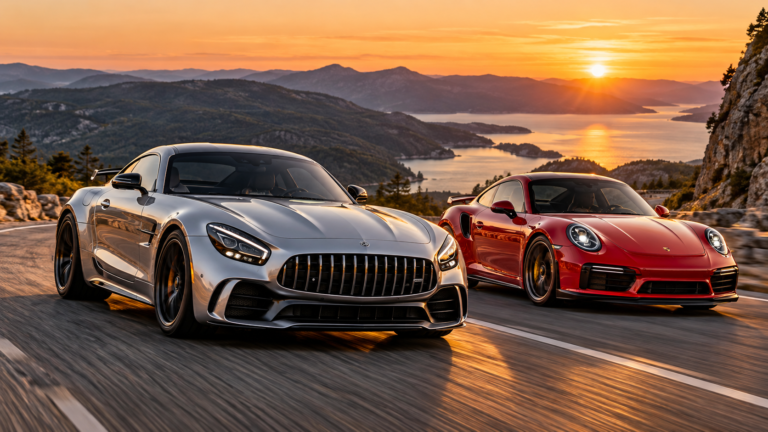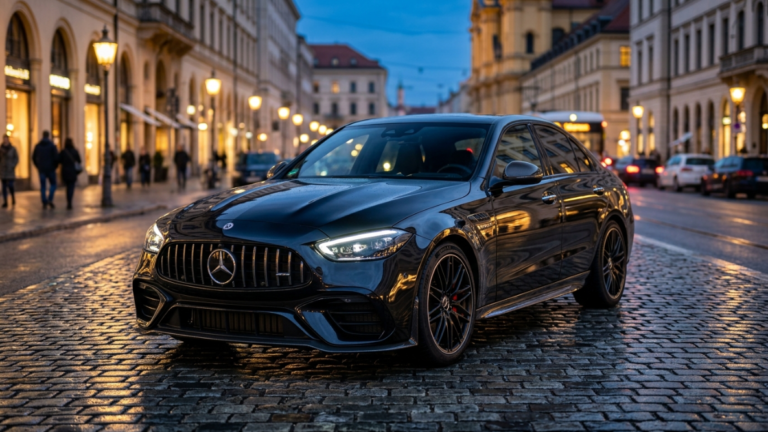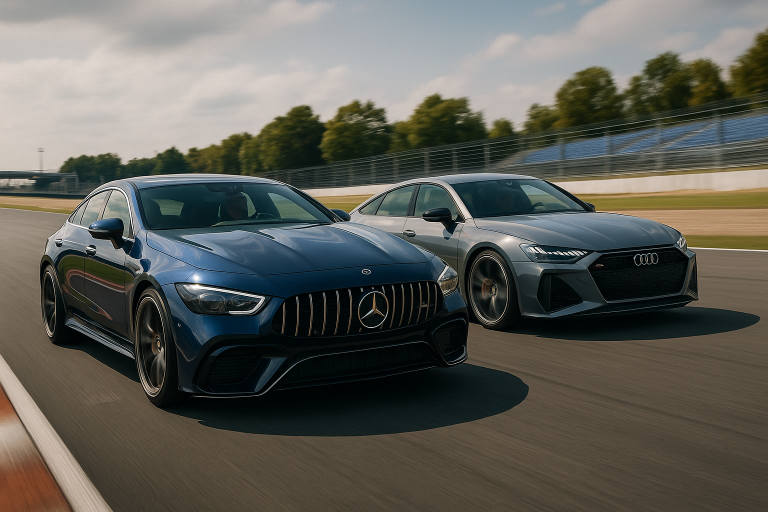
What sets a Mercedes-AMG apart from every other luxury performance car? It is not just the speed or the badge. The signature AMG features come from engineering, character and a philosophy that has been refined for more than half a century in Affalterbach, Germany. From hand-built engines to unmistakable exhaust sounds and racing technology, AMG cars are designed to feel special every time you start them.
If you have ever wondered what makes AMG unique, here are the seven defining AMG features, plus the customization options that let owners make each car their own. To see which models best show these qualities, read our guide to the top Mercedes-AMG models.
Table of Contents
- Where AMG Comes From
- Understanding the AMG Model Range
- 1. One Man, One Engine
- 2. The Signature AMG Exhaust Sound
- 3. Aggressive Styling and Aerodynamics
- 4. AMG-Specific Chassis and Suspension Tuning
- 5. AMG DYNAMIC SELECT Drive Modes
- 6. Performance Interiors with Motorsport Touches
- 7. Track Heritage and Racing Pedigree
- AMG vs a Regular Mercedes-Benz
- Electrification and the Future of AMG
- AMG Braking Systems
- Key AMG Engines at a Glance
- Bonus: Customization Options
- Frequently Asked Questions
- Are all AMG engines hand-built?
- What does AMG stand for?
- Is an AMG worth the extra cost?
- Final Thoughts
Where AMG Comes From
AMG was founded in 1967 by Hans Werner Aufrecht and Erhard Melcher, two former Mercedes-Benz engineers. The name comes from their initials and Grossaspach, Aufrecht’s birthplace. The company first gained fame in 1971 when its modified 300 SEL 6.8 finished second in class at the Spa 24 Hours. Mercedes-Benz began working closely with AMG in the 1990s and took full ownership in 2005. Today Mercedes-AMG builds everything from compact performance cars to hypercars like the AMG ONE. Learn more in our article on the history of AMG.
Understanding the AMG Model Range
Before looking at the features, it helps to understand how the AMG range is organized. Entry-level performance models carry numbers such as 35, 43 and 53. These are developed by AMG but built on the regular Mercedes-Benz production lines, offering strong performance and AMG styling at a lower price. The top-level models carry numbers such as 45 S and 63, and they use the most powerful engines and the most advanced chassis technology. Above them sit special editions like the Black Series, which are track-focused and built in limited numbers. Many of the features below are found across the range, while some, such as the hand-built engine, are reserved for the top models.
1. One Man, One Engine
The most famous of all AMG features is the One Man, One Engine philosophy. In AMG’s engine shop in Affalterbach, a single technician assembles a complete engine from start to finish. When the work is done, the technician signs a plaque that is fixed to the engine. Today this applies to AMG’s top-level V8 engines, such as the 4.0-liter twin-turbo V8 in the GT and S-Class models, as well as the high-performance M139 four-cylinder in the 45 S models. Earlier, it also applied to AMG’s legendary V12 engines.
This approach is more than marketing. It ensures that each engine is built with care, and it gives owners a personal connection to the person who built the heart of their car. Many owners proudly show the signed plaque when they open the hood.
2. The Signature AMG Exhaust Sound
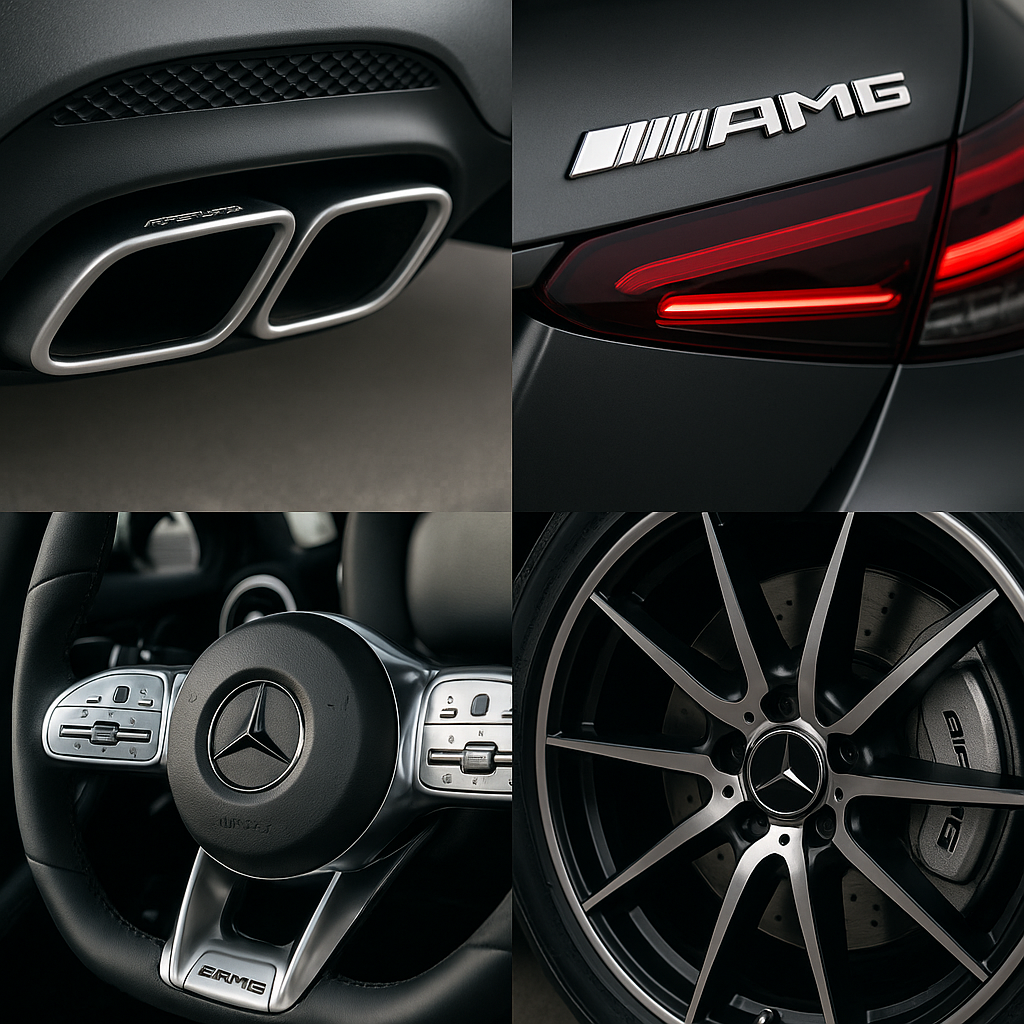
From a deep rumble at idle to explosive crackles on downshifts, AMG exhausts are tuned to thrill. AMG engineers spend a great deal of time shaping the sound of each car using adjustable exhaust flaps, which open in sportier modes to release the full soundtrack. The twin-turbo V8 is especially famous for its thunderous bark, and earlier naturally aspirated engines like the 6.2-liter M156 became legends for their sound.
Sound is a central part of the AMG experience. It gives the cars a strong emotional character and makes them instantly recognizable, even before they come into view.
3. Aggressive Styling and Aerodynamics
AMG models feature distinct body styling that sets them apart from regular Mercedes-Benz models. Common features include the vertical-slat Panamericana grille, wider fenders, larger air intakes, functional diffusers, rear spoilers and sculpted hoods and bumpers. On top models like the AMG GT, active aerodynamics adjust spoilers and front elements to improve stability at high speed.
Even at a glance, enthusiasts can tell the difference between a regular Mercedes and an AMG. The design communicates power without sacrificing the elegance Mercedes-Benz is known for.
4. AMG-Specific Chassis and Suspension Tuning
AMG models are not simply regular Mercedes cars with more power. They receive dedicated suspension components, stiffer mounts, larger brakes and unique steering calibration. Many models use AMG RIDE CONTROL adaptive suspension, while top models offer active roll stabilization that keeps the body flat in corners. Rear-axle steering on many recent models makes large cars feel more agile.
The 4MATIC+ all-wheel-drive system is another highlight. It can vary the torque split between the front and rear axles, and on several models it includes a Drift Mode that sends all power to the rear wheels for experienced drivers on a closed course.
5. AMG DYNAMIC SELECT Drive Modes
Most AMG models offer AMG DYNAMIC SELECT, a system that lets drivers choose between several driving modes. Typical modes include Slippery, Comfort, Sport, Sport Plus, Race and Individual. Each mode adjusts throttle response, suspension stiffness, steering, exhaust sound and transmission behavior. The result is one car with many personalities, from a relaxed cruiser to a track-ready machine. AMG steering wheel buttons allow drivers to switch modes and adjust settings without taking their hands off the wheel.
6. Performance Interiors with Motorsport Touches
Inside an AMG, buyers find a cabin that combines luxury with performance details. Features include flat-bottom AMG Performance steering wheels, carbon fiber or aluminum trim, sport seats with extra bolstering, AMG-specific digital displays with performance data and a track pace function on some models that records lap times. Luxury is never compromised, but it is always wrapped in speed-focused details.
7. Track Heritage and Racing Pedigree
AMG’s influence extends far beyond the street. The brand has a long history in touring car racing, including the DTM championship, and customer teams race the AMG GT3 around the world. AMG models have served as the official safety car in Formula 1, and Mercedes-AMG is closely linked with the Mercedes Formula 1 team. The AMG ONE hypercar even uses a Formula 1-derived hybrid powertrain. That passion and knowledge feed directly into every car AMG builds.
AMG vs a Regular Mercedes-Benz
The difference between an AMG and a regular Mercedes goes well beyond the engine. AMG models receive their own front and rear axles in many cases, stiffer body structures, unique cooling systems for sustained performance, specific transmission software, larger wheels and tires and exclusive interior trim. The steering is quicker, the suspension is tuned for body control and the stability systems allow more freedom before intervening. Together, these changes transform a comfortable luxury car into a true performance machine while keeping the quality and comfort Mercedes-Benz is known for.
Electrification and the Future of AMG
AMG is adapting its features for the electric era. Its E Performance plug-in hybrid models combine combustion engines with electric motors and high-performance batteries derived from Formula 1 technology, delivering more power than ever. Fully electric AMG models are also arriving, and the brand is developing a dedicated electric platform with its own motors. AMG’s challenge is to keep its signature sound and character alive as powertrains change.
AMG Braking Systems
Stopping power is just as important as speed. AMG models use larger brake discs and multi-piston calipers than regular Mercedes-Benz models, and many top models offer AMG carbon ceramic brakes. These are lighter, more resistant to fade during repeated hard braking and easy to identify by their bronze-colored calipers. They are expensive to replace, but they give AMG cars confidence on track and on demanding mountain roads.
Key AMG Engines at a Glance
| Engine | Type | Typical models |
|---|---|---|
| M139 | 2.0L turbo four-cylinder | A 45 S, CLA 45 S, C 63 S E Performance |
| M256 | 3.0L turbo inline-six mild hybrid | 53 models |
| M177 / M178 | 4.0L twin-turbo V8 | 63 models, AMG GT |
| M156 (past) | 6.2L naturally aspirated V8 | C 63, E 63, SLS AMG |
| M279 (past) | 6.0L twin-turbo V12 | S 65, G 65 |
Bonus: Customization Options
AMG owners can personalize their cars with a wide range of options, including Night Packages, exclusive forged wheels, carbon ceramic brakes, matte or MANUFAKTUR paint colors and AMG Performance seats and trims. Each AMG can be tailored to its owner’s taste and driving style.
Frequently Asked Questions
Are all AMG engines hand-built?
No. The One Man, One Engine philosophy applies to AMG’s top-level engines, such as the 4.0-liter V8 in 63 models and the M139 four-cylinder in 45 S models. Engines in 35, 43 and 53 models are built on regular production lines.
What does AMG stand for?
AMG comes from the names of its founders, Aufrecht and Melcher, and Grossaspach, Aufrecht’s hometown.
Is an AMG worth the extra cost?
For drivers who value performance, sound and character, an AMG offers a much more exciting experience than a regular Mercedes. However, running costs are higher, so buyers should budget for tires, brakes and maintenance.
Final Thoughts
An AMG is not just a faster Mercedes. It is a statement. Hand-built engines, unforgettable sound, aggressive design, advanced chassis technology and racing heritage come together to create cars that awaken the senses. These AMG features explain why so many drivers find it hard to settle for anything else once they have experienced one. Explore the current lineup on the official Mercedes-AMG USA website.