When you see the AMG badge on a Mercedes-Benz, you are looking at more than a performance upgrade. You are looking at a legacy. AMG history is a story of racing passion, engineering precision and a relentless pursuit of speed that took a tiny independent workshop and turned it into one of the most respected performance brands in the world.
In this guide we take a drive through the history of Mercedes-AMG, from its humble roots and early racing success to its partnership with Mercedes-Benz, its iconic road cars, its role in motorsport and its future in the electric era. To learn what makes modern AMG cars special, read our guide to the top 7 AMG features.
Table of Contents
- 1967: The Birth of AMG
- 1971: The Red Pig and the First Taste of Glory
- The 1980s: Building a Reputation on the Road
- The 1990s: Partnership with Mercedes-Benz
- The CLK GTR: AMG Builds a Supercar
- The 2000s and 2010s: Icons of the Modern Era
- How AMG Grew into a Global Brand
- The Modern AMG Lineup
- The People Behind AMG
- AMG in Motorsport
- The Future of AMG
- AMG History Timeline
- Legendary AMG Models Every Fan Should Know
- Frequently Asked Questions
- Who founded AMG?
- When did Mercedes-Benz buy AMG?
- Where are AMG cars developed?
- Final Thoughts
1967: The Birth of AMG
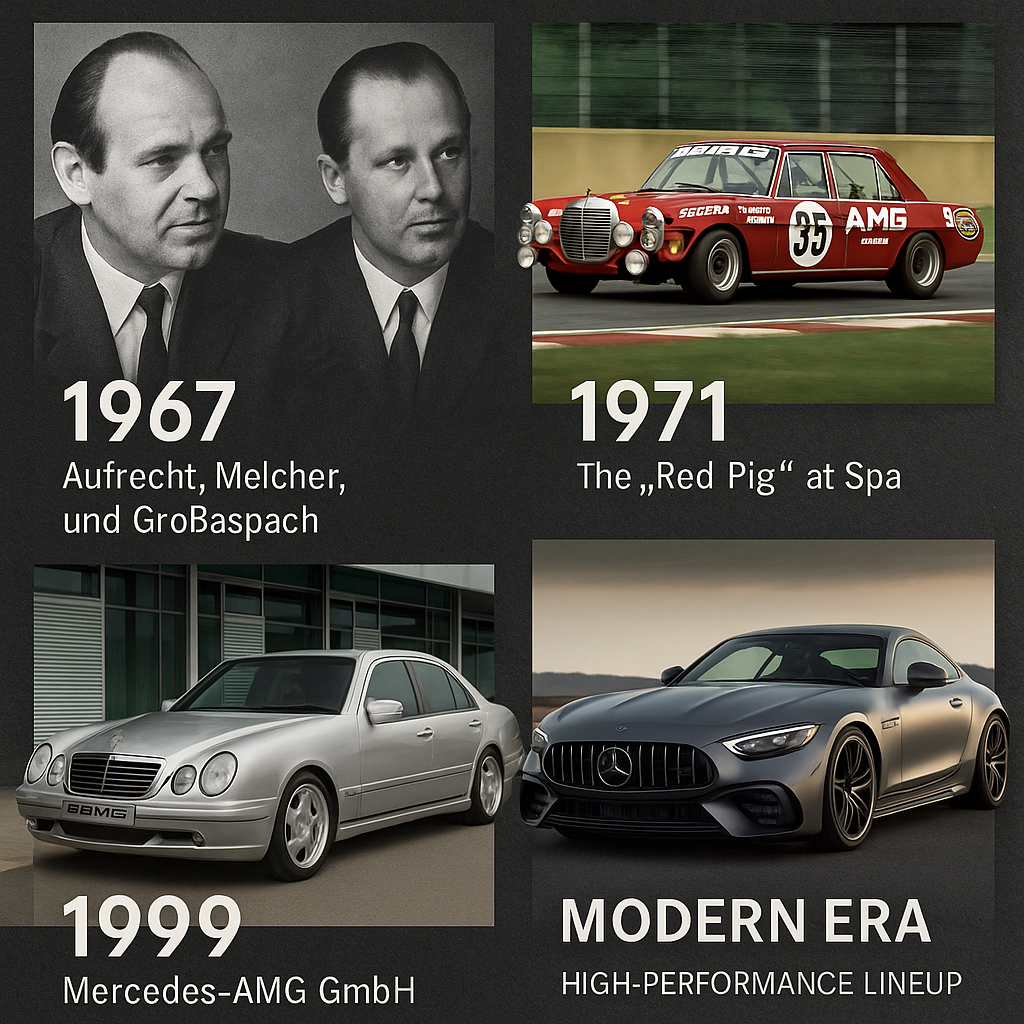
AMG history began in 1967 in Burgstall an der Murr, a small town near Stuttgart. Two former Mercedes-Benz engineers, Hans Werner Aufrecht and Erhard Melcher, had worked together on racing engines in their spare time. When Mercedes-Benz stepped back from motorsport, they decided to start their own company focused on building and improving race engines for Mercedes vehicles.
The name AMG comes from three sources: Aufrecht, Melcher and Grossaspach, Aufrecht’s birthplace. Their mission was simple: build faster, stronger and more competitive machines based on Mercedes-Benz cars.
1971: The Red Pig and the First Taste of Glory

In 1971, AMG made headlines when its heavily modified Mercedes-Benz 300 SEL 6.8 won its class and finished second overall at the 24 Hours of Spa in Belgium. The big, heavy luxury sedan was nicknamed the Red Pig, and its success against much lighter sports cars shocked the racing world. AMG had enlarged the V8 engine to 6.8 liters and extensively reworked the car, proving that the small company could compete with established manufacturers.
From that moment, AMG earned recognition as a serious force in motorsport and performance tuning. In 1976 the company moved to Affalterbach, which remains its home today.
The 1980s: Building a Reputation on the Road
Throughout the 1980s, AMG created high-performance versions of Mercedes-Benz cars for wealthy customers. The most famous was the AMG Hammer, introduced in 1986. Based on the W124 E-Class sedan, it used a 5.6-liter V8 with AMG-developed cylinder heads, producing around 360 hp. It was faster than many supercars of its time, and its combination of luxury sedan practicality and sports car speed made it a legend. Coupe and wagon versions followed.
At this time AMG was still independent, and its cars were modified after they left the Mercedes-Benz factory. AMG also offered body kits, wheels and interior upgrades, and it built a strong following among customers who wanted their Mercedes to stand out.
The 1990s: Partnership with Mercedes-Benz
In 1990, AMG signed a cooperation agreement with Mercedes-Benz, which allowed AMG products to be sold and serviced through Mercedes dealerships. In 1993 came the C 36 AMG, the first model developed jointly by AMG and Mercedes-Benz. The same year, the E 60 AMG became one of the fastest sedans of its era with its 6.0-liter V8.
In 1999, DaimlerChrysler acquired a majority stake in AMG, forming Mercedes-AMG GmbH. Mercedes-Benz took full ownership in 2005. Aufrecht separated the racing operations into a new company, HWA, which continued to run Mercedes racing programs. From this point, AMG models were developed directly alongside Mercedes-Benz models rather than modified afterward, and AMG sales grew dramatically.
The CLK GTR: AMG Builds a Supercar
One of the most extraordinary chapters in AMG history came in 1997, when AMG developed the CLK GTR to compete in the FIA GT Championship. It was a purpose-built racing car with a mid-mounted V12 engine, designed to beat rivals such as the McLaren F1 GTR and Porsche 911 GT1. The CLK GTR won the championship in 1997, and its successor won again in 1998. To satisfy homologation rules, AMG built a small number of road-going CLK GTR cars, which are now among the most valuable Mercedes-Benz models ever produced.
The 2000s and 2010s: Icons of the Modern Era
The new century brought some of the most iconic AMG models ever built. The 6.2-liter M156 V8, introduced in 2006, was AMG’s first engine designed entirely in-house, and it powered cars such as the C 63 AMG and E 63 AMG. In 2010, the SLS AMG became the first car developed entirely by AMG, with its dramatic gullwing doors and front-mid-mounted V8. The AMG GT followed in 2014, introducing the 4.0-liter twin-turbo V8 that powers many AMG models today. Extreme Black Series models, such as the SLS AMG Black Series and the AMG GT Black Series, pushed performance even further.
How AMG Grew into a Global Brand
After becoming part of Mercedes-Benz, AMG expanded rapidly. The company introduced more affordable models, first with the 43 and later the 35 and 53 lines, which brought AMG performance and styling to a much wider audience. At the same time, AMG kept its most powerful 63 models and special editions at the top of the range. Sales grew from a few thousand cars per year in the 1990s to well over 100,000 cars per year in the late 2010s, making AMG one of the most successful performance brands in the world.
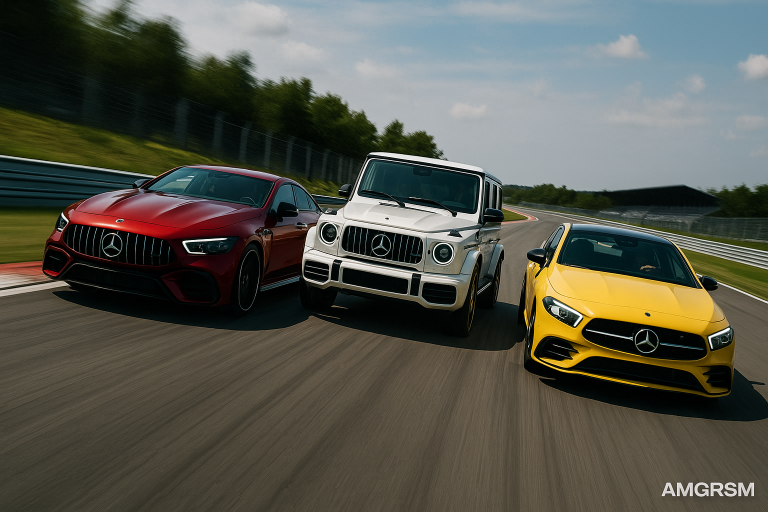
AMG also expanded into new segments. The G 63 became a status symbol around the world, while the GLE 63 and GLS 63 brought AMG performance to large SUVs. Even compact cars like the A 45 received the full AMG treatment, proving that the brand’s character could be applied to almost any Mercedes-Benz model.
The Modern AMG Lineup
Today AMG builds a wide range of performance cars, including:
- Compact models such as the A 45 S and CLA 45 S, with the world’s most powerful production four-cylinder engine
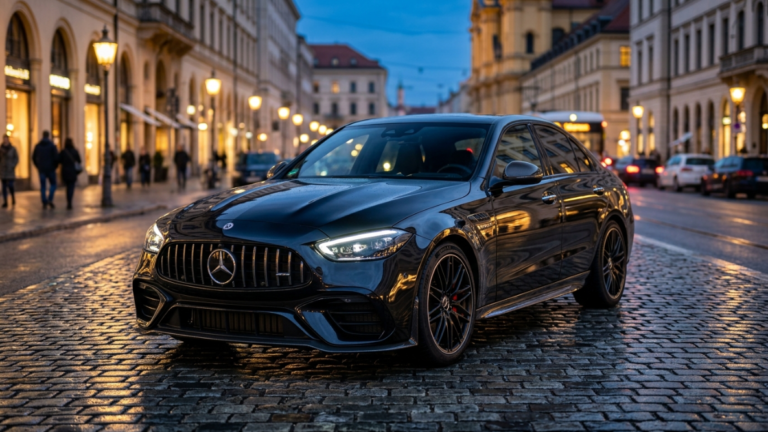
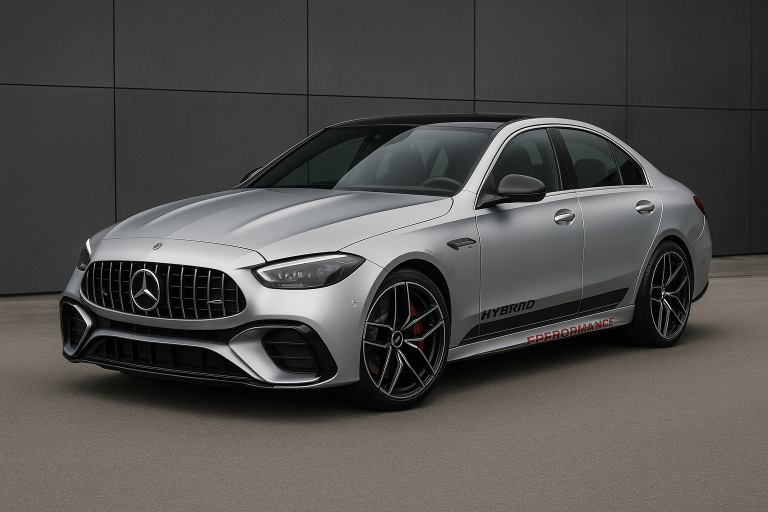
- The C 63 S E Performance, a plug-in hybrid with Formula 1-inspired technology
- The G 63, a luxury off-roader with a hand-built twin-turbo V8
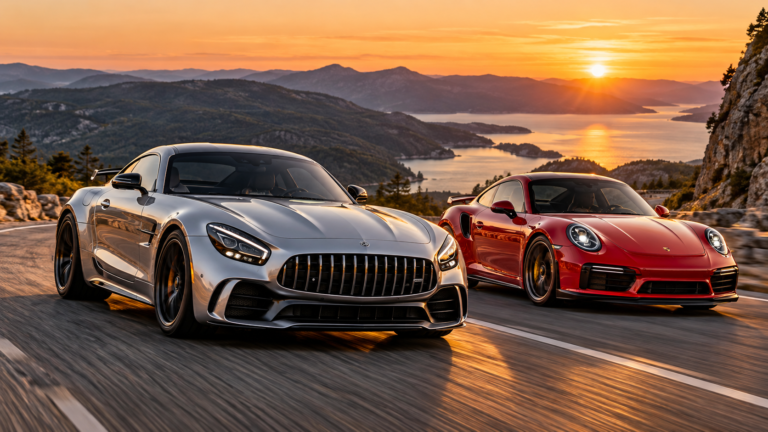
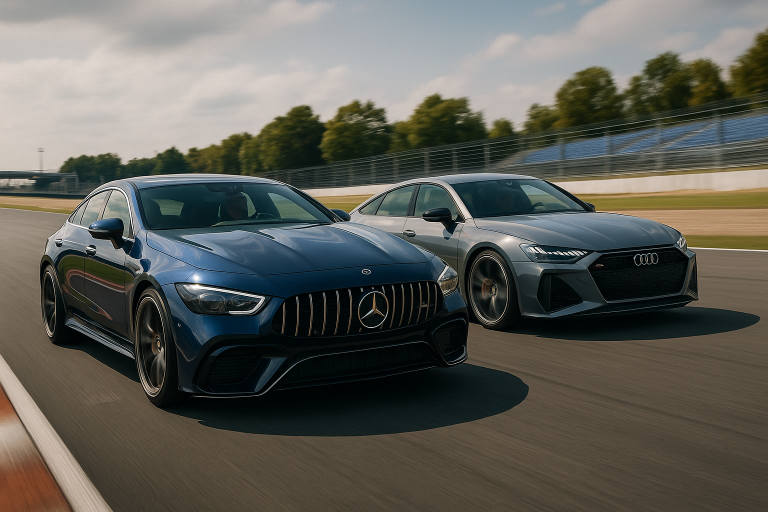
- The AMG GT family of coupes, roadsters and four-door models
- The AMG ONE, a hypercar with a Formula 1-derived hybrid powertrain
AMG’s top engines are still built by hand under the One Man, One Engine philosophy, with each technician signing a plaque on the finished engine.
The People Behind AMG
AMG’s success has always depended on talented engineers and leaders. Aufrecht’s passion for racing set the tone in the early years, while later leaders guided the brand through its rapid growth and its move into electrification. Equally important are the technicians in Affalterbach who hand-build engines and sign their names to them, keeping the founders’ craftsmanship alive.
AMG in Motorsport
Racing has always been at the heart of AMG history. AMG-prepared cars competed in the German touring car championship, known as DTM, for many years and won multiple titles. AMG customer racing programs supply the AMG GT3 and GT4 to teams around the world. In Formula 1, the Mercedes works team carries the Mercedes-AMG name, and AMG models have served as official safety cars and medical cars. This racing connection influences the development of AMG road cars, especially in aerodynamics, hybrid systems and chassis dynamics.
The Future of AMG
With the rise of electrification, AMG is evolving. Electric models such as the Mercedes-AMG EQE 53 deliver instant torque, while E Performance plug-in hybrids combine combustion engines with powerful electric motors. AMG is also developing a dedicated electric platform for future high-performance models. The challenge is to keep the emotion, sound and character that made AMG famous as powertrains change.
AMG History Timeline
| Year | Milestone |
|---|---|
| 1967 | AMG founded by Hans Werner Aufrecht and Erhard Melcher |
| 1971 | 300 SEL 6.8 AMG finishes second overall at the Spa 24 Hours |
| 1976 | AMG moves to Affalterbach |
| 1986 | The AMG Hammer is introduced |
| 1990 | Cooperation agreement with Mercedes-Benz |
| 1993 | C 36 AMG, the first jointly developed model |
| 1997 | CLK GTR wins the FIA GT Championship |
| 1999 | DaimlerChrysler takes a majority stake |
| 2005 | Mercedes-Benz takes full ownership |
| 2010 | SLS AMG, the first car developed entirely by AMG |
| 2014 | AMG GT launches with the 4.0-liter twin-turbo V8 |
| 2022 | AMG ONE hypercar deliveries begin |
Legendary AMG Models Every Fan Should Know
- 300 SEL 6.8 AMG: the Red Pig that started the legend
- AMG Hammer: the original super sedan of the 1980s
- CLK GTR: a homologation supercar built for racing
- SL 65 AMG Black Series: a twin-turbo V12 roadster turned into a fixed-roof track weapon
- C 63 AMG (W204): a compact sedan with a 6.2-liter V8 and a cult following
- SLS AMG: the gullwing supercar that proved AMG could build its own cars
- AMG GT Black Series: one of the fastest production cars ever around the Nurburgring
- AMG ONE: a road car with a Formula 1 hybrid powertrain
Frequently Asked Questions
Who founded AMG?
AMG was founded in 1967 by Hans Werner Aufrecht and Erhard Melcher, two former Mercedes-Benz engineers.
When did Mercedes-Benz buy AMG?
DaimlerChrysler acquired a majority stake in 1999, and Mercedes-Benz took full ownership of AMG in 2005.
Where are AMG cars developed?
AMG is based in Affalterbach, Germany, where its top engines are assembled by hand.
Final Thoughts
From a small workshop near Stuttgart to the world’s racetracks and showrooms, AMG history is a remarkable story of passion and engineering. The Red Pig, the Hammer, the SLS and the AMG GT each mark a chapter in a journey that continues today. Learn more on the official Mercedes-AMG website.