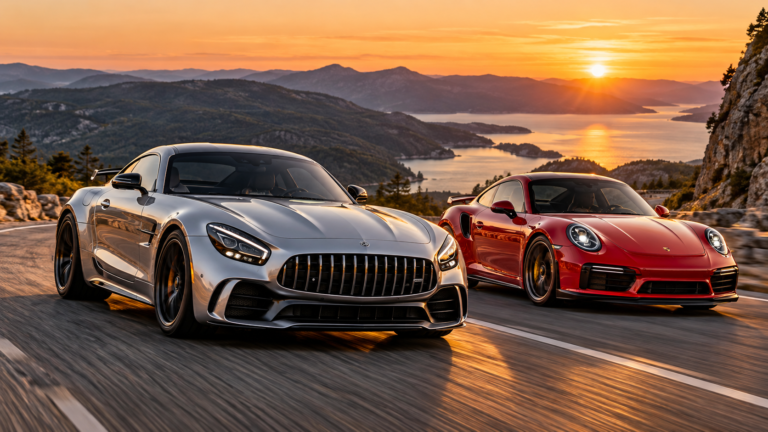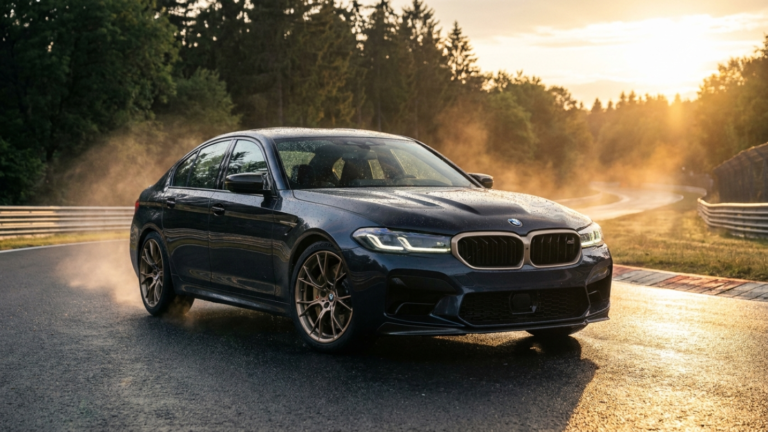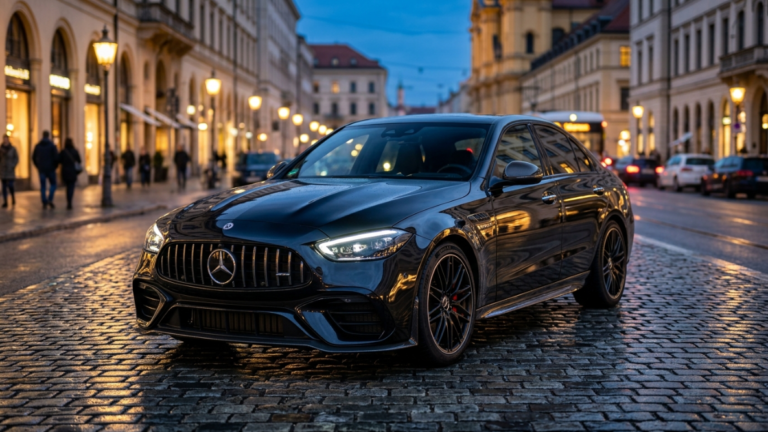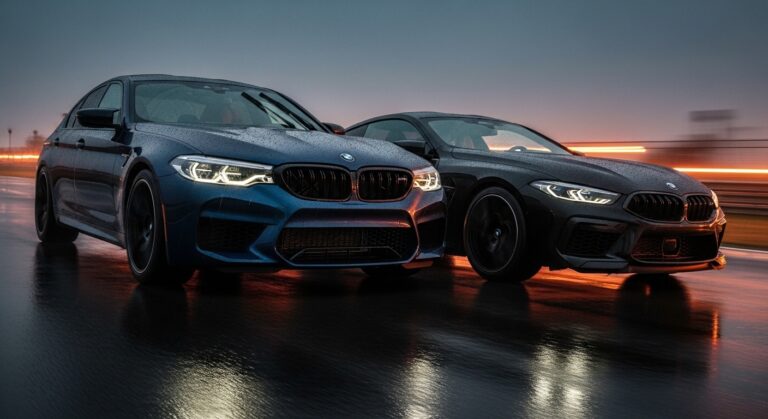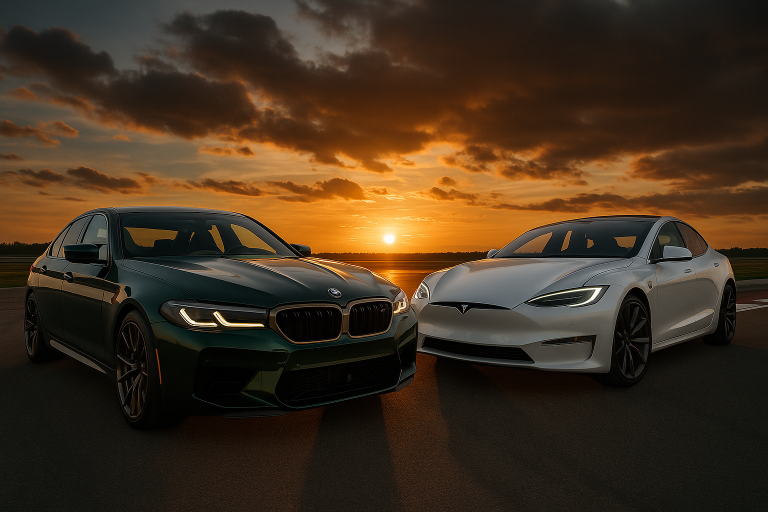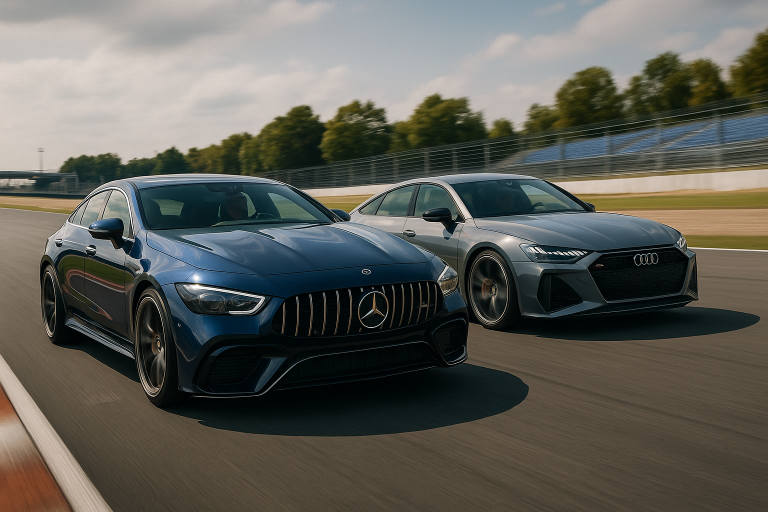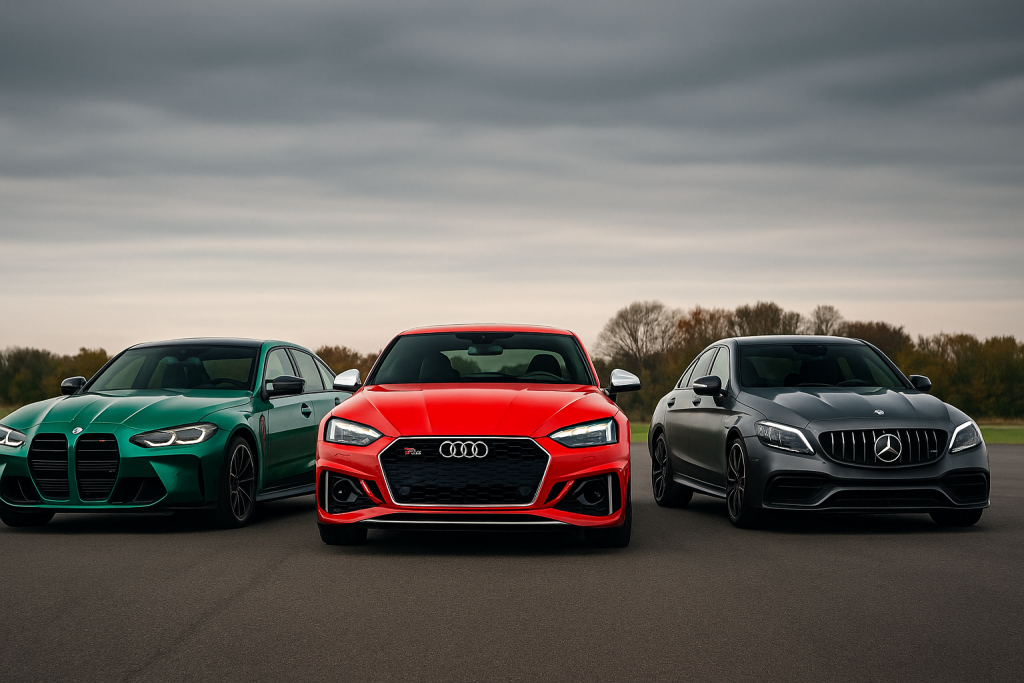
BMW M vs Audi RS vs Mercedes-AMG is the question every fan of German performance cars eventually asks. All three divisions build some of the fastest, most capable and most desirable cars in the world, and all three compete directly in almost every segment, from compact sedans to super SUVs. Yet each has its own philosophy, character and engineering DNA. Understanding those differences is the key to choosing the brand that fits your personality and driving style.
In this guide we explain the history of each division, how their engines, chassis and interiors differ, how they compare in key segments and which brand suits which type of driver. For a closer look at two of the rivals, read our Audi RS vs BMW M comparison.
Table of Contents
- The Origins of Each Brand
- BMW M: Precision and Balance
- Audi RS: Quattro Power and Daily Usability
- Mercedes-AMG: Muscle, Style and Luxury
- Head-to-Head in Key Segments
- Engines and Technology
- Motorsport Today
- Design Language
- Interiors and Comfort
- Sound and Emotion
- Reliability and Ownership Costs
- Resale Value
- The Electric Future
- Which One Is Right for You?
- Frequently Asked Questions
- Which is the fastest: BMW M, Audi RS or Mercedes-AMG?
- Which brand is best for daily driving?
- Which brand is best for track days?
- Final Thoughts
The Origins of Each Brand
BMW M began in 1972 as BMW Motorsport GmbH, a racing department that later built road cars like the M1, the E30 M3 and the first M5. Racing success shaped its identity, and the M badge became a symbol of precision engineering.
Mercedes-AMG started in 1967 as an independent engineering company founded by Hans Werner Aufrecht and Erhard Melcher. AMG built its reputation by modifying Mercedes-Benz cars for racing and became famous after the 300 SEL 6.8 AMG finished second in class at the 1971 Spa 24 Hours. Mercedes-Benz took full ownership of AMG in 2005.
Audi Sport, originally called quattro GmbH, was founded in 1983. Its performance story began with the Quattro rally cars that dominated the World Rally Championship and proved the advantages of all-wheel drive. The first RS model, the RS2 Avant of 1994, was developed with Porsche and set the template for fast, practical Audis.
BMW M: Precision and Balance
BMW M is all about driver engagement and chassis balance. M cars are designed to deliver sharp handling, precise steering and a strong connection between car and driver. Most models now use the M xDrive all-wheel-drive system, but it is rear-biased and often allows a pure rear-wheel-drive mode for maximum fun.
- Famous models: M2, M3, M4, M5, X5 M
- Engine philosophy: high-revving turbocharged inline-sixes and V8s, now joined by hybrid power in the M5 and XM
- Interior feel: driver-centric, sporty and focused
- Driving character: agile, engaging and playful when needed
If you love carving through mountain roads or attending track days, BMW M is likely to suit you best.
Audi RS: Quattro Power and Daily Usability
Audi RS models combine brute force with everyday comfort. Quattro all-wheel drive, advanced technology and understated yet aggressive design make RS cars perfect for drivers who want performance in all weather without sacrificing daily usability.
- Famous models: RS3, RS6 Avant, RS7 Sportback, RS Q8, R8
- Engine philosophy: turbocharged five-cylinders, V6s and V8s, plus electric RS e-tron GT models
- Interior feel: high-tech, clean and refined, with the Audi virtual cockpit
- Driving character: stable, fast and confidence-inspiring
If you want speed with practicality or love fast wagons that fly under the radar, Audi RS delivers both.
Mercedes-AMG: Muscle, Style and Luxury
AMG is Mercedes-Benz’s answer to raw power and luxury. Its signature is the one man, one engine philosophy, in which a single technician assembles each top-level V8 engine by hand and signs a plaque on it. AMG cars are known for thunderous exhaust notes, bold styling and a luxurious atmosphere.
- Famous models: C63, E63, GT, G63, SL
- Engine philosophy: hand-built twin-turbo V8s, powerful four-cylinders and plug-in hybrid E Performance systems
- Interior feel: luxurious, bold and digital
- Driving character: loud, powerful and comfortable
If you love the sound of a V8, want head-turning design and crave both luxury and aggression, AMG is the brand for you. Learn more in our Top 10 Mercedes-AMG models guide.
Head-to-Head in Key Segments
| Segment | BMW M | Audi RS | Mercedes-AMG |
|---|---|---|---|
| Compact | M2 | RS3 | CLA 45 S |
| Mid-size sedan | M3 | RS5 Sportback | C63 S E Performance |
| Super sedan | M5 | RS7 Sportback | E63 S / GT 63 4-Door |
| Fast wagon | M5 Touring | RS6 Avant | E63 S Wagon (past models) |
| Performance SUV | X5 M | RS Q8 | GLE 63 S |
Engines and Technology
Each brand takes a different approach to its engines. BMW M is famous for its inline-six engines, such as the S58 in the M3 and M4, which are smooth, powerful and tunable. Audi Sport is known for its charismatic five-cylinder in the RS3 and its shared 4.0-liter V8. AMG’s 4.0-liter twin-turbo V8 is renowned for its sound and character, while its four-cylinder M139 is one of the most powerful production four-cylinders ever built. All three brands are now adding hybrid technology to meet emissions rules.
Motorsport Today
Racing still shapes all three brands. BMW M competes in endurance racing with the M4 GT3 and the M Hybrid V8 prototype. Mercedes-AMG customer teams race the AMG GT3 around the world, and the brand has deep links to the Mercedes Formula 1 team, whose technology influenced the AMG ONE hypercar. Audi Sport has a long history at Le Mans and in GT racing, and Audi is entering Formula 1 as a works team. These programs keep engineers focused on performance and give each brand credibility with enthusiasts.
Design Language
Design is one of the clearest ways to tell these brands apart. BMW M cars wear bold kidney grilles, quad exhaust tips, aggressive bumpers and vivid colors such as Isle of Man Green and Sao Paulo Yellow. Audi RS models are more understated, with wide flared fenders, honeycomb grilles, large oval exhaust tips and a clean, technical look. Mercedes-AMG cars use the vertical-slat Panamericana grille, dramatic bodywork and luxurious details that make them stand out in any parking lot.
Interiors and Comfort
BMW M interiors focus on the driver, with sport seats, a thick steering wheel, red M1 and M2 shortcut buttons and BMW’s curved display. Audi RS interiors are among the most refined in the segment, with the virtual cockpit, high-quality materials and excellent build quality. AMG interiors are the most luxurious and dramatic, with large screens, turbine-style air vents, extensive ambient lighting and premium leather. Buyers who spend a lot of time in traffic or on long trips often prefer the comfort of Audi and AMG, while those who prioritize driving prefer BMW.
Sound and Emotion
Sound plays a big role in how each brand feels. AMG’s V8s are famous for their deep, thunderous rumble and crackling overrun. Audi’s five-cylinder RS3 has one of the most unique sounds in the car world, while its V8 models deliver a smooth, muscular tone. BMW’s inline-six engines produce a sharp, high-revving note, and its V8 models sound strong but more refined. Many buyers choose their brand simply because of the sound.
Reliability and Ownership Costs
All three brands build complex, high-performance cars, so ownership costs are higher than for regular models. Premium fuel, expensive tires, large brakes and specialist servicing are part of the experience. Reliability depends heavily on the specific model, engine and maintenance history rather than the brand alone. BMW’s S58 inline-six and AMG’s M177 V8 have earned strong reputations, and Audi’s 4.0-liter V8 is widely used across the Volkswagen Group. A full service history and a pre-purchase inspection are essential for any used performance car.
Resale Value
Most high-performance German sedans and SUVs depreciate quickly in their first few years, which is bad news for new buyers but good news for used buyers. Limited editions such as the BMW M5 CS, the Audi RS6 Avant GT and AMG Black Series models tend to hold their value much better. Fast wagons, especially the Audi RS6 Avant, are also popular in the US used market.
The Electric Future
All three divisions are preparing for electrification. Audi already offers the fully electric RS e-tron GT, Mercedes-AMG has introduced electric AMG models and plug-in hybrid E Performance cars, and BMW M has added hybrid power to the M5 and XM while preparing fully electric M models. The challenge for each brand is to keep its unique character as engines become quieter and more electrified.
Which One Is Right for You?
| Brand | Strengths | Best for |
|---|---|---|
| BMW M | Handling and driving purity | Enthusiasts and track days |
| Audi RS | All-weather grip, technology and versatility | Daily driving with performance |
| Mercedes-AMG | Power, luxury and presence | Grand touring, style and sound |
Frequently Asked Questions
Which is the fastest: BMW M, Audi RS or Mercedes-AMG?
It depends on the model. AMG offers some of the most powerful cars, such as the GT 63 S E Performance, while BMW M often leads on the racetrack and Audi RS models excel in all-weather acceleration.
Which brand is best for daily driving?
Audi RS is often considered the best daily driver thanks to its Quattro traction, comfortable ride and refined interior, although AMG is also very comfortable.
Which brand is best for track days?
BMW M has the strongest reputation on track, especially with models like the M2, M3 CS and M4 CSL.
Final Thoughts
In the BMW M vs Audi RS vs Mercedes-AMG debate, there is no single winner. Each brand builds incredible cars, and the right choice depends on what matters most to you: precision, practicality or power. Visit the official BMW M, Audi USA and Mercedes-AMG websites to explore the latest models.