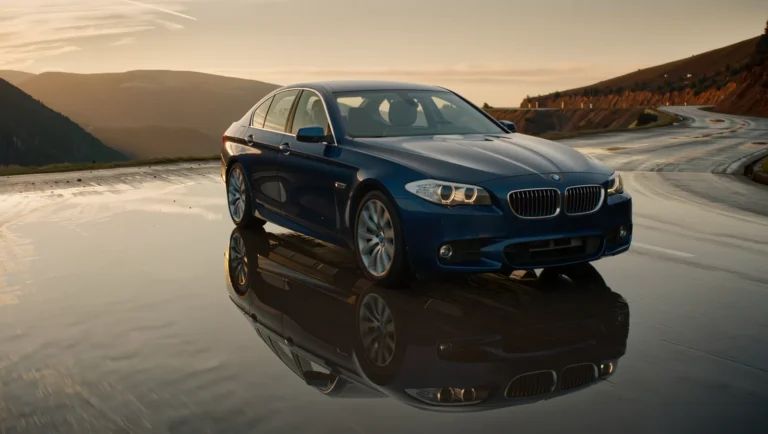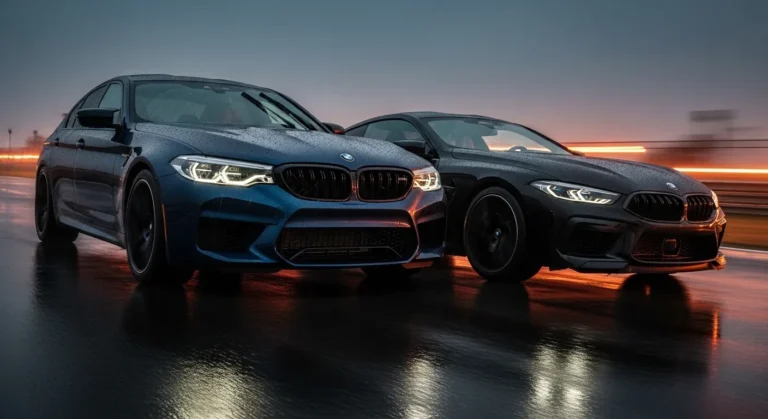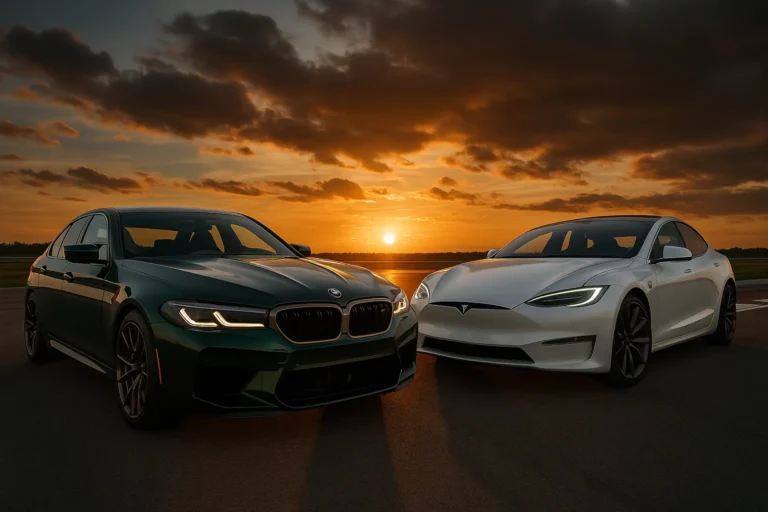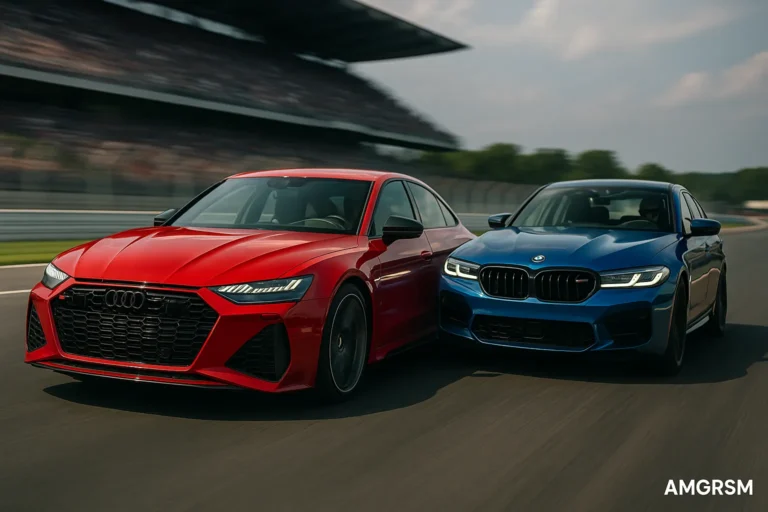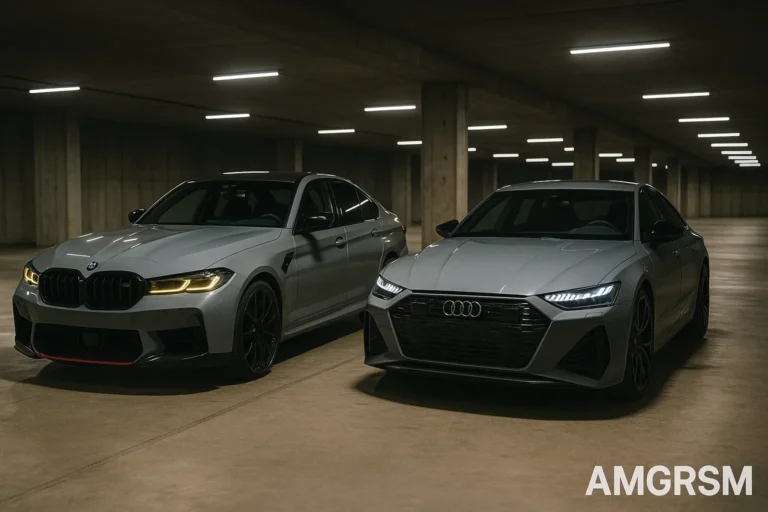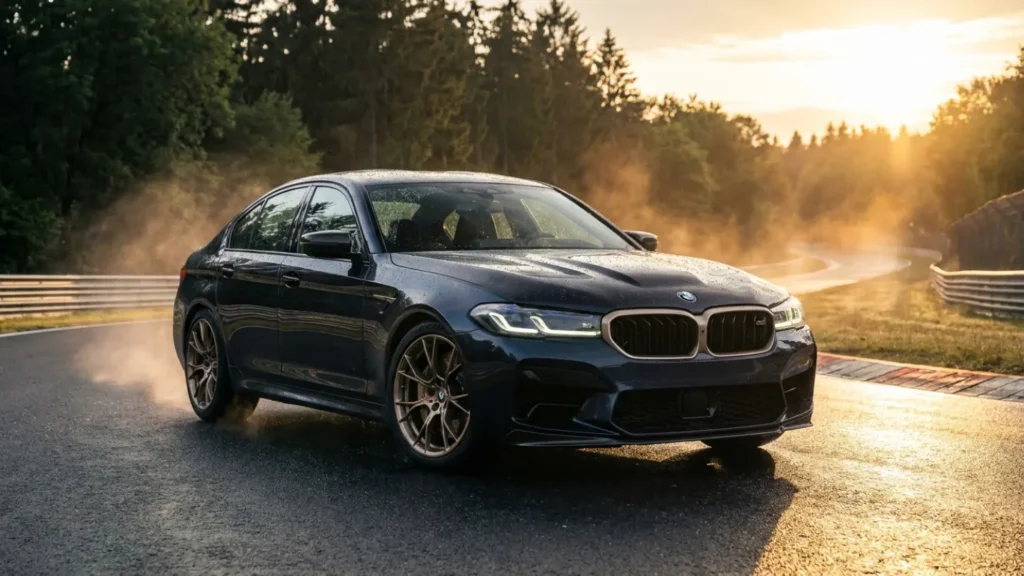
The BMW M5 CS is widely regarded as one of the greatest performance sedans ever built. It took the already ferocious M5 Competition, removed weight, added power, sharpened the chassis and turned a luxury express into something much closer to a four-door supercar. Produced for a single model year in the United States, it has become one of the most sought-after modern BMW M cars on the used market.
Most buyers already know the headline numbers: 627 horsepower, a 0-60 mph time under three seconds and a limited top speed of 190 mph. But those figures only explain part of the story. This review breaks down what makes the BMW M5 CS different from a regular M5, what it costs to own, which issues owners report and who should consider buying one today. For more context on BMW’s flagship performance cars, see our BMW M5 vs M8 comparison and our 2025 BMW M5 G90 review.
Table of Contents
- What Makes the BMW M5 CS So Special
- BMW M5 CS Specs: The Numbers That Matter
- Performance and Driving Character
- Acceleration
- Handling
- Braking and Track Use
- BMW M5 CS vs M5 Competition: What’s Different
- How Many BMW M5 CS Were Made?
- BMW M5 CS Price and Values
- BMW M5 CS Reliability and Ownership Costs
- BMW M5 CS vs Its Main Rivals
- Mercedes-AMG E63 S
- Audi RS7 Sportback
- Cadillac CT5-V Blackwing
- Should You Buy a Used BMW M5 CS?
- The BMW M5 CS Makes Sense If:
- Consider Something Else If:
- Frequently Asked Questions
- How many BMW M5 CS were made?
- How fast is the BMW M5 CS 0-60?
- How much did the BMW M5 CS cost new?
- What is the difference between the M5 CS and the M5 Competition?
- Does the BMW M5 CS have a rear bench seat?
- Final Verdict on the BMW M5 CS
What Makes the BMW M5 CS So Special
In BMW M terminology, the CS badge sits above Competition models and has historically been reserved for the most focused, lightweight and limited versions of a car. The BMW M5 CS follows that formula closely. BMW engineers started with the F90 M5 Competition and targeted three areas: less weight, more power and a sharper chassis.
According to BMW, the result is roughly 230 pounds lighter than the M5 Competition. Much of that saving comes from carbon fiber components, including the hood, front splitter, mirror caps and rear diffuser, as well as a titanium exhaust silencer and lightweight carbon bucket seats. Visually, the CS stands out with Gold Bronze accents on the grille and wheels and distinctive yellow daytime running lights inspired by GT racing cars. Full details are available on the official BMW USA website.
BMW M5 CS Specs: The Numbers That Matter
| Specification | BMW M5 CS (2022) |
|---|---|
| Engine | 4.4-liter twin-turbo S63 V8 |
| Horsepower | 627 hp |
| Torque | 553 lb-ft |
| Transmission | 8-speed M Steptronic automatic |
| Drivetrain | M xDrive all-wheel drive with 2WD mode |
| 0-60 mph (BMW) | 2.9 seconds |
| Top speed | 190 mph (limited, with M Driver’s Package) |
| Brakes | M Carbon ceramic brakes |
| Seating | 4 seats (individual rear seats) |
| Original US MSRP | $142,000 plus $995 destination |
| Production | About 1,132 worldwide, 454 for the US (MDataWorks data) |
Those numbers place the BMW M5 CS in supercar territory, yet it still offers four doors, a usable trunk and modern luxury features. That combination is a big reason the car has such a strong reputation among enthusiasts.
Performance and Driving Character
Acceleration
BMW quotes a 0-60 mph time of 2.9 seconds, and instrumented tests by major US publications such as Car and Driver have recorded times even quicker than the official figure. In its instrumented test, reported by BMWBLOG, Car and Driver measured 0-60 mph in 2.6 seconds and the quarter mile in 10.6 seconds at 130 mph, with the test car weighing 4,096 pounds. That puts a four-door sedan in the same acceleration bracket as many mid-engine exotics. The twin-turbo V8 delivers its torque across a very wide rev range, so the car pulls hard almost anywhere, not just at the top of the tachometer.
Handling
The CS uses retuned suspension and specific chassis settings compared with the M5 Competition. According to BMW of North America, its engine mounts are much stiffer (5,139 lb/in versus 3,312 lb/in), the springs are about 10 percent firmer, the ride height is 0.2 inch lower, front negative camber is increased and the rear anti-roll bar is firmer. Road testers have consistently described it as sharper and more communicative, with better body control and more precise turn-in. The M xDrive system can send most of its power to the rear wheels, and a pure rear-wheel-drive mode is available for experienced drivers on a closed course.
Braking and Track Use
Standard M Carbon ceramic brakes give the CS strong, fade-resistant stopping power, which is important in a car that still weighs well over two tons. Owners who use the car on track days often praise its consistency over repeated laps, although track use dramatically increases wear on brakes and tires.
BMW M5 CS vs M5 Competition: What’s Different
The most common question from buyers is whether the BMW M5 CS is worth the premium over a regular M5 Competition. The key differences are:
- Weight reduction: roughly 230 pounds less, according to BMW, through carbon fiber body parts, carbon seats and a titanium exhaust silencer.
- Power: 627 hp compared with 617 hp in the M5 Competition.
- Chassis: CS-specific suspension tuning and setup for sharper handling.
- Interior: four individual seats with M Carbon bucket seats up front, instead of a rear bench.
- Brakes: M Carbon ceramic brakes as standard equipment.
- Exclusivity: a limited production run sold in the US only for the 2022 model year.
On paper, some of these changes look small. On the road, reviewers agree that they add up to a noticeably different character. The M5 Competition feels like an extremely fast luxury sedan. The CS feels like a performance car first, with luxury features as a bonus.
How Many BMW M5 CS Were Made?
BMW never published an official final production figure for the M5 CS. However, data compiled by the BMW registry MDataWorks, and reported by autoevolution, shows about 1,132 cars built worldwide, of which 454 were delivered to the United States. That is roughly 40 percent of the total, making the US the most important market for the car.
Only three paint colors were offered. Brands Hatch Grey metallic was standard, while Frozen Brands Hatch Grey and Frozen Deep Green metallic were BMW Individual options. According to the same data, Frozen Deep Green was the most popular choice, with around 570 cars, followed by about 286 in Brands Hatch Grey and about 276 in Frozen Brands Hatch Grey.
| Color | Approx. cars built (worldwide) |
|---|---|
| Frozen Deep Green metallic | 570 |
| Brands Hatch Grey metallic | 286 |
| Frozen Brands Hatch Grey metallic | 276 |
BMW M5 CS Price and Values
The BMW M5 CS launched with an MSRP of $142,000 plus a $995 destination charge in the US, making it the most expensive M5 of its generation. Because production was limited and demand from collectors and enthusiasts remains strong, used values have stayed high compared with most luxury performance sedans. Low-mileage examples in desirable colors are particularly sought after.
Several factors support the car’s strong values:
- Limited production and a single US model year
- Its position as one of the last pure V8 M5 models before the hybrid G90 generation
- Strong reviews from the automotive press
- Performance that still competes with much newer cars
For buyers, this means a BMW M5 CS will rarely be a bargain, but it is also less likely to suffer the steep depreciation typical of large luxury sedans.
BMW M5 CS Reliability and Ownership Costs
The BMW M5 CS shares its core drivetrain with the M5 Competition, which helps from a reliability standpoint. The S63 V8 in the F90 M5 and the 8-speed M Steptronic transmission have been in service for several years, and owner communities such as M5Board are a useful resource for model-specific issues and service advice.
The main ownership considerations reported by owners include:
- Carbon ceramic brakes: very durable in road use, but replacement of rotors and pads is expensive, especially after frequent track driving.
- Tires: the high-performance tires fitted to the CS wear quickly and are costly to replace.
- Exposed carbon fiber: parts such as the front splitter and mirror caps can be damaged by road debris or curbs, so paint protection film is a popular addition.
- Seats: the carbon bucket seats are supportive but firm, and some owners find them less comfortable on long trips.
- Fuel: premium fuel is required for full performance.
As with any high-performance BMW, a complete service history and a pre-purchase inspection by a BMW M specialist are essential. Check for regular oil services, evidence of track use, brake and tire condition, and any outstanding recalls or service campaigns.
BMW M5 CS vs Its Main Rivals
When it was new, the BMW M5 CS competed in a small but very capable group of super sedans. Each rival offers a different interpretation of what a high-performance four-door should be, and they remain relevant alternatives on the used market today.
Mercedes-AMG E63 S
The W213 Mercedes-AMG E63 S uses a 4.0-liter twin-turbo V8 with 603 hp and, like the M5, sends power through an all-wheel-drive system with a rear-drive mode. It offers a more luxurious, comfort-focused cabin and a louder, more theatrical V8 soundtrack. Buyers who want a wagon body style have an advantage with the E63 S, since the F90-generation M5 was never offered as a Touring. For a closer look at AMG’s super sedan, read why the Mercedes-AMG E63 scares supercars.
Audi RS7 Sportback
The C8 Audi RS7 Sportback combines a 591-hp twin-turbo V8 with quattro all-wheel drive and a dramatic fastback design. It is more of a grand tourer than a track weapon, with a focus on all-weather speed, comfort and technology. It lacks the raw, focused edge of the BMW M5 CS but is easier to live with every day.
Cadillac CT5-V Blackwing
The Cadillac CT5-V Blackwing takes a different approach with a 668-hp supercharged V8, rear-wheel drive and an available manual transmission. Many enthusiasts consider it the most engaging driver’s car in the class. It cannot match the CS for all-weather traction or launch performance, but it offers a more analog experience.
Compared with these rivals, the BMW M5 CS stands out for its combination of weight reduction, all-wheel-drive traction, track capability and exclusivity. It is the most focused car of the group and the one most likely to be treated as a future collectible.
Should You Buy a Used BMW M5 CS?
The BMW M5 CS Makes Sense If:
- You want a rare, collectible modern M car that is likely to hold its value well
- You value the last of the pure V8 M5 era
- You plan to enjoy spirited driving or occasional track days
- You have a realistic budget for premium maintenance, tires and brakes
Consider Something Else If:
- You want maximum daily comfort, in which case a regular M5 Competition is a better fit
- You regularly carry three adults in the back, as the CS seats only four
- You prefer a car that blends in rather than one that draws attention
- You want the newest technology, where the hybrid M5 G90 offers more
For a more comfortable and less expensive alternative from the same generation, see our BMW M5 Competition review.
To see how the M5 CS compares with an electric rival, read our BMW M5 CS vs Tesla Model S Plaid comparison.
Frequently Asked Questions
How many BMW M5 CS were made?
BMW has not released an official total, but registry data from MDataWorks indicates about 1,132 cars worldwide, including 454 for the United States, all for the 2022 model year.
How fast is the BMW M5 CS 0-60?
BMW quotes 0-60 mph in 2.9 seconds. Car and Driver recorded 2.6 seconds in its instrumented test, with a quarter mile of 10.6 seconds at 130 mph.
How much did the BMW M5 CS cost new?
The US MSRP was $142,000 plus a $995 destination charge, making it the most expensive F90 M5. Used prices depend heavily on mileage, color and condition.
What is the difference between the M5 CS and the M5 Competition?
The CS has 627 hp instead of 617 hp, weighs about 230 pounds less, uses stiffer engine mounts and firmer springs, sits 0.2 inch lower and comes standard with carbon ceramic brakes and four individual seats.
Does the BMW M5 CS have a rear bench seat?
No. The M5 CS has two individual rear bucket seats, so it carries four people instead of five.
Final Verdict on the BMW M5 CS
The BMW M5 CS represents the peak of the F90 M5 generation. It combines a powerful twin-turbo V8, a lighter body, sharper suspension and an exclusive specification in a car that can still carry four people and their luggage. Few performance sedans have earned such universal praise from the automotive press.
It is not the most comfortable or practical M5, and it is certainly not cheap to buy or maintain. But for enthusiasts who want one of the most capable and collectible sedans of the modern era, the BMW M5 CS remains a benchmark. As the M5 moves into the hybrid era, the CS stands as a reminder of how exciting a pure internal-combustion super sedan can be.